
African tulip tree
Spathodea campanulata · also called African tulip, Fountain tree, Flame of the forest
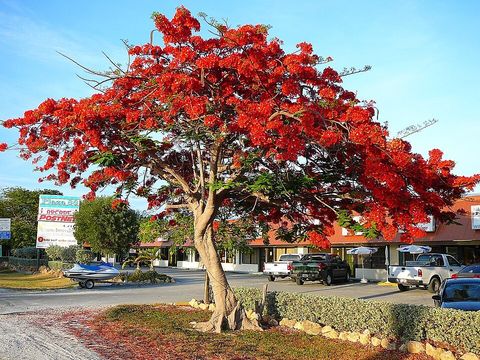
Planted in Queensland gardens and streets for its big orange-red flowers, the African tulip tree is a quick-growing evergreen native to tropical Africa. It has spread from gardens into gullies, creek banks and disturbed rainforest, where it crowds out native plants, and its flowers are toxic to Australia's native stingless bees. Queensland now lists it as a restricted invasive plant.
- Exotic
- Restricted weed in Queensland
- 20 to 25 m tall
African tulip tree at a glance
- Height
- 20 to 25 m
- Growth
- Fast
- Leaves
- Evergreen
- Flowers
- Orange, red, All year
- Roots
- Aggressive
- Origin
- Tropical Africa
- Family
- Bignoniaceae
How to identify an African tulip tree
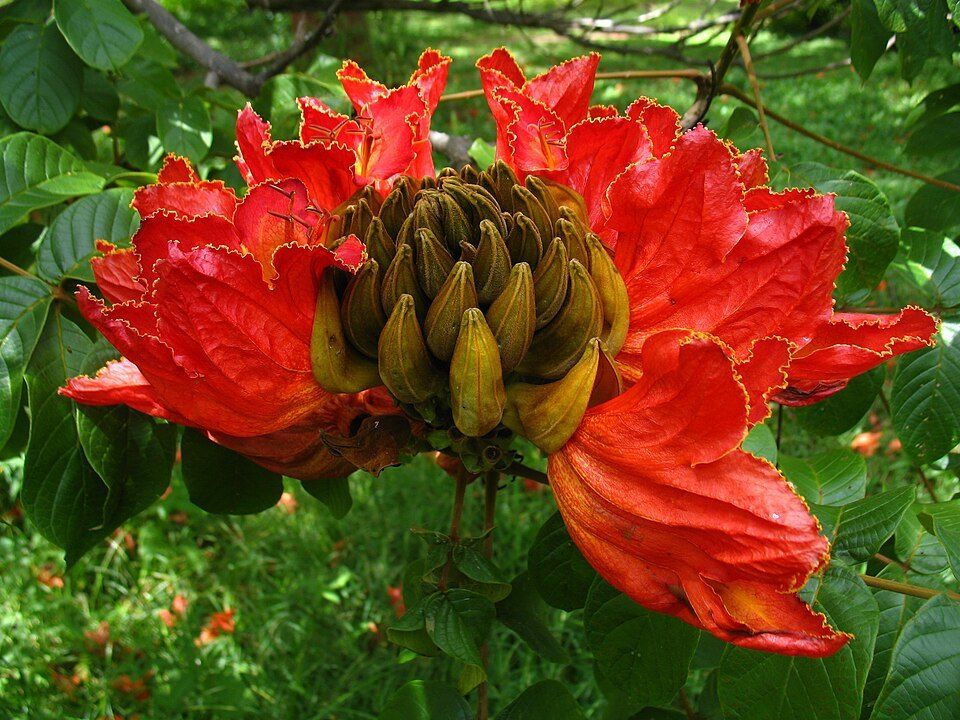
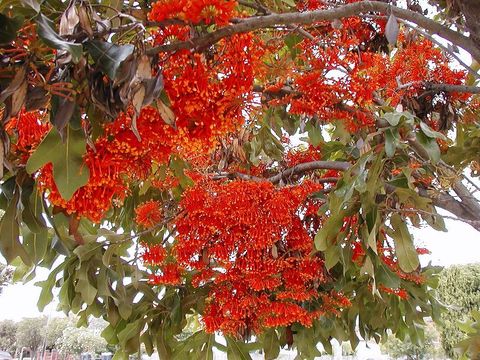
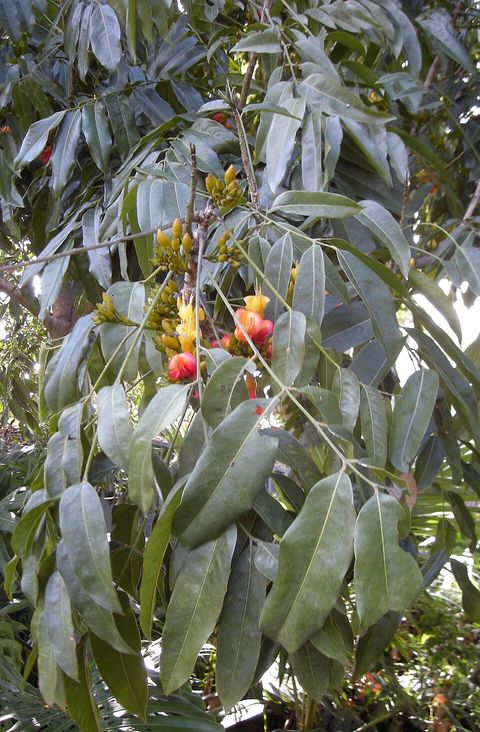
Look for large compound leaves, up to 50 cm long, with 7 to 17 oval leaflets arranged in opposite pairs; each leaflet has two or three tiny raised glands at its base. Flowers sit in dense clusters at the branch tips. Each one bursts from a curved, brown, horn-like bud and opens into an orange-red cup about 10 cm long with a frilly yellow rim. Pods are 17 to 30 cm long and split to shed papery seeds. Young branches carry pale corky spots, and old trunks become rough and slightly buttressed. Brisbane City Council says it is rarely confused with anything else. It is sometimes called flame tree, a name shared with the native Illawarra flame tree, which has red bell flowers on bare branches.
Growing an African tulip tree in Brisbane
It thrives in subtropical Queensland, which is part of the problem. Brisbane City Council notes it is becoming naturalised in south-east Queensland, and it does best in moist spots such as creek lines and gullies, where it out-competes native plants. Seeds travel on the wind, along waterways and in garden waste dumped in bushland. At 20 metres or more it is too big for most suburban yards, and trees near creeks or bushland are the most likely to spread.
What to watch out for
It's a Category 3 restricted invasive plant in Queensland, so you must not give it away, sell it or release it into the environment, and you must manage its impacts on your land. Its flowers are toxic to Australia's native stingless bees, which are important pollinators of native plants. Unitywater lists it among trees not to plant near water or sewer pipes. Damaged roots can sucker, and the tree can reach 20 to 25 metres.
- Seedlings. Its light, winged seeds blow from a single tree into gullies, creeks and bushland, and dumped prunings can start new plants.
- Poisonous parts. The flowers are toxic to Australia's native stingless bees, and Grow Me Instead describes the woody pods as poisonous.
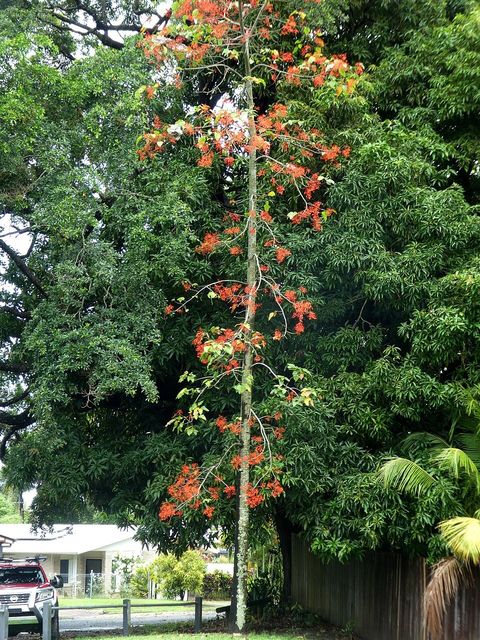
- Size. Australian sources say it can reach 20 to 25 metres, with a spreading crown and a buttressed trunk.
Pruning and care
This is a tree to control rather than shape. Seedlings can be pulled or dug out while the soil is moist. Business Queensland says herbicide is the most effective control, and Brisbane City Council lists cut stump, basal bark and stem injection methods for established trees, which matters because cutting alone can trigger root suckers. Keep prunings and pods out of bushland and creeks. Felling a large specimen and dealing with the stump is a job for a qualified tree service with the right gear.
Is the African tulip tree a weed in Queensland?
Why is the African tulip tree bad for native bees?
What can I plant instead of an African tulip tree?
Are African tulip tree roots invasive?

Sources and credits
- African tulip tree (weed identification tool) Brisbane City Council
- African tulip tree Business Queensland (Queensland Government)
- Think before you plant (planting guide) Unitywater
- African Tulip Tree Grow Me Instead (Nursery and Garden Industry Australia)
- Spathodea campanulata Atlas of Living Australia
- Brachychiton acerifolius PlantNET (Royal Botanic Gardens and Domain Trust, Sydney)
- Biosecurity Regulation 2016, restricted matter (invasive plants) Queensland Legislation (Office of the Queensland Parliamentary Counsel)
Photo: Steven Haw, CC BY 2.0, via Wikimedia Commons.
This profile updates sheet 11 of the plant profile booklet made for Colourful Tree Lopping in 2013. We checked every fact against current sources and rewrote it for the guide.
Checked October 2026. Weed listings and council rules change: check the council's and the Queensland Government's pages before you act.
Get a free quote. We'll beat most written quotes.
Tell us about the job and the site. You don't need to be home for the quote. Available 7 days.
- 4.9 on Google (38 reviews)
- Family owned & operating since 1993
- Fully insured
- We'll beat most written quotes