
Cocos palm
Syagrus romanzoffiana · also called Queen palm, Feathery coconut, Giriba palm
The cocos palm, also called queen palm, is a fast-growing South American palm that was planted in many Queensland gardens. It is now a problem: it seeds heavily, bats spread the seed into bushland, and its fruit and fronds can injure or kill flying-foxes. Brisbane City Council lists it as pest vegetation, and dead fronds and rotting fruit make it messy.
- Exotic
- Brisbane pest plant
- 12 to 20 m tall
Cocos palm at a glance
- Height
- 12 to 20 m
- Growth
- Fast
- Leaves
- Evergreen
- Flowers
- Small and easy to miss
- Origin
- South America: eastern Brazil, Argentina, Paraguay and Uruguay
- Family
- Arecaceae
How to identify a cocos palm
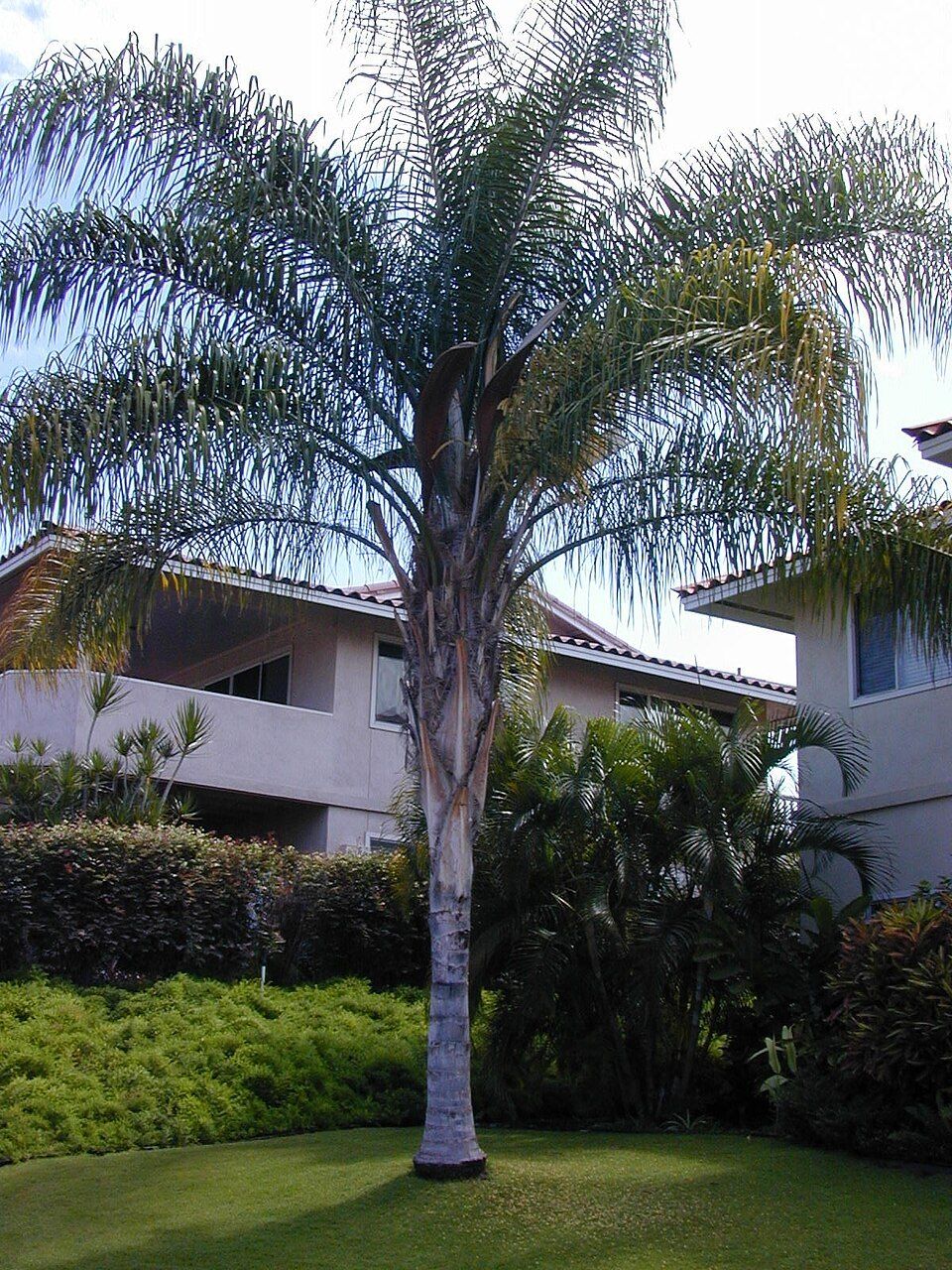
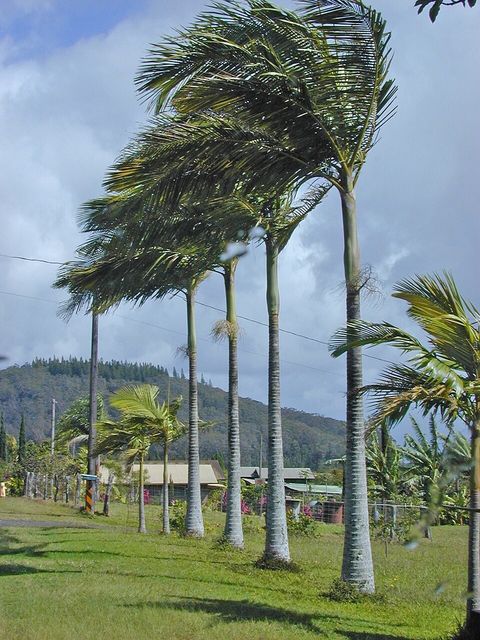
A cocos palm has a single straight, smooth grey trunk about 30 cm thick, marked with widely spaced rings where old fronds were attached. The crown holds arching fronds up to 5 metres long, with hundreds of narrow leaflets sticking out in several directions, so each frond looks like a plume rather than a flat feather. Dead fronds tend to hang down against the trunk instead of dropping. Branched flower clusters up to 2 metres long carry small creamy-yellow flowers, followed by heavy hanging bunches of egg-shaped fruit that turn yellow, then orange. The native bangalow palm, by contrast, sheds its old fronds cleanly.
Growing a cocos palm in Brisbane
Cocos palms were long a common choice in Queensland gardens and streets, and South East Queensland is where the palm has spread most widely. The trouble starts after planting: each palm produces masses of fruit, bats and other animals carry the seed, and seedlings come up in gardens, along creeks and in dry eucalypt forest. Brisbane City Council lists it as pest vegetation, and Grow Me Instead suggests native palms such as the bangalow as better choices for subtropical gardens.
What to watch out for
Brisbane City Council lists cocos palm as pest vegetation, and it is regarded as an environmental weed in Queensland because it seeds so freely. It is also hard on flying-foxes: green fruit can be toxic to them, the sticky fruit can cause fatal constipation in young animals, seeds can lodge behind their teeth, and they can get caught in the fronds and flower sheaths. Dead fronds hang on the trunk and fallen fruit ferments, so the palm looks untidy.
- Seedlings. It seeds heavily, bats and other animals spread the seed, and seedlings can form thick carpets that crowd out native regrowth.
- Mess. Dead fronds hang on the trunk for months instead of falling, and dropped fruit ferments on the ground.
Pruning and care
If you keep a cocos palm for now, cut off the dead fronds, because this palm does not shed them on its own. Pick up fallen fruit and seal it in plastic bags before disposal, and pull or dig out any seedlings sprouting near the base. To get rid of a palm, Business Queensland suggests cutting off the crown below the lowest frond. Climbing a tall palm, or working near power lines, is a job for a trained professional with the right gear.
Is the cocos palm a weed in Queensland?
Why are cocos palms bad for flying-foxes?
Do I need a permit to remove a cocos palm in Brisbane?
What palm can I plant instead of a cocos palm?

Sources and credits
- Cocos palm (weed identification tool) Brisbane City Council
- Frequently Asked Questions (weed identification tool) Brisbane City Council
- Cocos palm Business Queensland (Queensland Government)
- Syagrus romanzoffiana fact sheet Environmental Weeds of Australia (Lucid key, Identic Pty Ltd)
- Cocos Palm (Queensland Sub-Tropics Region) Grow Me Instead (Nursery & Garden Industry Australia)
- Brisbane weeds (open data) Brisbane City Council
- Syagrus romanzoffiana species page Atlas of Living Australia
- Livistona decipiens (name search) Atlas of Living Australia
Photo: Forest & Kim Starr, CC BY 3.0, via Wikimedia Commons.
This profile updates sheet 9 of the plant profile booklet made for Colourful Tree Lopping in 2013. We checked every fact against current sources and rewrote it for the guide.
Checked October 2026. Weed listings and council rules change: check the council's and the Queensland Government's pages before you act.
Get a free quote. We'll beat most written quotes.
Tell us about the job and the site. You don't need to be home for the quote. Available 7 days.
- 4.9 on Google (38 reviews)
- Family owned & operating since 1993
- Fully insured
- We'll beat most written quotes