
Brush box
Lophostemon confertus · also called Brisbane box, Queensland box, Queensland brush box
Brush box is a native tree of the wet forests and rainforest edges of eastern Queensland and New South Wales, and Brisbane City Council uses it as a street tree across most of the city. It has glossy leaves bunched at the twig tips, two-toned bark that is rough at the base and smooth pinkish-brown above, and fluffy white flowers in late spring and summer. Its roots need distance from sewer pipes.
- Native to South East Queensland
- 10 to 15 m tall
- Flowers December to February
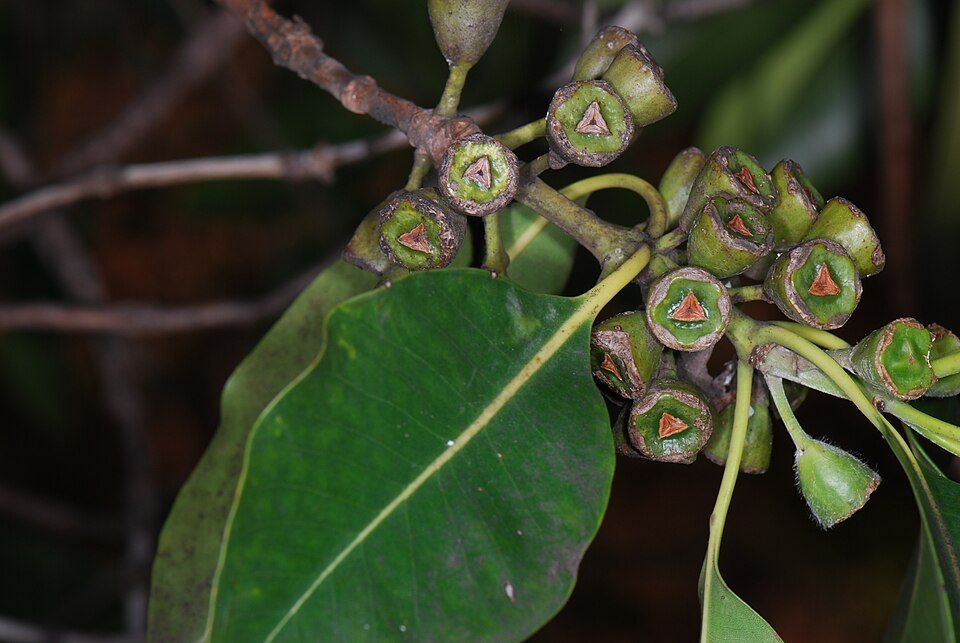
Brush box at a glance
- Height
- 10 to 15 m
- Leaves
- Evergreen
- Flowers
- White, cream, December to February
- Roots
- Aggressive
- Origin
- East coast forests from north Queensland to the Hunter Valley in NSW
- Power lines
- Not on the council's list for under power lines
- Family
- Myrtaceae
How to identify a brush box
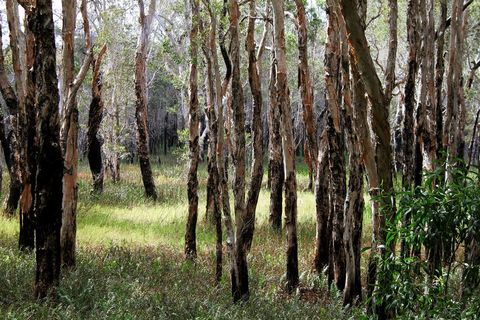
A large tree, usually 10 to 15 metres in Brisbane streets. The bark is the best clue: rough, brown and flaky on the lower trunk, then smooth and pinkish-brown on the upper trunk and branches. Glossy, leathery leaves 7 to 17 cm long sit in loose whorls of three to five at the end of each season's growth, and young shoots ooze a milky sap when broken. Fluffy white to cream flowers with bundled stamens appear in small clusters, followed by small cup-shaped capsules about 1 cm across.
Growing a brush box in Brisbane
Brush box grows naturally in wet forest and on rainforest margins along the east coast, including south-east Queensland. Brisbane City Council plants it in coastal, creekside, suburban, hillside and arterial road precincts, but keeps it out from under power lines and off verges narrower than 2.5 metres. It is a caterpillar food plant for three butterflies: the eastern flat, the common red-eye and the rare red-eye. The timber was once popular for floors in southern Queensland and New South Wales.
What to watch out for
Hunter Water gives brush box a high damage rating for sewer pipes, so plant it well away from sewer lines. At 10 to 15 metres it is a big tree for a suburban yard, and Brisbane City Council does not plant it under power lines.
Pruning and care
A brush box needs little routine pruning. Remove dead wood and crossing branches, and lift low limbs for clearance while the tree is young so the cuts stay small. Keep a single main trunk and avoid cutting back the whole crown. Water young trees through dry spells and mulch the root zone. Because of its sewer-pipe risk, check where your pipes run before planting. Large limbs over roofs or driveways are a job for a qualified arborist.
Are brush box roots invasive?
How tall does a brush box grow?
Is brush box native to Brisbane?
When does brush box flower?
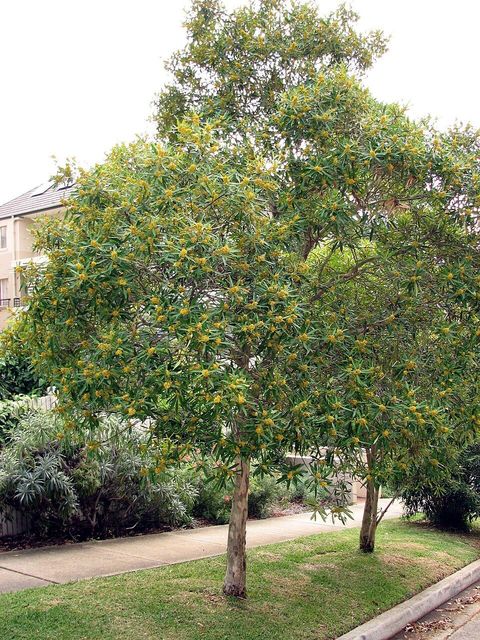
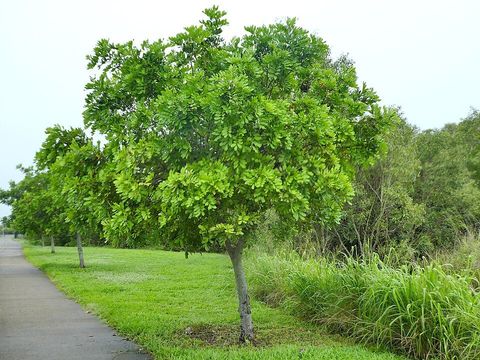
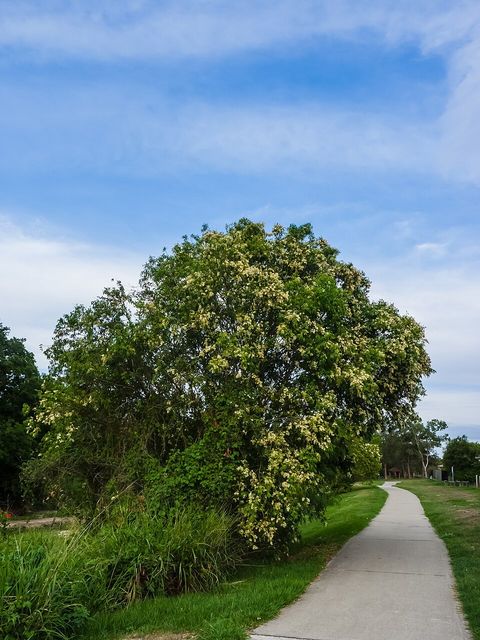

Sources and credits
- Street tree species (open data) Brisbane City Council
- Brisbane trees (street tree species table) Brisbane City Council
- Lophostemon confertus, New South Wales Flora Online PlantNET, Royal Botanic Gardens and Domain Trust
- Lophostemon confertus, Australian Tropical Rainforest Plants CSIRO (Australian Tropical Rainforest Plants online edition)
- Planting near sewer pipes Hunter Water
- Species profile: Lophostemon confertus (WildNet taxon details) Queensland Government
- Lophostemon confertus species page Atlas of Living Australia
Photo: Unknown, CC BY-SA 3.0, via Wikimedia Commons.
This profile updates sheet 54 of the plant profile booklet made for Colourful Tree Lopping in 2013. We checked every fact against current sources and rewrote it for the guide.
Checked October 2026. Weed listings and council rules change: check the council's and the Queensland Government's pages before you act.
Get a free quote. We'll beat most written quotes.
Tell us about the job and the site. You don't need to be home for the quote. Available 7 days.
- 4.9 on Google (38 reviews)
- Family owned & operating since 1993
- Fully insured
- We'll beat most written quotes