
Tuckeroo tree
Cupaniopsis anacardioides · also called Carrotwood
The tuckeroo tree is a tough, evergreen native of coastal scrubs and estuaries, first described from a specimen collected at Moreton Bay, and it is widely planted in Brisbane streets and parks. It forms a neat, rounded crown of glossy leaves, copes with salty wind and carries bright orange fruit that birds love. Brisbane City Council lists it as an 8 to 12 metre street tree.
- Native to South East Queensland
- 8 to 12 m tall
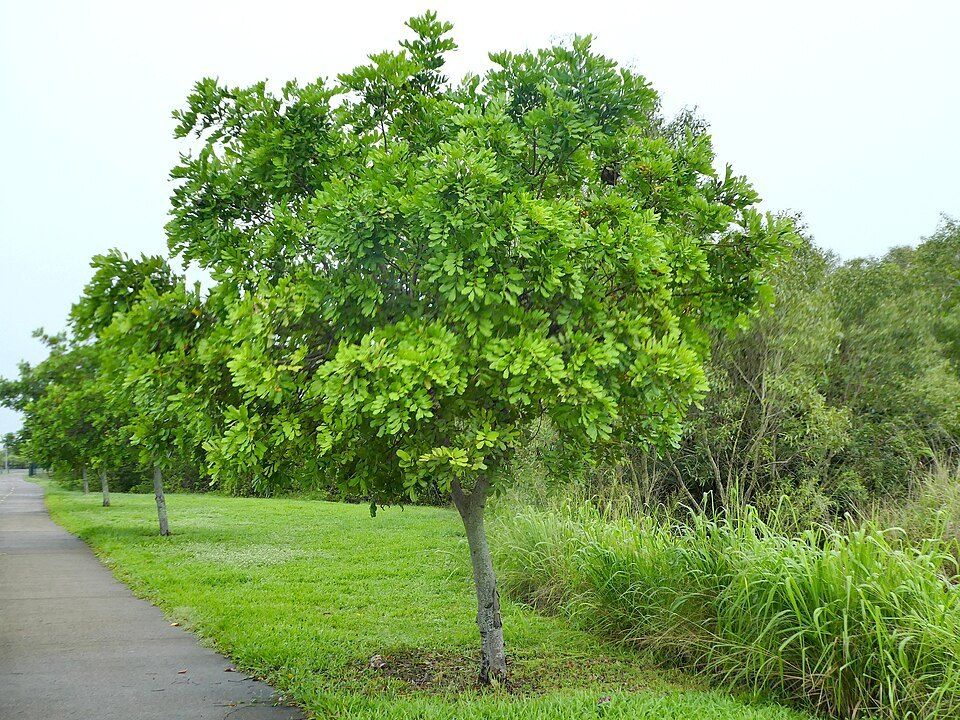
Tuckeroo at a glance
- Height
- 8 to 12 m
- Leaves
- Evergreen
- Flowers
- Small and easy to miss
- Roots
- Gentle
- Origin
- Coastal scrubs and monsoon forests from the Kimberley across northern Australia and down the east coast to central NSW
- Power lines
- Not on the council's list for under power lines
- Family
- Sapindaceae
How to identify a tuckeroo
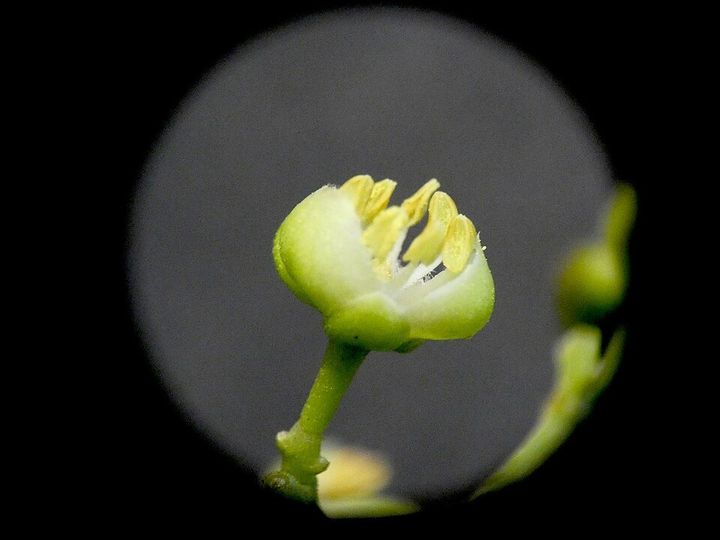
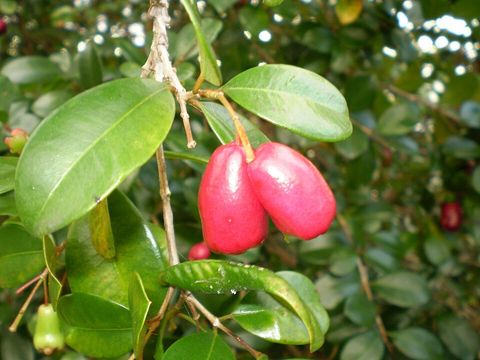
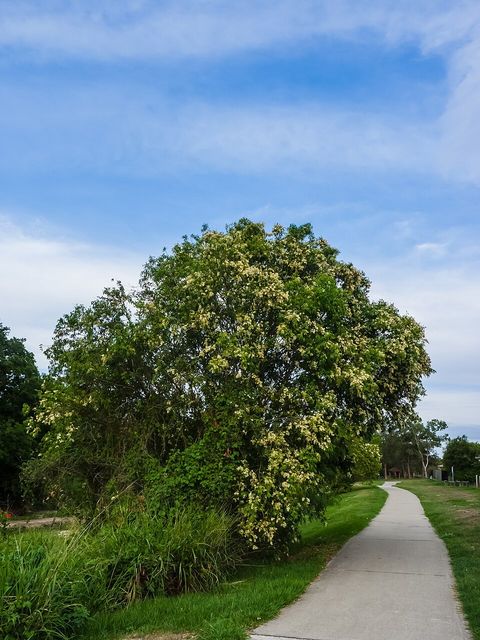
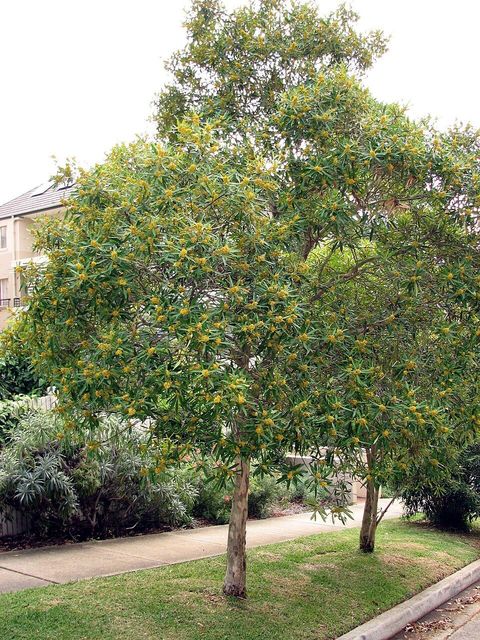
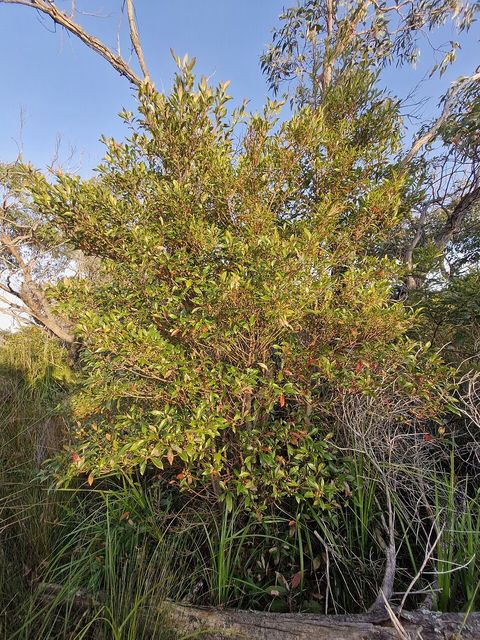
Tuckeroo has a dense, rounded, evergreen crown on a fairly short trunk with grey bark marked by raised horizontal lines. Each leaf carries 4 to 11 leathery, glossy leaflets, oblong in shape with a blunt or slightly notched tip, and the veins show on both sides. The tiny creamy green flowers are easy to miss. The fruit is what stands out: three-lobed capsules that turn bright orange, then split open to show black seeds in a red coat. Brisbane City Council also plants a separate species, the small-leaved tuckeroo (Cupaniopsis parvifolia).
Growing a tuckeroo in Brisbane
Tuckeroo is a local tree that handles Brisbane conditions well. Brisbane City Council uses it as a street tree in coastal, plains and higher land areas and on arterial road medians, giving it a height of 8 to 12 metres with a medium crown, on verges at least 2.5 metres wide and away from power lines. It grows in full sun or part shade and adapts to most soils, but it dislikes waterlogged roots. It also tolerates strong, salt-laden wind, which suits bayside suburbs.
Pruning and care
Tuckeroo needs little attention. Prune lightly to shape young trees and to lift the canopy over paths or driveways, and remove dead or crossing branches as needed; regular light trimming keeps the crown dense and rounded. Mulch and water young trees until they are established, which takes about three months. Avoid spots where water sits around the roots. Bigger crown work on a mature tree is a job for a qualified arborist.
How tall does a tuckeroo grow?
Are tuckeroo roots invasive?
Is tuckeroo good for coastal gardens?
Is tuckeroo native to Brisbane?


Sources and credits
- Street tree species (open data) Brisbane City Council
- Cupaniopsis anacardioides, New South Wales Flora Online PlantNET, Royal Botanic Gardens and Domain Trust
- Cupaniopsis anacardioides (Australian Tropical Rainforest Plants) CSIRO
- Trees of West Torrens: Tuckeroo (tree fact sheet, March 2019) City of West Torrens
- Cupaniopsis anacardioides (food plant page) Butterfly House (Christine Ashe and Don Herbison-Evans)
- Ipswich green thumbs urged to beware of thirsty tree roots (quoting Urban Utilities) Ipswich First (Ipswich City Council)
Photo: Steve Fitzgerald, CC BY-SA 4.0, via Wikimedia Commons.
Second photo: Steve Fitzgerald, CC BY-SA 4.0, via Wikimedia Commons.
Checked October 2026. Weed listings and council rules change: check the council's and the Queensland Government's pages before you act.
Get a free quote. We'll beat most written quotes.
Tell us about the job and the site. You don't need to be home for the quote. Available 7 days.
- 4.9 on Google (38 reviews)
- Family owned & operating since 1993
- Fully insured
- We'll beat most written quotes