
Lemon myrtle tree
Backhousia citriodora · also called Lemon-scented myrtle, Lemon ironwood
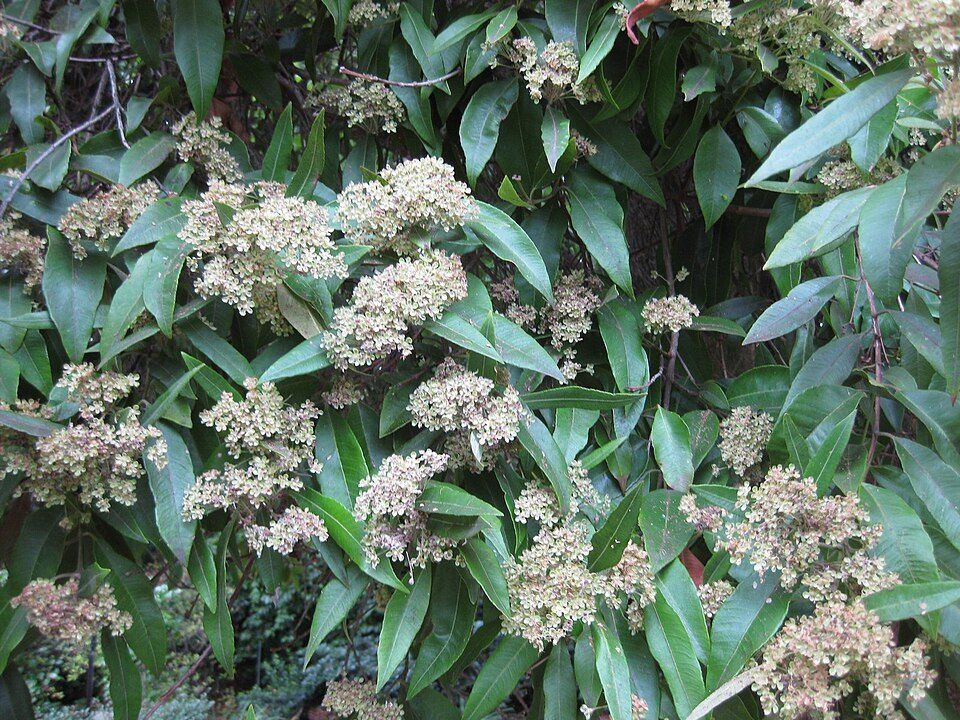
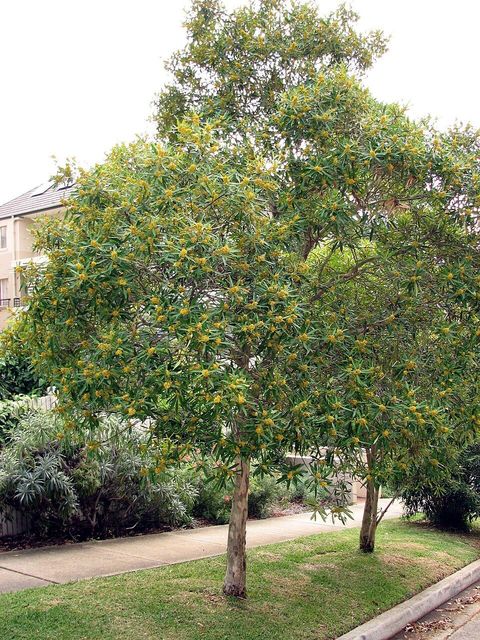
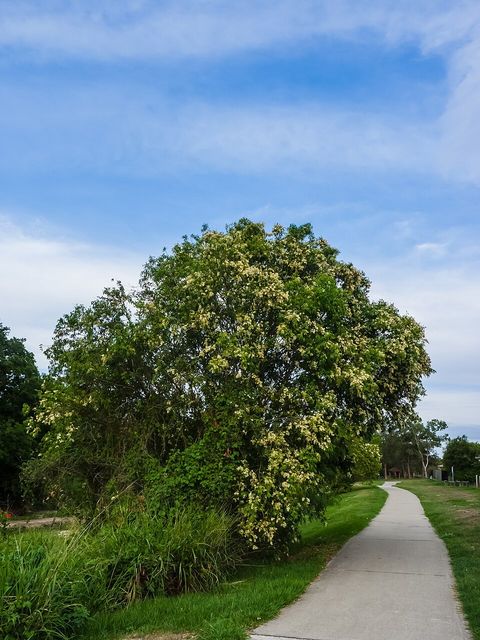
The lemon myrtle tree is a small Queensland rainforest tree grown for its dark green leaves, which give off a strong lemon scent when crushed and are used to flavour food and drinks. Clusters of creamy-white flowers appear in summer. It is a good fit for Brisbane gardens: it has a small crown, less invasive roots than many trees, and Brisbane City Council lists it as a street tree.
- Native to South East Queensland
- 5 to 10 m tall
- Flowers December to May
Lemon myrtle at a glance
- Height
- 5 to 10 m (up to 25 m in the wild)
- Growth
- Slow
- Leaves
- Evergreen
- Flowers
- White, cream, December to May
- Roots
- Gentle
- Origin
- Queensland rainforests from about Mackay south to the Brisbane area
- Power lines
- Not on the council's list for under power lines
- Family
- Myrtaceae
How to identify a lemon myrtle
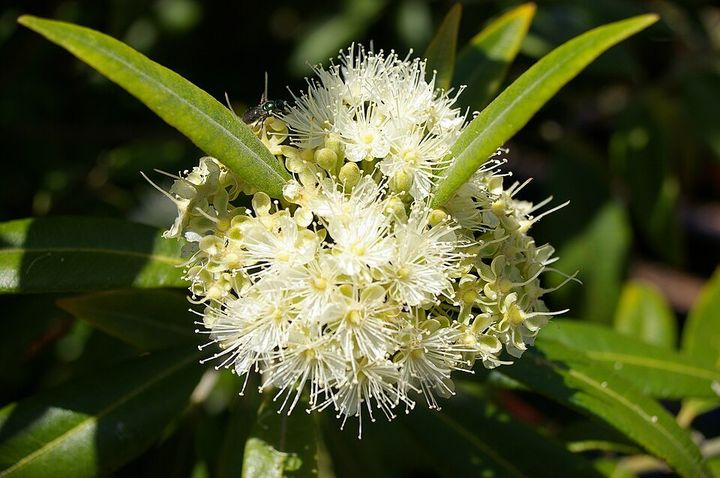
Lemon myrtle is a bushy small tree, often branched to the ground, with dark green leaves 4 to 15 cm long arranged in opposite pairs. The surest test is to crush a leaf: it releases a lemon smell as strong as any citrus. New leaves can be light green, purple or bronze. In summer, clusters of small cream-white flowers with fluffy stamens appear at the branch tips, followed by small, dry brown fruits. Bark on older trunks is rough and can become dark and fissured.
Growing a lemon myrtle in Brisbane
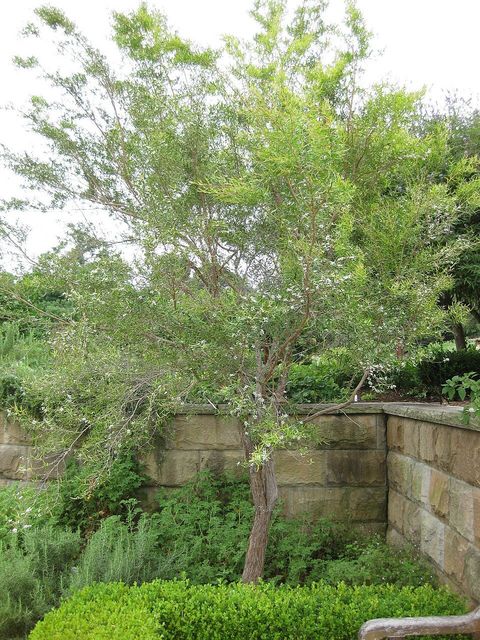
Lemon myrtle grows naturally in Queensland rainforests from about Mackay south to the Brisbane area. Brisbane City Council's street tree list gives it 5 to 10 metres with a small crown, and approves it for verges narrower than 2.5 metres and beside bus stops, but not under power lines. In gardens it often stays nearer 5 metres. It tolerates most soils, including poor clay, but not badly drained ground, and it takes plenty of sun. It suits small gardens and makes a good screen.
What to watch out for
Few problems. Even with its less invasive roots, Urban Utilities' general advice is to plant any tree at least 3 metres from sewer pipes.
Pruning and care
Lemon myrtle can be slow growing, but it responds well to slow-release or native plant fertiliser in spring. Mulch the root zone and water during long dry spells, especially while the tree is young, and protect young plants from frost in colder pockets. Prune after flowering to keep it bushy or to shape it as a screen; light trims also give a steady supply of fresh leaves for the kitchen. Avoid planting it in soil that stays wet.
Are lemon myrtle roots invasive?
How tall does a lemon myrtle tree grow in Brisbane?
Can you cook with lemon myrtle leaves?
When does lemon myrtle flower?


Sources and credits
- Street tree species (open data) Brisbane City Council
- Backhousia citriodora (Australian Tropical Rainforest Plants) CSIRO
- Backhousia citriodora Australian Native Plants Society (Australia)
- Backhousia citriodora Australian Plants Society NSW
- Ipswich green thumbs urged to beware of thirsty tree roots (quoting Urban Utilities) Ipswich First (Ipswich City Council)
- Urban Utilities issues spring tree root warning Beaudesert Bulletin (Urban Utilities media release)
- Backhousia citriodora species page Atlas of Living Australia
Photo: Raffi Kojian, CC BY-SA 3.0, via Wikimedia Commons.
Second photo: John Robert McPherson, CC BY-SA 4.0, via Wikimedia Commons.
Checked October 2026. Weed listings and council rules change: check the council's and the Queensland Government's pages before you act.
Get a free quote. We'll beat most written quotes.
Tell us about the job and the site. You don't need to be home for the quote. Available 7 days.
- 4.9 on Google (38 reviews)
- Family owned & operating since 1993
- Fully insured
- We'll beat most written quotes