
Leopard tree
Libidibia ferrea
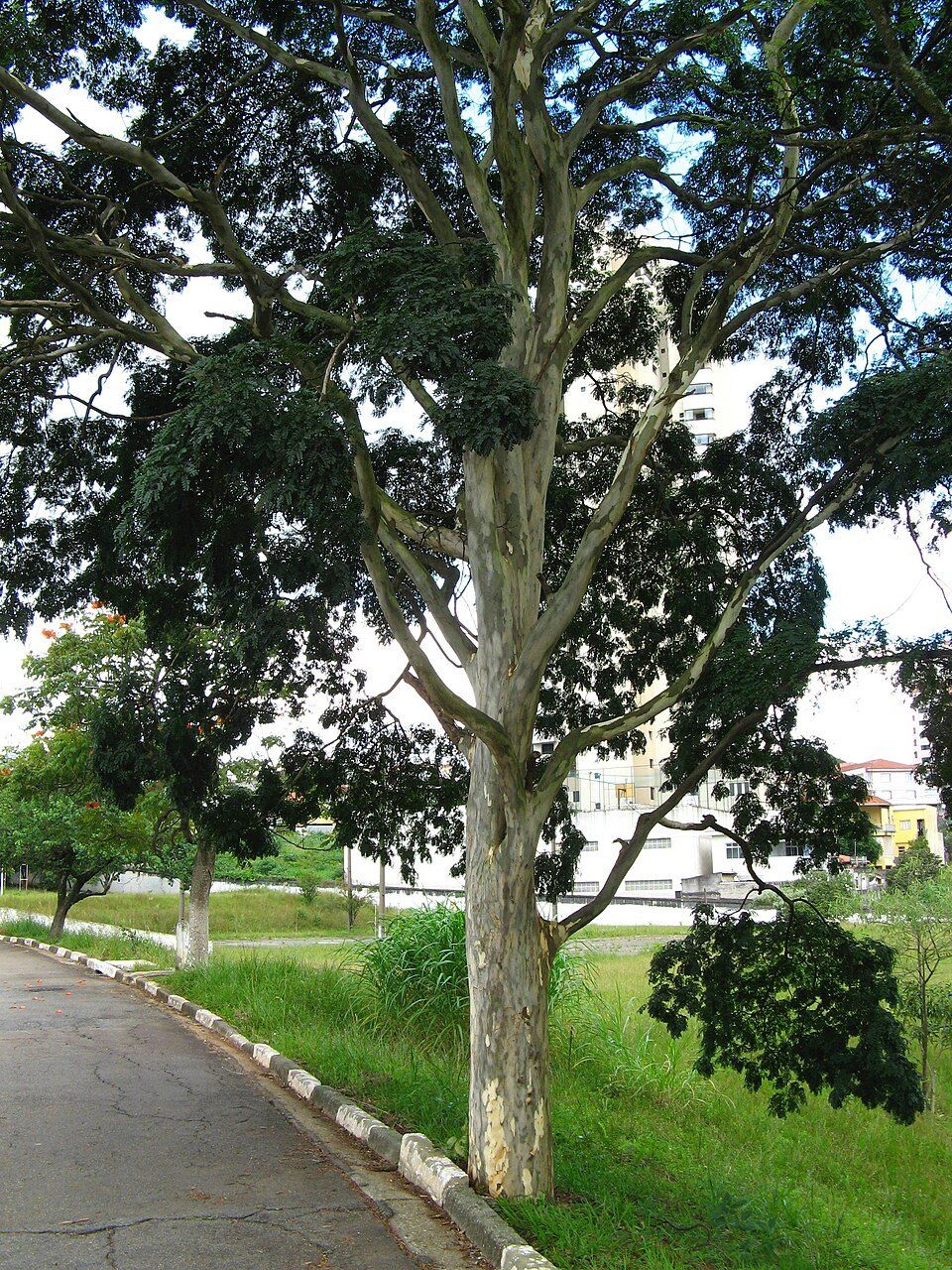
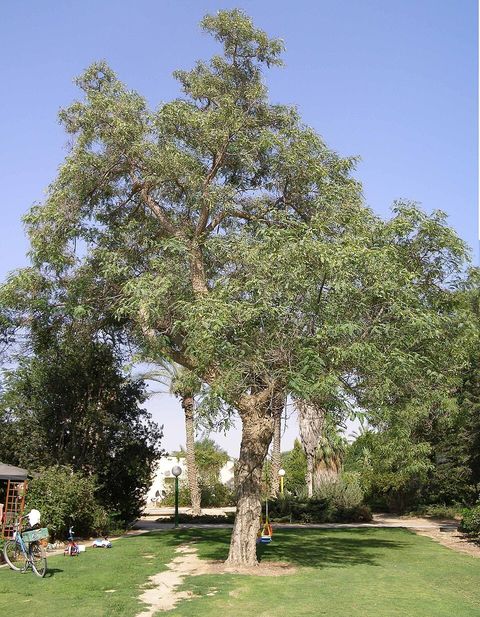
The leopard tree is a Brazilian tree grown for its trunk, which sheds bark in patches to leave a smooth mosaic of cream, grey, green, brown and red. It was once a common Brisbane street tree, but Brisbane City Council no longer plants it, reportedly because of root problems and the masses of hard pods it drops. It suits parks and large grounds better than suburban yards.
- Exotic
- 10 to 12 m tall
- Flowers December to February
Leopard tree at a glance
- Height
- 10 to 12 m
- Leaves
- Semi-deciduous
- Flowers
- Yellow, December to February
- Roots
- Surface roots
- Origin
- Brazil, South America
- Family
- Fabaceae
How to identify a leopard tree
The trunk is the giveaway. Its bark flakes off in patches, leaving a smooth, pale surface splashed with light and dark grey, brown, green and reddish blotches, much like a big cat's coat. The crown is open and spreading, with twice-divided leaves made of many small oval leaflets up to about 2.5 cm long. In summer, branched clusters of bright yellow flowers stand above the leaves. They are followed by hard, shiny, flattened pods about 6 cm long that never split open and pile up under the tree.
Growing a leopard tree in Brisbane
The leopard tree is still a common sight in older Brisbane streets and parks, and it grows well in the local climate. Brisbane City Council stopped planting it as a street tree, reportedly because of root problems and the slippery carpet of pods. It needs full sun and moist, well-drained soil, and once established it copes with dry spells and light frost. Give it a large, open spot well clear of paths, driveways, pools, pipes and the house.
What to watch out for
Plan for roots and pods. Byron Shire Council is replacing leopard trees in Bangalow's main street under a plan to stop tree roots damaging pavement and heritage buildings, and a Brisbane botany site reports Brisbane City Council stopped planting it partly because of its roots. The hard, shiny pods drop in large numbers and make paths slippery. Have an arborist check any tree showing fungus or decay: Byron Shire Council scheduled one leopard tree for urgent removal because a wood fungus infection could make it fall.
- Falling fruit. It drops masses of hard, shiny pods that cover the ground and make paths slippery.
- Size. A Brisbane horticultural guide calls it much too big for most home gardens, and Brisbane trees reach 10 to 12 metres, occasionally 20.
Pruning and care
Shape a young leopard tree early so it grows one strong main trunk, and remove badly placed branches while they are small, cutting just outside the branch collar. Mature trees need little more than removing dead or crossing wood and lifting low branches over paths. Rake up fallen pods often so no one slips. Water young trees through dry spells until established. Big limbs over a roof or road are a job for a professional with the right gear.
Are leopard tree roots invasive?
Why is it called a leopard tree?
How big does a leopard tree grow?
Is the leopard tree native to Australia?

Sources and credits
- Caesalpinia ferrea (leopard tree) Botany Brisbane (J. Frew)
- Caesalpinia (Queensland Gardening Pages) Calyx Horticultural Services
- Caesalpinia ferrea, Leopard Tree (Plant Selector+) Botanic Gardens and State Herbarium of South Australia
- Trees In Bangalow To Be Replaced (Byron Shire Council media release, 4 February 2026) Byron Shire Council, via Mirage News
- Libidibia ferrea species page Atlas of Living Australia
Photo: Mauroguanandi, Public domain, via Wikimedia Commons.
This profile updates sheet 14 of the plant profile booklet made for Colourful Tree Lopping in 2013. We checked every fact against current sources and rewrote it for the guide.
Checked October 2026. Weed listings and council rules change: check the council's and the Queensland Government's pages before you act.
Get a free quote. We'll beat most written quotes.
Tell us about the job and the site. You don't need to be home for the quote. Available 7 days.
- 4.9 on Google (38 reviews)
- Family owned & operating since 1993
- Fully insured
- We'll beat most written quotes