
Plunkett mallee
Eucalyptus curtisii
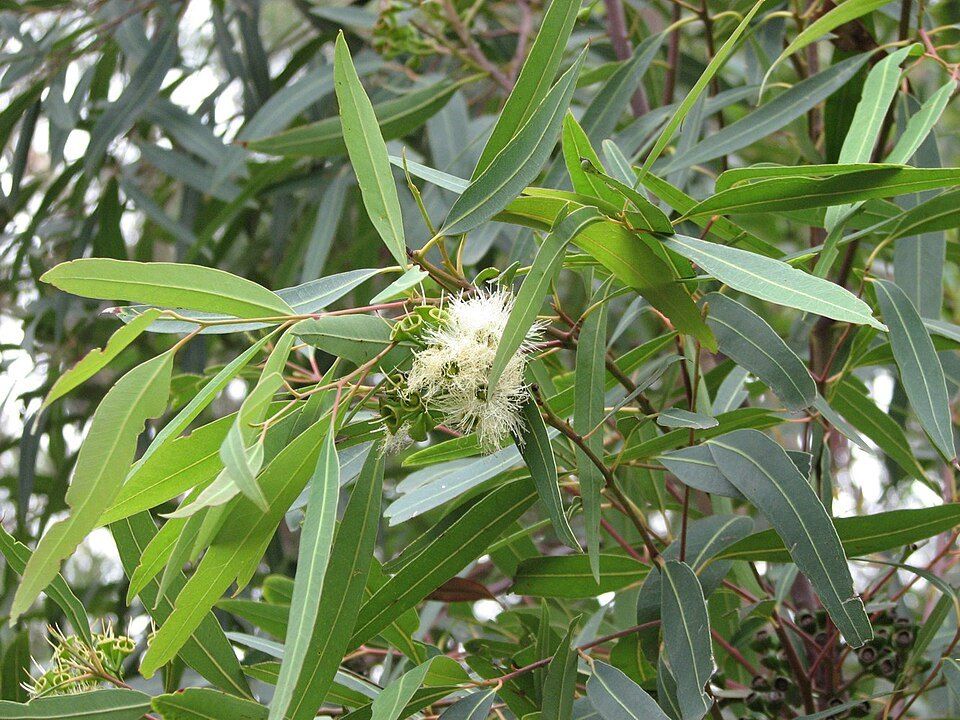
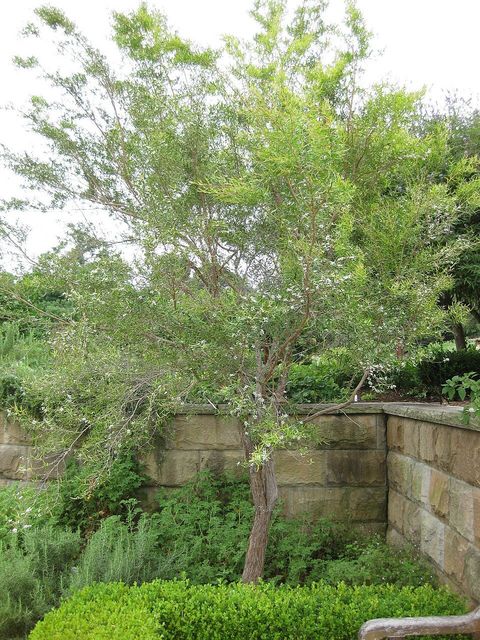
Plunkett mallee is a small, slender eucalypt found naturally only in south-eastern Queensland. It takes its common name from Plunkett, south of Beenleigh, where it was first collected in 1929. It forms a mallee with several slim stems, or a small single-trunked tree, up to about 7 metres tall, with smooth silvery bark, glossy two-toned leaves and white flowers from spring into early summer, so it fits a suburban garden.
- Native to South East Queensland
- 5 to 7 m tall
- Flowers September to December
Plunkett mallee at a glance
- Height
- 5 to 7 m
- Leaves
- Evergreen
- Flowers
- White, September to December
- Origin
- Endemic to south-eastern Queensland, from Plunkett near Beenleigh west to Inglewood and Dalby
- Family
- Myrtaceae
How to identify a Plunkett mallee
Plunkett mallee usually grows as a clump of slender stems rising from a woody base, or as a small single-trunked tree. The smooth bark is silvery grey and peels away in small brown curls. Adult leaves are lance-shaped, 6 to 14 cm long, glossy and noticeably darker on top than underneath. Unlike other eucalypts in its range, it carries its flowers in clusters of seven at the tips of the branchlets rather than in the leaf angles, and its gumnuts open by losing a small cap instead of splitting into valves. Those end-of-branch clusters and the two-toned leaves are the features to check.
Growing a Plunkett mallee in Brisbane
Plunkett mallee is a local native. It occurs as scattered plants from Plunkett, south of Beenleigh, out to Inglewood, Dalby and the Barakula State Forest and north to the Glass House Mountains area, often on poorly drained soils in shrubland or open forest. At 7 metres or less it suits suburban gardens where a full-sized gum would be too big, and its silvery stems and white spring flowers give a bush look without the bulk of a forest tree.
What to watch out for
Plunkett mallee is not on Brisbane City Council's weed list, and at no more than about 7 metres tall it stays much smaller than the forest gums.
Pruning and care
Plunkett mallee needs little routine care. Prune only to remove dead, damaged or crossing stems, cutting at the base of the stem or just outside a branch collar, and thin crowded stems if you prefer a more open shape. Like other mallees it grows from a lignotuber, a woody swelling at ground level that carries dormant buds, so it can reshoot from the base after damage. Avoid heavy shaping, because its natural slender, multi-stemmed form is part of its appeal.
How tall does a Plunkett mallee grow?
Where does the Plunkett mallee grow naturally?
When does Plunkett mallee flower?

Sources and credits
- Eucalyptus curtisii, EUCLID: Eucalypts of Australia Centre for Australian National Biodiversity Research (Lucid Central)
- Eucalyptus curtisii Flora of Australia (ABRS, via Atlas of Living Australia)
- Eucalyptus curtisii (species page and herbarium records) Atlas of Living Australia
- Mango Maintenance (pruning cuts at the branch collar) Gardening Australia (ABC)
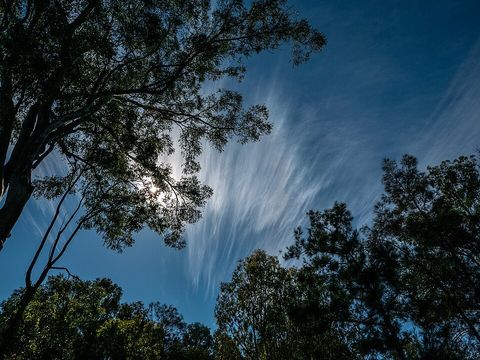
Photo: Melburnian, CC BY 2.5, via Wikimedia Commons.
This profile updates sheet 50 of the plant profile booklet made for Colourful Tree Lopping in 2013. We checked every fact against current sources and rewrote it for the guide.
Checked October 2026. Weed listings and council rules change: check the council's and the Queensland Government's pages before you act.
Get a free quote. We'll beat most written quotes.
Tell us about the job and the site. You don't need to be home for the quote. Available 7 days.
- 4.9 on Google (38 reviews)
- Family owned & operating since 1993
- Fully insured
- We'll beat most written quotes