
Snow-in-summer tree
Melaleuca linariifolia · also called Flax-leaved paperbark
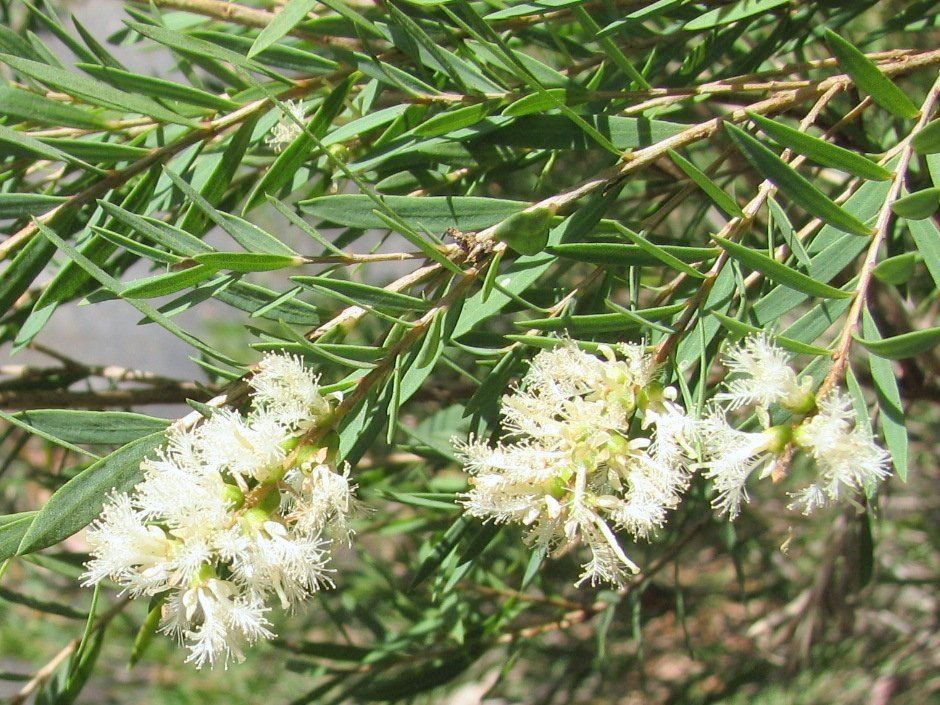
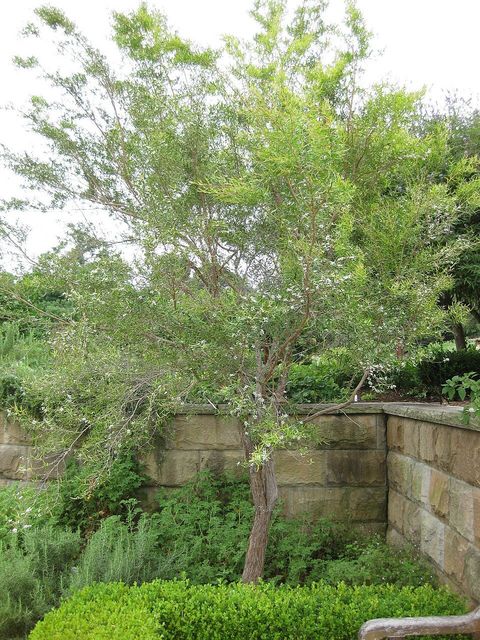
Snow-in-summer is a native paperbark tree that earns its name in late spring and summer, when fluffy white, honey-scented flowers almost hide the foliage. It has papery bark and narrow blue-green leaves, and usually grows about 8 to 10 metres tall. It copes with damp ground and short spells of flooding, which makes it useful for low, wet spots in Brisbane gardens.
- Native to South East Queensland
- 8 to 10 m tall
- Flowers November to February
Snow-in-summer at a glance
- Height
- 8 to 10 m (up to 12 m in the wild)
- Leaves
- Evergreen
- Flowers
- White, cream, November to February
- Roots
- Aggressive
- Origin
- Coastal New South Wales from Eden north into Queensland, including the Brisbane region
- Family
- Myrtaceae
How to identify a snow-in-summer
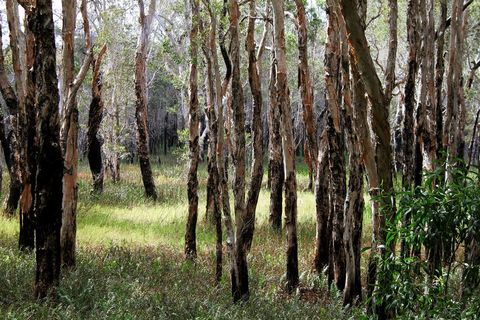
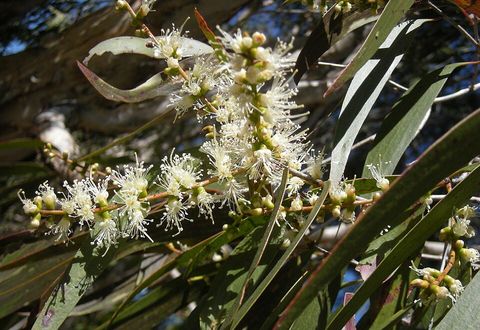
This is a small paperbark with white to cream papery bark that peels away in layers. Its leaves are narrow, pointed and blue-green, 2 to 4.5 cm long, in pairs set at right angles to the pair below. In late spring and summer, fluffy white flower spikes up to 4 cm long cover the crown, giving off a honey-like scent. Each flower has many long stamens grouped into five bundles. Small cylindrical capsules then form in clusters along the old flower spikes.
Growing a snow-in-summer in Brisbane
Snow-in-summer is a local native. It grows naturally from the NSW south coast north into Queensland, and herbarium specimens were collected around Brisbane as early as 1863. In the wild it favours swampy ground near creeks, so it suits damp spots and heavier soils and tolerates short-term flooding. It does not thrive on hot, dry, exposed sites without extra water, and it flowers best in full sun. At 8 to 10 metres it suits a medium or large suburban garden.
What to watch out for
Paperbark roots can find their way into pipes. Urban Utilities advises against planting paperbarks near sewer lines because their roots seek out water, so keep this tree well clear of drains and sewers. Webbing caterpillars can cause heavy leaf loss in some years. Otherwise melaleucas are generally healthy, trouble-free trees.
Pruning and care
Give it full sun and steady moisture: it benefits from extra water in dry spells and handles soil that stays damp. A light trim each year promotes bushy growth, and denser foliage gives a better flowering display. Melaleucas generally respond well to pruning, and a slow-release fertiliser after flowering is recommended. Watch for webbing caterpillars, which bind leaves and droppings into a web and can strip foliage. Large or high pruning work is a job for a qualified arborist.
Why is it called snow-in-summer?
How tall does a snow in summer tree grow?
Is snow-in-summer the same as weeping paperbark?
Does snow-in-summer grow in wet soil?

Sources and credits
- Melaleuca linariifolia, New South Wales Flora Online PlantNET, Royal Botanic Gardens and Domain Trust
- Melaleuca linariifolia Australian Native Plants Society (Australia)
- Melaleuca linariifolia Australian Plants Society NSW
- Melaleuca linariifolia herbarium records in Queensland Atlas of Living Australia
- Ipswich green thumbs urged to beware of thirsty tree roots (quoting Urban Utilities) Ipswich First (Ipswich City Council)
- Melaleuca linariifolia species page Atlas of Living Australia
Photo: Eug, CC BY 3.0, via Wikimedia Commons.
This profile updates sheet 57 of the plant profile booklet made for Colourful Tree Lopping in 2013. We checked every fact against current sources and rewrote it for the guide.
Checked October 2026. Weed listings and council rules change: check the council's and the Queensland Government's pages before you act.
Get a free quote. We'll beat most written quotes.
Tell us about the job and the site. You don't need to be home for the quote. Available 7 days.
- 4.9 on Google (38 reviews)
- Family owned & operating since 1993
- Fully insured
- We'll beat most written quotes