
Red bloodwood
Corymbia gummifera · also called Bloodwood
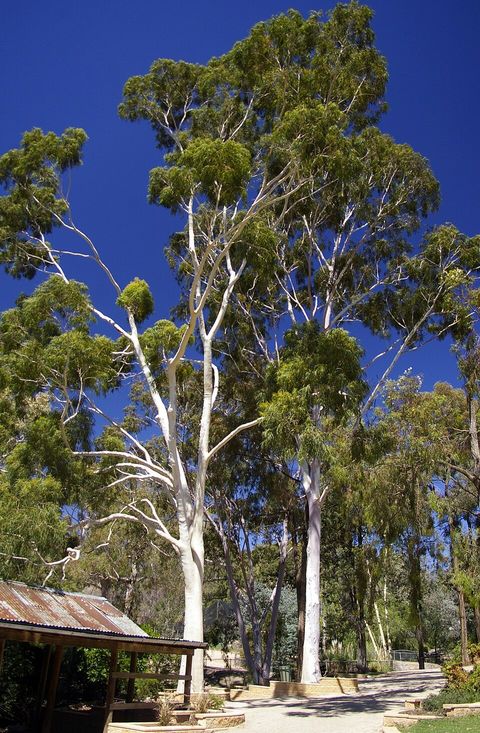
Red bloodwood is a hardy native gum with rough, flaky brown bark, creamy summer flowers and large urn-shaped gumnuts. It grows wild on sandy, low-fertility soils from Victoria into South East Queensland, and bees, insects and grey-headed flying-foxes feed on its flowers. It can reach 30 metres or more, so it suits acreage and large gardens, where it copes with drought and poor soil.
- Native to South East Queensland
- 10 to 30 m tall
- Flowers December to February
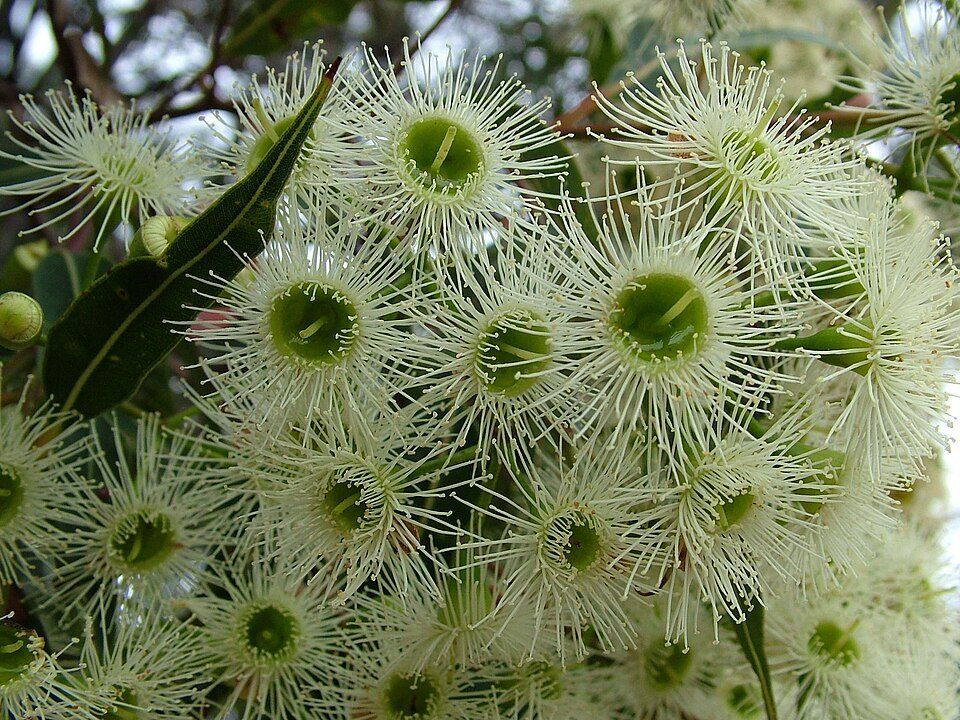
Red bloodwood at a glance
- Height
- 10 to 30 m (up to 35 m in the wild)
- Leaves
- Evergreen
- Flowers
- Cream, white, December to February
- Roots
- Aggressive
- Origin
- Coastal eastern Australia from far eastern Victoria north to about Gympie and Fraser Island (K'gari)
- Family
- Myrtaceae
How to identify a red bloodwood
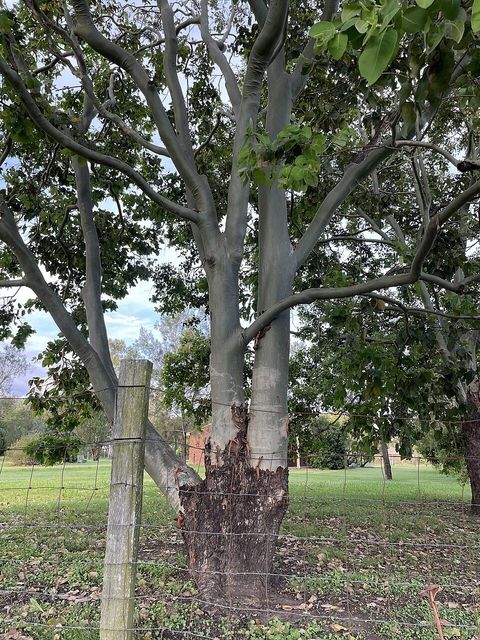
Red bloodwood has rough, flaky bark broken into small squares, brown or grey-brown with reddish patches, that carries right out to the smaller branches. The trunk often oozes a red gum called kino. The leaves are lance-shaped and clearly paler underneath. Creamy-white flowers sit in showy clusters at the ends of the branches in summer, followed by large urn-shaped gumnuts up to about 2 cm long. Pink bloodwood looks similar, but its gumnuts are not flared at the rim, its seeds are winged and it prefers richer soils.
Growing a red bloodwood in Brisbane
Red bloodwood is a local tree of the sandy coastal country in South East Queensland, reaching its northern limit around Gympie and Fraser Island. It is not common in nurseries and is mostly seen as a remnant tree on rural blocks and in residential backyards. It prefers sandy, well-drained soil but will grow in heavier soil, and it copes with drought, poor soils and light frost. Give it full sun and plenty of room: garden trees reach at least 10 metres, and wild trees can reach 30 or more.
What to watch out for
The main issue is size. Red bloodwoods reach 30 to 35 metres in the wild and at least 10 metres in gardens. Unitywater lists large gum trees among those not to plant near water and sewer pipes, so keep this one well away from services and the house.
- Size. It grows to 30 to 35 metres in the wild and at least 10 metres in gardens.
Pruning and care
Plant red bloodwood in a sunny, open spot with good drainage, and water it through its first dry spells. It responds to hard cutting: the Australian Plants Society notes it can be cut back periodically to keep a smaller, multi-stemmed mallee form. On a full-size tree, prune only dead, damaged or crossing branches, cutting just outside the branch collar, and leave large limbs to a qualified arborist. Trees can live for more than a hundred years, so plan the site carefully.
How tall does a red bloodwood grow?
Is red bloodwood native to Brisbane?
What is the difference between red bloodwood and pink bloodwood?
Why is it called a bloodwood?

Sources and credits
- Corymbia gummifera (EUCLID: Eucalypts of Australia) EUCLID, Centre for Australian National Biodiversity Research
- Corymbia gummifera, New South Wales Flora Online PlantNET, Royal Botanic Gardens and Domain Trust
- Corymbia gummifera Australian Plants Society NSW
- Red bloodwood (timber properties) Business Queensland (Queensland Government)
- Think before you plant (smart planting) Unitywater
- Corymbia gummifera herbarium records in Queensland Atlas of Living Australia
- Learn about eucalypts (EUCLID introduction) EUCLID, Centre for Australian National Biodiversity Research
Photo: Mike Bayly, CC BY-SA 2.5, via Wikimedia Commons.
This profile updates sheet 43 of the plant profile booklet made for Colourful Tree Lopping in 2013. We checked every fact against current sources and rewrote it for the guide.
Checked October 2026. Weed listings and council rules change: check the council's and the Queensland Government's pages before you act.
Get a free quote. We'll beat most written quotes.
Tell us about the job and the site. You don't need to be home for the quote. Available 7 days.
- 4.9 on Google (38 reviews)
- Family owned & operating since 1993
- Fully insured
- We'll beat most written quotes