
Red cedar tree
Toona ciliata · also called Australian red cedar, Cedar
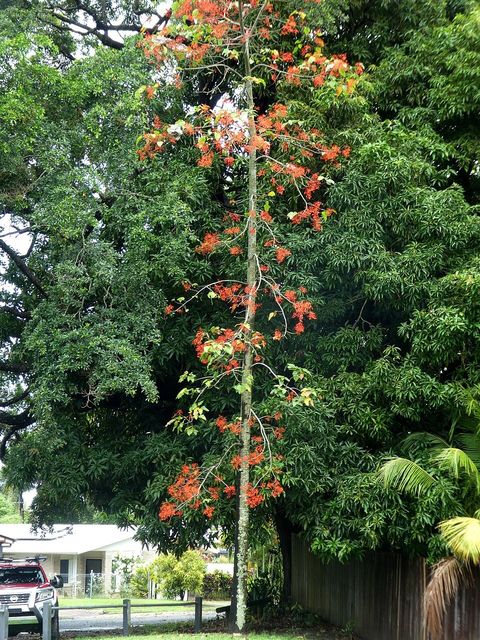
The red cedar tree is a big deciduous rainforest tree native to South East Queensland, famous for the soft, fragrant timber that drew cedar-getters along the east coast soon after European settlement. It stands bare for part of winter, then flushes pink-red new leaves in spring. It grows fast and can reach 40 metres, and a shoot-boring moth makes it hard to grow well.
- Native to South East Queensland
- 30 to 40 m tall
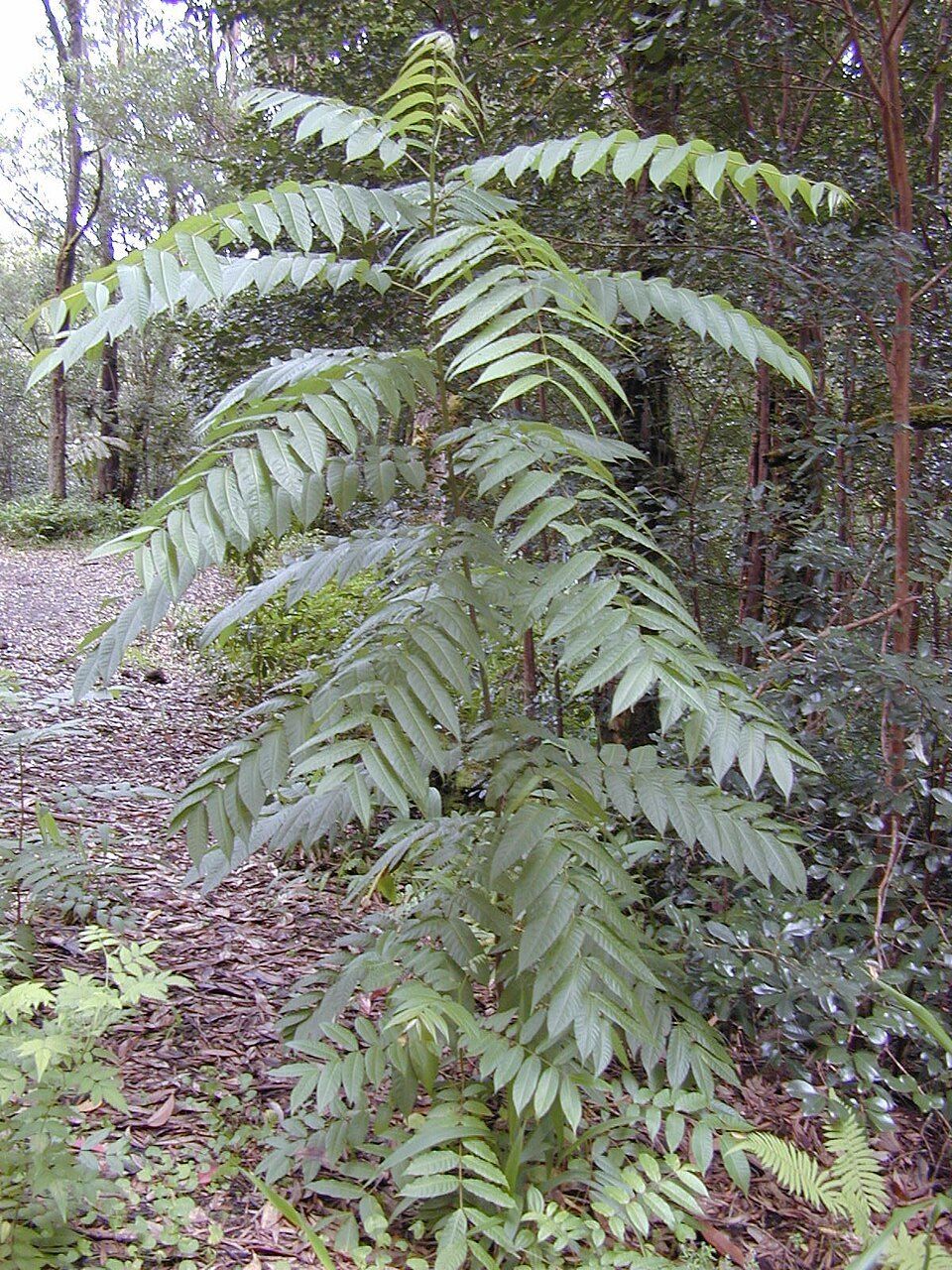
Red cedar at a glance
- Height
- 30 to 40 m (up to 60 m in the wild)
- Growth
- Fast
- Leaves
- Deciduous
- Flowers
- Small and easy to miss
- Origin
- Coastal rainforests from Cape York to Ulladulla in NSW, and from Pakistan to New Guinea
- Family
- Meliaceae
How to identify a red cedar
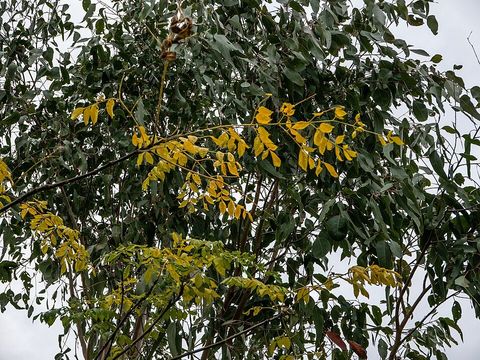
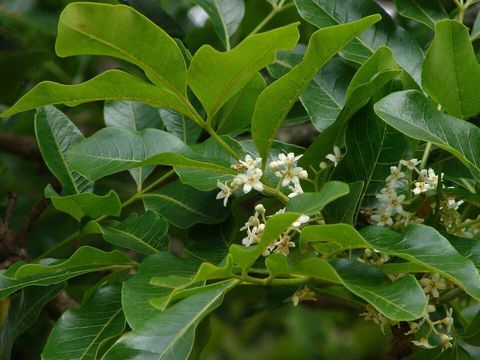
Red cedar is a deciduous rainforest tree that stands bare for part of winter, then puts out new leaves that are pink to red before they turn green. The leaves are large and compound, 15 to 50 cm long, with 8 to 20 pointed, lopsided leaflets, and a freshly broken twig gives off a faint incense or cigar-box smell. The bark is brown to grey and scaly, and old trees develop a buttressed base. Small white flowers in long sprays appear in spring, followed by oval capsules that release winged seeds. Its bare winter outline and red spring flush are the easiest clues.
Growing a red cedar in Brisbane
Red cedar grows naturally in rainforest in South East Queensland and once grew in abundance on the rich alluvial flats beside the region's larger rivers. It reaches its best on deep, fertile soils such as basalt and river alluvium, and it needs room to spread, so it suits acreage, large parks and creek banks rather than a suburban yard. Being deciduous, it lets winter sun through. Its main pest is a shoot-boring moth whose attacks make red cedar difficult to grow in plantations.
What to watch out for
Red cedar is not on Brisbane City Council's weed list, but it is a big tree: up to 40 metres in forest, with a buttressed trunk that can reach 3 metres across, so it is a poor fit for small blocks. Being deciduous, it drops its leaves in winter, so expect a seasonal clean-up. The cedar shoot borer is the species' main pest.
- Size. A forest tree that can reach 40 metres with a buttressed trunk up to 3 metres across, far too big for most suburban blocks.
Pruning and care
Give red cedar a spot with room to become a large tree. Pruning is mostly limited to removing dead, damaged or poorly placed branches, cut just outside the branch collar, and the branch structure is easiest to see in winter while the tree is bare. Watch young trees for damage to the growing tips from the cedar shoot borer, the species' main pest. Large trees with limbs over buildings or driveways are a job for an arborist with the right gear.
Is red cedar native to Brisbane?
Is red cedar deciduous?
How tall does a red cedar tree grow?
Why is red cedar hard to grow?

Sources and credits
- Toona ciliata Flora of Australia (ABRS, via Atlas of Living Australia)
- Toona ciliata, New South Wales Flora Online PlantNET, Royal Botanic Gardens Sydney
- Toona ciliata, Australian Tropical Rainforest Plants CSIRO (Lucid Central)
- Toona ciliata (species page and herbarium records) Atlas of Living Australia
- Mango Maintenance (pruning cuts at the branch collar) Gardening Australia (ABC)
Photo: Forest & Kim Starr, CC BY 3.0, via Wikimedia Commons.
This profile updates sheet 28 of the plant profile booklet made for Colourful Tree Lopping in 2013. We checked every fact against current sources and rewrote it for the guide.
Checked October 2026. Weed listings and council rules change: check the council's and the Queensland Government's pages before you act.
Get a free quote. We'll beat most written quotes.
Tell us about the job and the site. You don't need to be home for the quote. Available 7 days.
- 4.9 on Google (38 reviews)
- Family owned & operating since 1993
- Fully insured
- We'll beat most written quotes