
White cedar tree
Melia azedarach · also called Cape lilac, Bead tree, Chinaberry
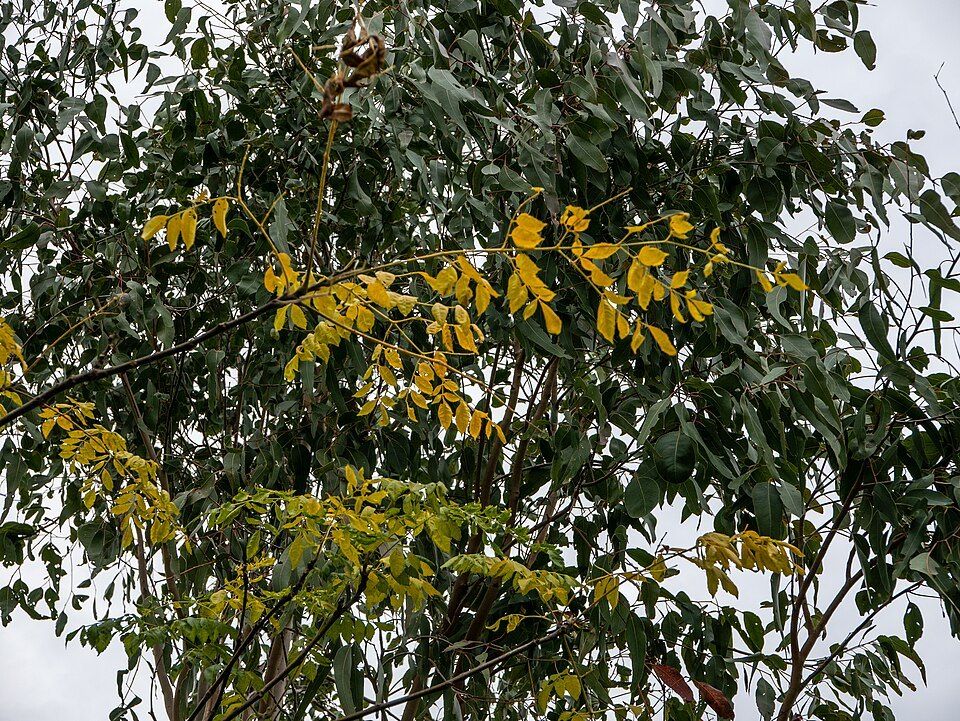
The white cedar tree is a Queensland native and one of the few Australian trees that loses its leaves in winter. That makes it a useful shade tree: cool in summer and sunny in winter, with scented lilac flowers in spring and yellow berries that hang on after the leaves fall. The berries are poisonous if eaten, and hairy caterpillars can strip it bare, so choose its spot with care.
- Native to South East Queensland
- 10 to 12 m tall
- Flowers September to November
White cedar at a glance
- Height
- 10 to 12 m (up to 35 m in the wild)
- Leaves
- Deciduous
- Flowers
- Purple, white, September to November
- Roots
- Aggressive
- Origin
- Northern and eastern Australia from the Kimberley to the NSW south coast, plus Asia and the Pacific
- Family
- Meliaceae
How to identify a white cedar
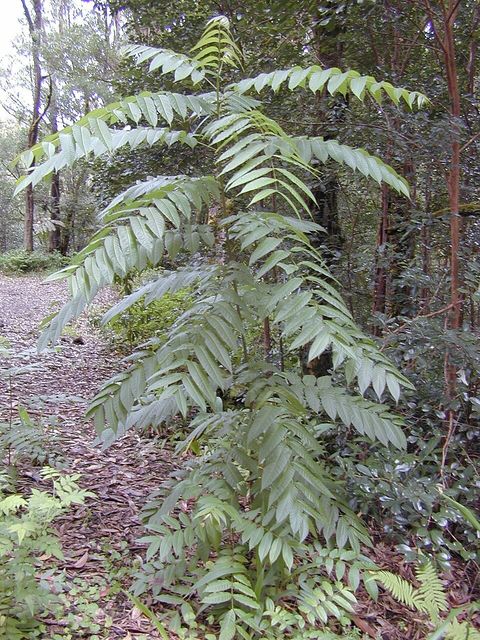
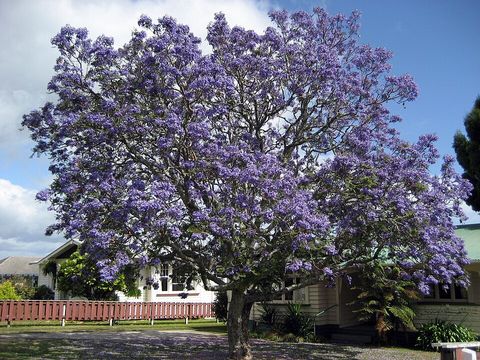
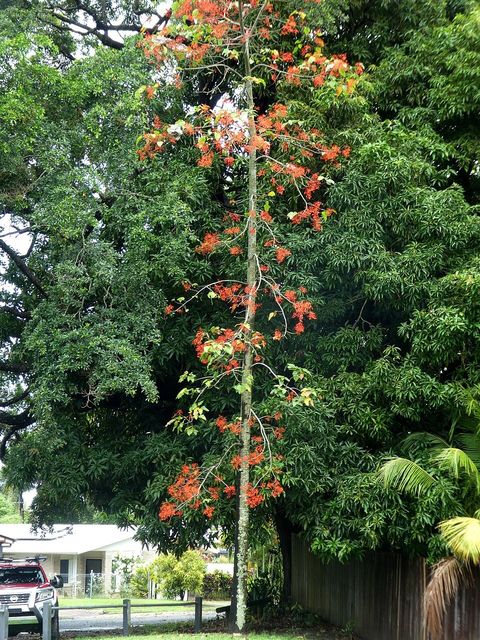
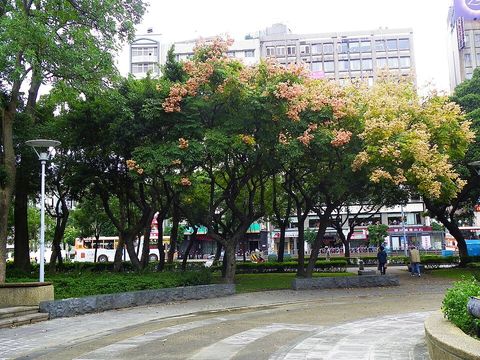
White cedar has a rounded, spreading crown of large, twice-divided leaves up to about 45 cm long, made of many pointed and often toothed leaflets. The bark is grey-brown with narrow furrows that give it a striped look. In spring, loose sprays of small, starry, lilac and white flowers with a purple tube in the centre open with the new leaves. Round to oval berries about 1.5 cm long follow, ripening yellow to orange and staying on the bare branches through winter, which makes the tree easy to pick out in June and July.
Growing a white cedar in Brisbane
White cedar grows naturally in South East Queensland, mostly on the edges of drier rainforest and in regrowth. It is tough once established, coping with low rainfall, most soil types and moderate frost. The tree is bare for part of winter, usually somewhere between June and August, which lets the sun through to the house. Garden trees commonly reach 10 to 12 metres. Plant it away from sewer lines, paving and play areas, as its roots and fallen fruit both cause problems.
What to watch out for
The seeds, fruit and leaves are poisonous if eaten, so keep small children and pets away from fallen berries. Hairy white cedar moth caterpillars can strip a tree and then wander into homes, and their bristles can cause an itchy rash. Hunter Water rates white cedar a very high risk to sewer pipes. Dried fruit turns hard and slippery on paving, and the brittle wood can snap.
- Poisonous parts. The seeds, fruit and leaves are poisonous if eaten by people, pets or livestock, although fruit-eating birds are not affected.
- Irritant sap or hairs. Hairy white cedar moth caterpillars can strip the tree and wander into houses, and their bristles give some people an itchy rash.
- Falling fruit. Dried fruit turns very hard, so it rolls underfoot on paving and can shoot out from under a mower.
- Brittle branches. The wood is brittle, and poorly propagated or planted trees can snap off at ground level.
- Seedlings. Heavy-fruiting trees drop plenty of seed that sprouts readily.
Pruning and care
White cedar needs little pruning. Shape young trees early so they form one sturdy trunk, and remove dead or damaged branches while the tree is bare and its framework is easy to see. Cut carefully, as the wood is brittle and can shatter. The caterpillars climb the trunk at dusk to feed, so that is the time to check for them; trees usually recover, since they lose their leaves each year anyway. Big limbs are a job for a qualified arborist.
Is white cedar poisonous?
Is the white cedar tree native to Brisbane?
What are the hairy caterpillars on my white cedar?
Are white cedar roots invasive?

Sources and credits
- Melia azedarach, New South Wales Flora Online PlantNET, Royal Botanic Gardens and Domain Trust
- Melia azedarach (plant profile) Australian Native Plants Society (Australia)
- Melia azedarach (Australian Tropical Rainforest Plants) CSIRO
- White cedar is a rare bird: a winter deciduous Australian tree (Gregory Moore, University of Melbourne) The Conversation
- Planting near sewer pipes Hunter Water
- Leptocneria reducta, White Cedar Moth Butterfly House (Don Herbison-Evans, Stella Crossley and Mark Peaty)
Photo: John Robert McPherson, CC BY-SA 4.0, via Wikimedia Commons.
This profile updates sheet 27 of the plant profile booklet made for Colourful Tree Lopping in 2013. We checked every fact against current sources and rewrote it for the guide.
Checked October 2026. Weed listings and council rules change: check the council's and the Queensland Government's pages before you act.
Get a free quote. We'll beat most written quotes.
Tell us about the job and the site. You don't need to be home for the quote. Available 7 days.
- 4.9 on Google (38 reviews)
- Family owned & operating since 1993
- Fully insured
- We'll beat most written quotes