
Weeping paperbark
Melaleuca leucadendra · also called White paperbark, Cajeput tree, Weeping tea tree
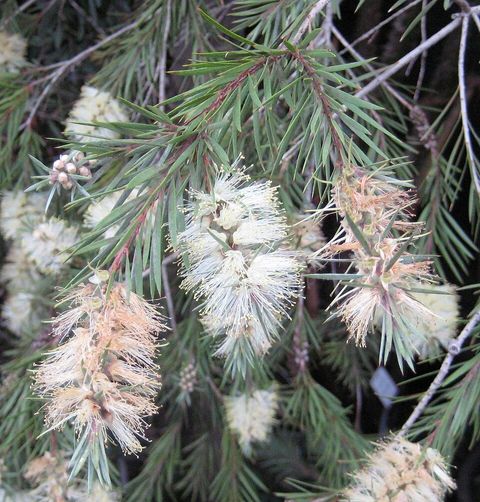
The weeping paperbark is a native tree with thick, creamy-white papery bark, long drooping leaves and strongly scented cream bottlebrush flowers, mostly in winter. It comes from northern Australia but has proved a reliable street tree in Brisbane, usually growing to about 10 metres. Honeyeaters, lorikeets and flying foxes feed on the nectar, but its roots should be kept well away from pipes.
- Australian native
- 10 m tall
- Flowers June to August
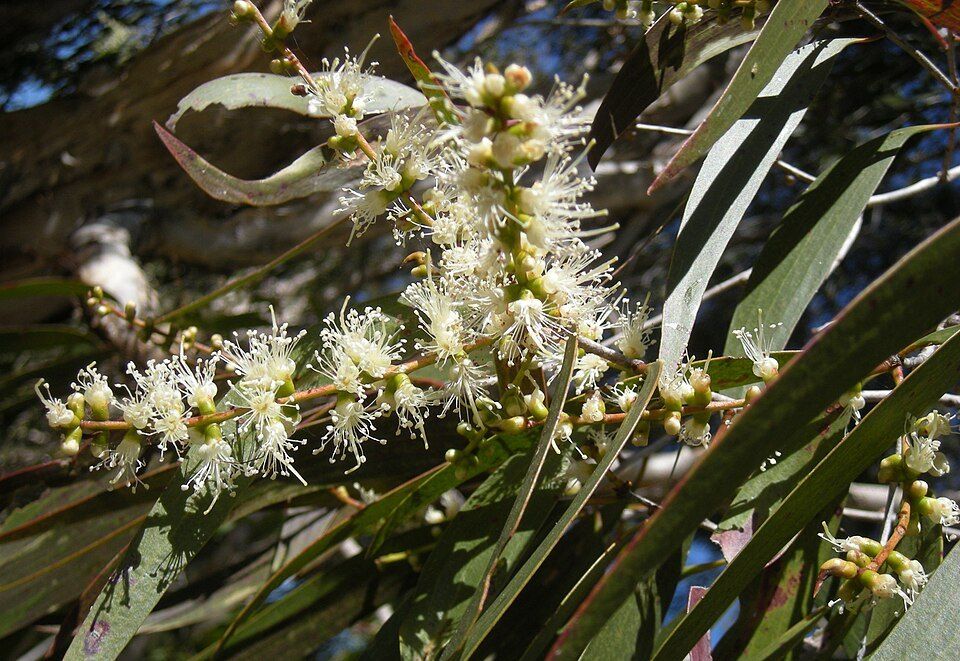
Weeping paperbark at a glance
- Height
- 10 m (up to 30 m in the wild)
- Spread
- 5 to 8 m
- Leaves
- Evergreen
- Flowers
- Cream, white, June to August
- Roots
- Aggressive
- Origin
- Northern Australia from the Kimberley to Cape York and down the Queensland coast to about Bundaberg; also New Guinea and nearby islands
- Family
- Myrtaceae
How to identify a weeping paperbark
Look for thick, spongy, creamy-white bark that peels in papery layers, and long, narrow leaves hanging from drooping branchlets, which give the tree its weeping look. The leaves are about 10 to 20 cm long and 1 to 2 cm wide, with five or more veins running lengthwise. Loose cream bottlebrush spikes appear mostly in winter and have a strong, sweet scent that some compare to biscuits baking. Small woody capsules about 4 to 5 mm across follow. The broad-leaved paperbark is similar, but weeping paperbark has brighter green, more drooping foliage.
Growing a weeping paperbark in Brisbane
Although its natural range is northern Australia, it has proved itself as a street tree in Brisbane, usually reaching about 10 m tall and 5 to 8 m wide. It copes with both very wet and dry conditions, including boggy and salty ground, which makes it useful near ponds, drains and creek banks. Give it full sun. Young trees need some shelter in their first year, and it is not recommended for cold, frosty areas.
What to watch out for
Its roots are the main concern. Unitywater lists weeping paperbark among plants not to grow near water and sewer pipes, and Urban Utilities advises avoiding paperbarks near sewers and planting trees at least 3 m from sewer pipes. It is a big tree that can reach 30 m in the wild, so allow room well away from the house.
Pruning and care
Weeping paperbarks need little pruning. Remove dead, damaged or crossing branches, lift low branchlets that hang over paths or driveways, and train young trees to a single main trunk. Leave the papery bark in place rather than peeling it. Water young trees until they are established, especially through dry spells, and give them some shelter in the first year. Big limbs over a roof are a job for a professional with the right gear.
Are weeping paperbark roots invasive?
How tall does a weeping paperbark grow?
When does weeping paperbark flower?
Is weeping paperbark native to Brisbane?
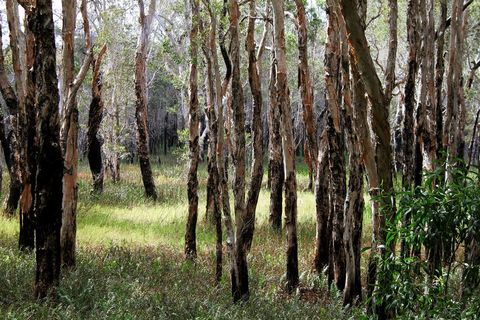
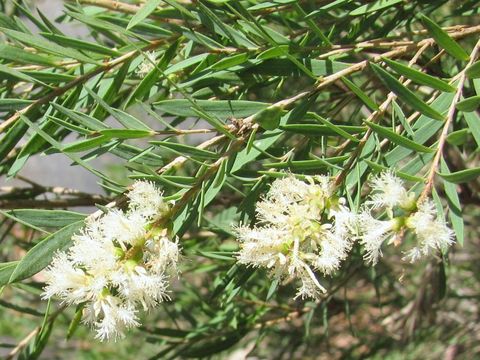
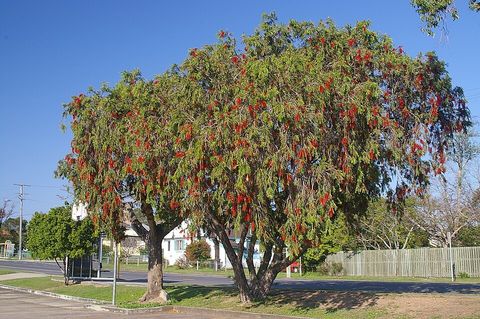

Sources and credits
- Melaleuca leucadendra (Australian Tropical Rainforest Plants) CSIRO
- Weeping paperbark Burke's Backyard
- Weeping paperbark (local plants database) Central QLD Coast Landcare Network
- Weeping Paperbark (plant finder) Smart Approved WaterMark
- Think before you plant Unitywater
- Ipswich green thumbs urged to beware of thirsty tree roots (Urban Utilities tips) Ipswich First (Ipswich City Council)
- Melaleuca leucadendra (species page) Atlas of Living Australia
Photo: Ethel Aardvark, CC BY 3.0, via Wikimedia Commons.
This profile updates sheet 56 of the plant profile booklet made for Colourful Tree Lopping in 2013. We checked every fact against current sources and rewrote it for the guide.
Checked October 2026. Weed listings and council rules change: check the council's and the Queensland Government's pages before you act.
Get a free quote. We'll beat most written quotes.
Tell us about the job and the site. You don't need to be home for the quote. Available 7 days.
- 4.9 on Google (38 reviews)
- Family owned & operating since 1993
- Fully insured
- We'll beat most written quotes