
Weeping bottlebrush tree
Callistemon viminalis · also called Bottlebrush, Red bottlebrush
The weeping bottlebrush is one of the best known Australian bottlebrush trees: a small native tree with drooping branches, narrow leaves and bright red brushes in spring. It grows wild along creeks in Queensland and northern New South Wales, copes with damp ground and draws birds and insects. Compact named forms such as 'Hannah Ray' and 'Captain Cook' suit smaller gardens.
- Native to South East Queensland
- 4 to 8 m tall
- Flowers September to December
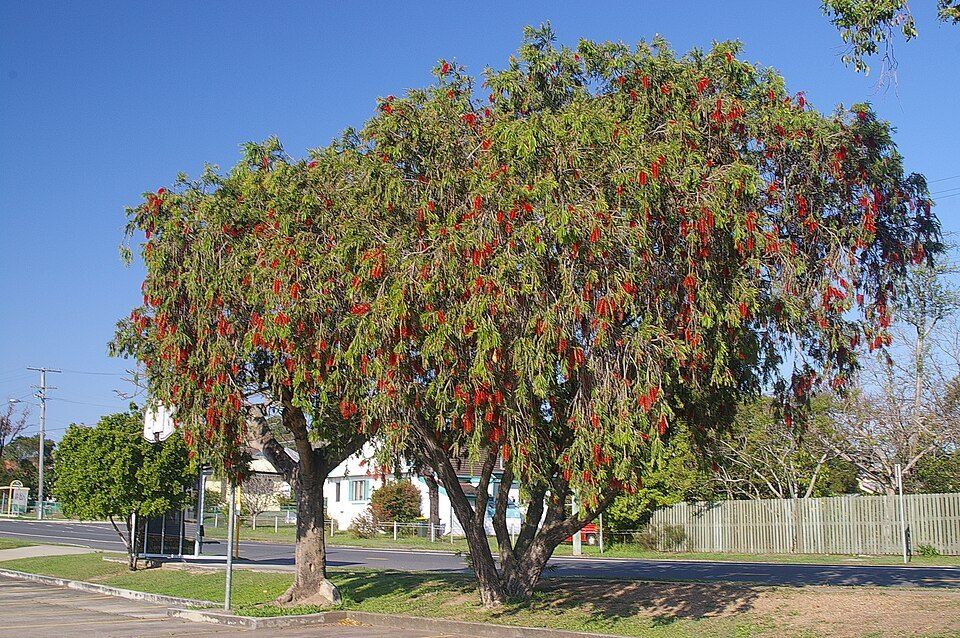
Weeping bottlebrush at a glance
- Height
- 4 to 8 m (up to 10 m in the wild)
- Leaves
- Evergreen
- Flowers
- Red, September to December
- Roots
- Aggressive
- Origin
- Creeks and rivers from the Gloucester area of NSW through much of Queensland, with outliers in the Kimberley
- Family
- Myrtaceae
How to identify a weeping bottlebrush
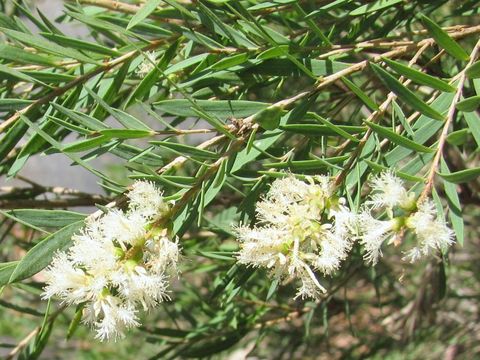
Look for long, drooping branches hung with narrow leaves 3 to 7 cm long and 3 to 7 mm wide, often with one edge straighter than the other. In spring the branch ends carry bright red brushes 4 to 10 cm long, and the red stamens are joined at the base and fall as one unit. Small, cup-shaped woody capsules about 5 to 6 mm across follow along the stems. The bark is dark and furrowed. Willow bottlebrush looks similar but has papery, peeling bark and creamy white to yellow brushes.
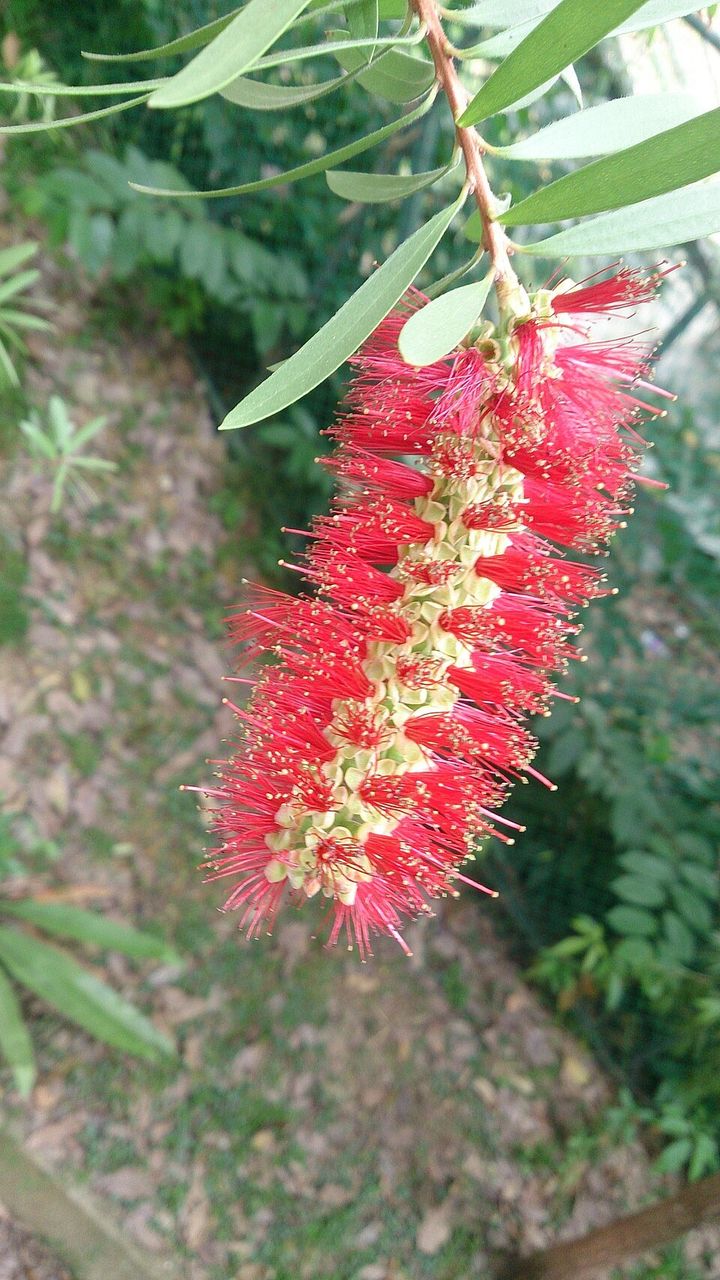
Growing a weeping bottlebrush in Brisbane
This is a local native that grows naturally along creeks and rivers through much of Queensland, including the Brisbane area. In the wild it lives beside watercourses, so it does best with a reliable water supply, but once established it handles long dry spells. It likes medium to heavy soils, tolerates less than perfect drainage and flowers best in full sun. Keep the species well away from sewer lines; the smaller named forms suit courtyards and narrow beds.
What to watch out for
Bottlebrush roots go looking for water. Urban Utilities advises against planting water-seeking bottlebrushes near sewer pipes, and they are known to grow into old, leaking terracotta lines, so plant the full-size species at least 3 metres from pipes. Burke's Backyard notes they pose little risk to a house built on a slab.
Pruning and care
Give it a feed after flowering each year and water through long dry spells while young. Pruning is optional. A light trim of the spent brushes just after flowering keeps it tidy, but heavy pruning can spoil the natural weeping shape of the weeping forms. The named cultivars are propagated from cuttings because seedlings do not come true to type. If a large old tree needs work over a roof or fence, that is a job for an arborist.
Are bottlebrush tree roots invasive?
When does the weeping bottlebrush flower?
How tall does a weeping bottlebrush grow?
Is it Callistemon viminalis or Melaleuca viminalis?
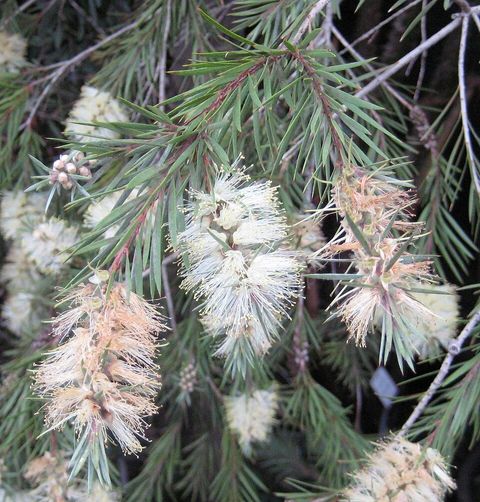
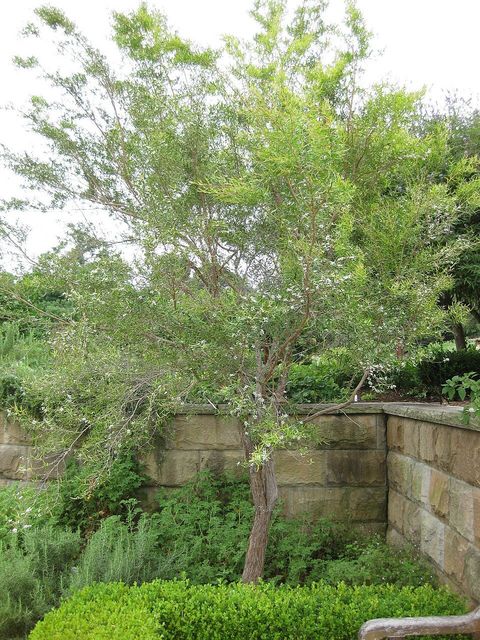


Sources and credits
- Callistemon viminalis: Weeping Bottlebrush Atlas of Living Australia (Australian Plant Census names)
- Callistemon viminalis (New South Wales Flora Online) PlantNET, Royal Botanic Gardens and Domain Trust
- Callistemon viminalis (syn. Melaleuca viminalis) Australian Native Plants Society (Australia)
- Census of the Queensland Flora and Fungi 2025 (open data) Queensland Herbarium, Queensland Government
- Ipswich green thumbs urged to beware of thirsty tree roots (quoting Urban Utilities) Ipswich First, Ipswich City Council
- Do bottlebrush roots beside houses pose structural problems? Burke's Backyard
- Free native plants species (open data) Brisbane City Council
- Callistemon salignus (New South Wales Flora Online) PlantNET, Royal Botanic Gardens and Domain Trust
Photo: John Robert McPherson, CC BY-SA 4.0, via Wikimedia Commons.
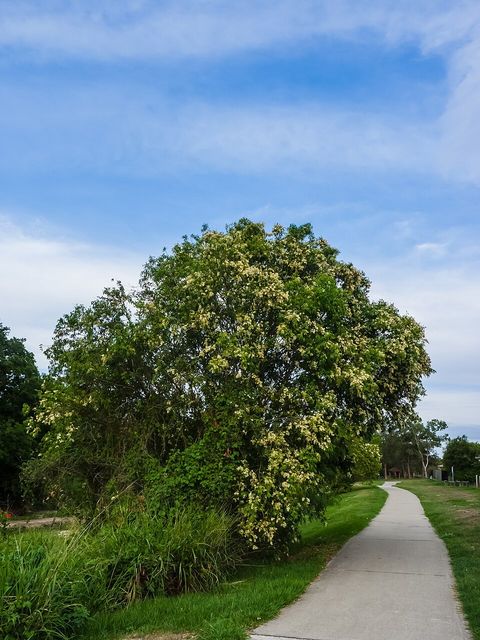
Second photo: Mokkie, CC BY-SA 3.0, via Wikimedia Commons.
This profile updates sheet 41 of the plant profile booklet made for Colourful Tree Lopping in 2013. We checked every fact against current sources and rewrote it for the guide.
Checked October 2026. Weed listings and council rules change: check the council's and the Queensland Government's pages before you act.
Get a free quote. We'll beat most written quotes.
Tell us about the job and the site. You don't need to be home for the quote. Available 7 days.
- 4.9 on Google (38 reviews)
- Family owned & operating since 1993
- Fully insured
- We'll beat most written quotes