
Broad-leaved pepper tree (brazilian pepper tree)
Schinus terebinthifolia · also called Brazilian pepper tree, Broad leaf pepper tree, Broadleaved pepper
The broad-leaved pepper tree, also called the Brazilian pepper tree, is a spreading South American tree, once sold as an ornamental for its glossy leaves and bunches of bright red berries. Birds carry the seed into creeks, wetlands and bushland, where it forms dense thickets, and its sap can irritate skin. It is common across south-east Queensland, and the state lists it as a Category 3 restricted invasive plant.
- Exotic
- Restricted weed in Queensland
- 3 to 7 m tall
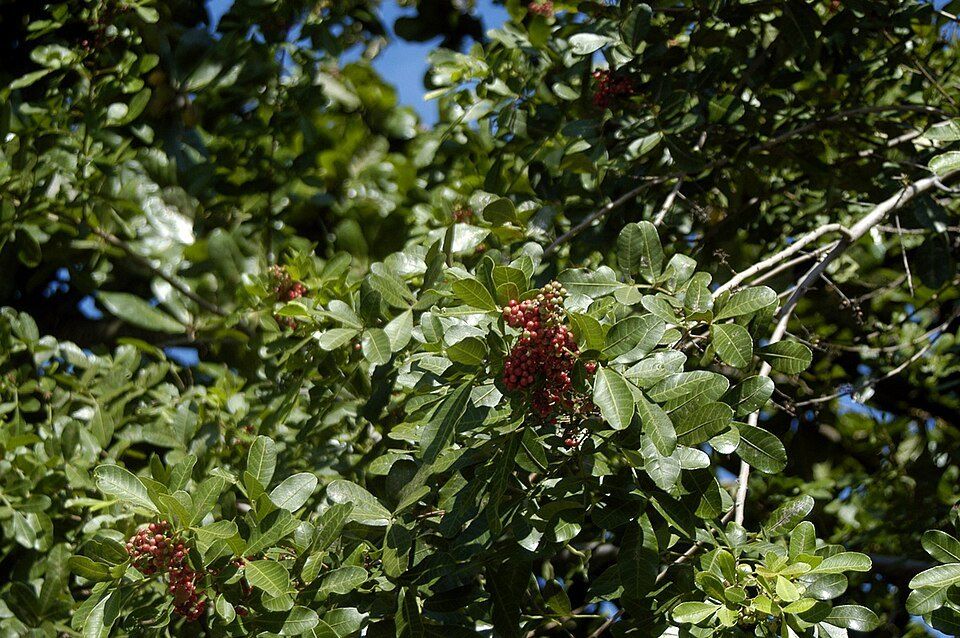
Broad-leaved pepper tree at a glance
- Height
- 3 to 7 m (up to 16 m in the wild)
- Growth
- Fast
- Leaves
- Evergreen
- Flowers
- Small and easy to miss
- Origin
- South America
- Family
- Anacardiaceae
How to identify a broad-leaved pepper tree
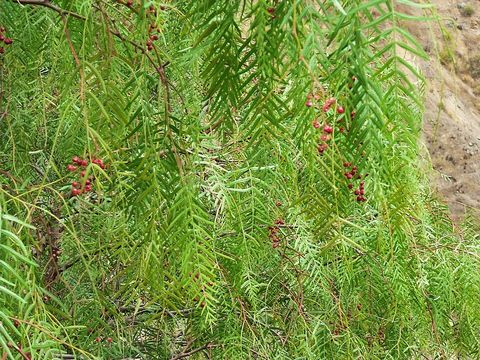
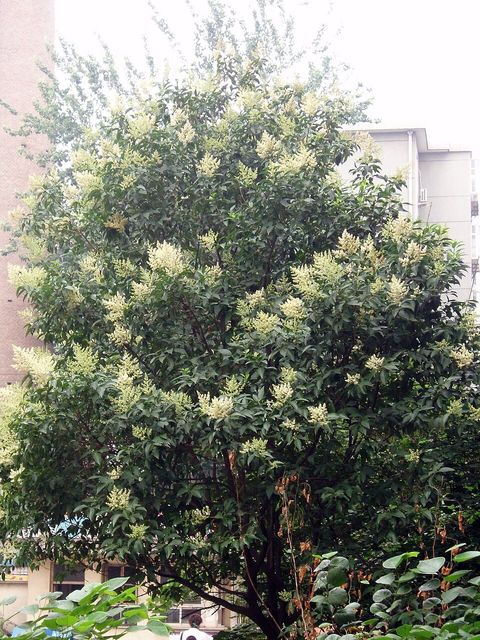
Expect a broad, spreading tree, often with several trunks, usually 3 to 7 metres tall. Each compound leaf has 5 to 9 shiny leaflets that sit almost directly on the leaf stem, with a single leaflet at the tip. They are dark green on top, paler underneath and peppery when crushed. Leaflets on seedlings and suckers often have small teeth. Tiny cream flowers form branched clusters, and male and female flowers grow on separate trees. Female trees carry dense bunches of glossy berries that ripen bright red, mostly in winter. Old bark is dark and deeply ridged. The weeping pepper tree is similar, but its foliage droops and its leaflets are only 2 to 10 mm wide, against 12 to 30 mm here.
Growing a broad-leaved pepper tree in Brisbane
Brisbane suits it far too well. It is most common in south-east Queensland and north-east New South Wales, and turns up along creeks, roadsides, urban bushland and coastal wetlands. It tolerates shade and spreads fastest on waterlogged or poorly drained ground, so low-lying yards near creeks are prime territory. Most new plants start from seed dropped by birds, and most infestations trace back to mature garden trees. Business Queensland also warns it can host mango black spot, and witches' broom diseases of citrus.
What to watch out for
It's a Category 3 restricted invasive plant in Queensland, so you must not give it away, sell it or release it into the environment, and you must manage its impacts on your land. The sap is a skin irritant related to rhus and poison ivy, and some people react just by standing near a flowering tree. The leaves and berries can upset the stomach if eaten. Cut stumps and damaged roots resprout, so removal needs follow-up.
- Irritant sap or hairs. The sap contains urushiols, the same kind of irritant found in rhus trees, and touching it can cause itching, rashes, welts and swelling.
- Allergies. Being near the tree while it flowers can cause allergic reactions, including a swollen face and breathing difficulties, in some people.
- Poisonous parts. The leaves and fruit contain toxins that can cause gastroenteritis if eaten.
- Seedlings. Birds eat the berries and drop the seed in creeks, wetlands and bushland, and felled trees can keep suckering for as long as 18 months.
Pruning and care
The goal here is control rather than shaping. Pull or chip out seedlings early, because plants can start fruiting at about three years old. Business Queensland's advice for bigger trees is to tackle them in winter, mulch the branches, especially if berries are present, and expect suckers to keep appearing for as long as 18 months, so follow-up matters. Wear gloves, long sleeves and eye protection, and keep the sap off your skin. Large, multi-trunked trees and their stumps are a job for a qualified tree service.
Broad-leaved pepper tree: your questions
Short answers, from the sources below.
Is the Brazilian pepper tree a weed in Queensland?
Is broad-leaved pepper tree sap dangerous?
How do I tell a broad-leaved pepper tree from a weeping pepper tree?
When does the broad-leaved pepper tree have red berries?

Sources and credits
- Broadleaved pepper (weed identification tool) Brisbane City Council
- Broad-leaved pepper tree Business Queensland (Queensland Government)
- Broad-leaf pepper tree (Schinus terebinthifolia) NSW WeedWise (NSW Department of Primary Industries)
- Schinus terebinthifolia Atlas of Living Australia
- Brisbane weeds (open data) Brisbane City Council
- Biosecurity Regulation 2016, restricted matter (invasive plants) Queensland Legislation (Office of the Queensland Parliamentary Counsel)
Photo: CostaPPPR, CC BY 3.0, via Wikimedia Commons.
This profile updates sheet 2 of the plant profile booklet made for Colourful Tree Lopping in 2013. We checked every fact against current sources and rewrote it for the guide.
Checked October 2026. Weed listings and council rules change: check the council's and the Queensland Government's pages before you act.
Get a free quote. We'll beat most written quotes.
Tell us about the job and the site. You don't need to be home for the quote. Available 7 days.
- 4.9 on Google (38 reviews)
- Family owned & operating since 1993
- Fully insured
- We'll beat most written quotes