
Frangipani
Plumeria rubra and Plumeria obtusa · also called Plumeria, Singapore frangipani, Temple tree
The frangipani is a small, umbrella-shaped tree from tropical America, grown for its strongly scented, five-petalled flowers in white, yellow, pink and red from late spring into autumn. Most garden frangipanis are deciduous Plumeria rubra forms and hybrids that stand bare through winter, while the Singapore frangipani keeps its leaves. It copes with dry spells and suits small gardens and pots, but it needs sharp drainage and its milky sap is poisonous.
- Exotic
- 5 to 8 m tall
- Flowers November to April
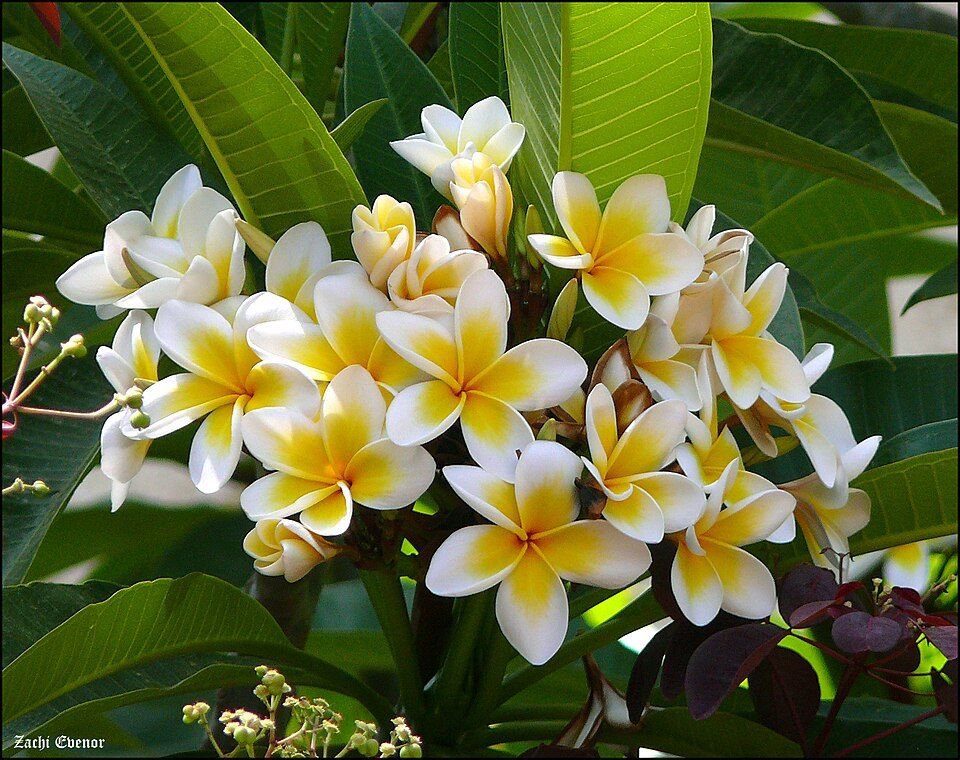
Frangipani at a glance
- Height
- 5 to 8 m
- Leaves
- Deciduous
- Flowers
- White, yellow, pink, red, orange, November to April
- Origin
- Mexico, Central America and Venezuela
- Family
- Apocynaceae
How to identify a frangipani
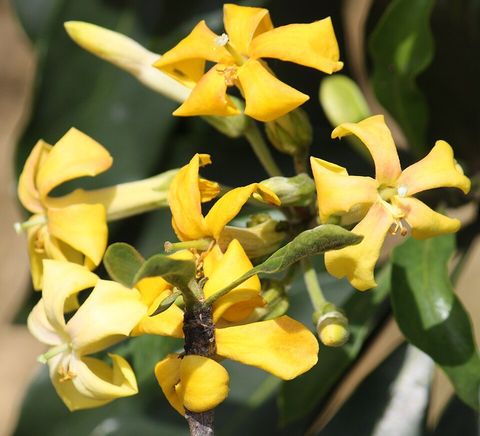
A small, broad tree, usually 5 to 8 metres tall, with an open, umbrella-shaped crown on thick, fleshy branches. The leaves are large, shiny and dark green with a strong midrib, and stems and leaves bleed milky sap when cut. The five-petalled flowers come in white, yellow, pink, red and blends, and their perfume is strongest at night. Deciduous types lose their leaves in the cooler months and stand bare until spring, showing off their sculptural branches. The native frangipani (Hymenosporum flavum) is an unrelated Queensland tree from a different plant family.
Growing a frangipani in Brisbane
Brisbane's warm climate suits frangipanis, and the city has some fine old ones: Gardening Australia has featured a red-flowered tree in Toowong Cemetery and the collection at the Mt Coot-tha botanic gardens. Give them full sun and free-draining soil, ideally sandy. They hate waterlogging, so on heavy clay plant them on a mound or in a raised bed, and note that red-flowered varieties are the fussiest about wet winters. Frangipani rust is well established in Queensland and appears in late summer and autumn. Dwarf types grow well in large pots.
What to watch out for
The milky sap in the stems and leaves is poisonous and can irritate skin, so wear gloves when pruning or taking cuttings. Frangipani rust causes small yellow to orange pustules under the leaves and can make them fall early; it isn't fatal, and binning fallen leaves in winter helps slow its return. Soft, spongy or discoloured stems may have stem rot and should be cut out. Leaf fall from deciduous types can clog pool cleaners and filters. Frangipani isn't on Brisbane City Council's weed list.
- Irritant sap or hairs. Cut stems and leaves bleed a milky sap that Gardening Australia describes as poisonous and a Gold Coast council planting guideline lists as a skin irritant, so wear gloves when pruning.
- Mess. Deciduous frangipanis drop their leaves in the cooler months, and Gardening Australia warns that leaf fall near a pool can clog cleaners and filters.
Pruning and care
The best time to prune is late winter to early spring, when the tree is leafless and its framework is easy to see. Thin crowded branches to open up the centre, which improves airflow and helps reduce rust, and cut cleanly at a branch junction on a slight angle so water runs off. Remove soft, spongy or discoloured stems, which can signal stem rot, and put them in the rubbish rather than the compost. For a more compact tree, Gardening Australia suggests trimming it back by about one-third once summer ends. Keep mulch away from the trunk and don't overwater.
When do frangipanis flower in Brisbane?
When should I prune a frangipani?
Is frangipani sap poisonous?
What causes orange spots under frangipani leaves?

Sources and credits
- Frangipanis (fact sheet) Burke's Backyard
- Frangipanis (Jerry Coleby-Williams) Gardening Australia (ABC)
- Top Tip: Pruning and Shaping Frangipanis (South-east Queensland) Gardening Australia (ABC)
- Frangipani (Costa Georgiadis) Gardening Australia (ABC)
- How to Grow a Frangipani Tree Yates
- Landscape Strategy Information Sheet 1: Guidelines for Undesirable Plants (January 2002) Gold Coast City Council
- Frangipani Rust (fact sheet) Burke's Backyard
- Planting Around Pools Gardening Australia (ABC)
- Plumeria rubra and Plumeria obtusa (WildNet taxon details) Queensland Government
- Hymenosporum flavum, native frangipani (WildNet taxon details) Queensland Government
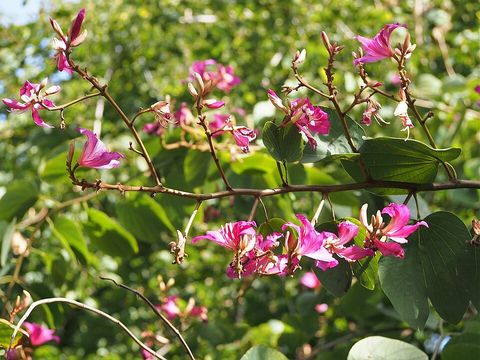
Photo: Zachi Evenor and MathKnight, CC BY 2.0, via Wikimedia Commons.
This profile updates sheet 4 of the plant profile booklet made for Colourful Tree Lopping in 2013. We checked every fact against current sources and rewrote it for the guide.
Checked October 2026. Weed listings and council rules change: check the council's and the Queensland Government's pages before you act.
Get a free quote. We'll beat most written quotes.
Tell us about the job and the site. You don't need to be home for the quote. Available 7 days.
- 4.9 on Google (38 reviews)
- Family owned & operating since 1993
- Fully insured
- We'll beat most written quotes