
Crepe myrtle
Lagerstroemia indica · also called Crape myrtle, Lagerstroemia
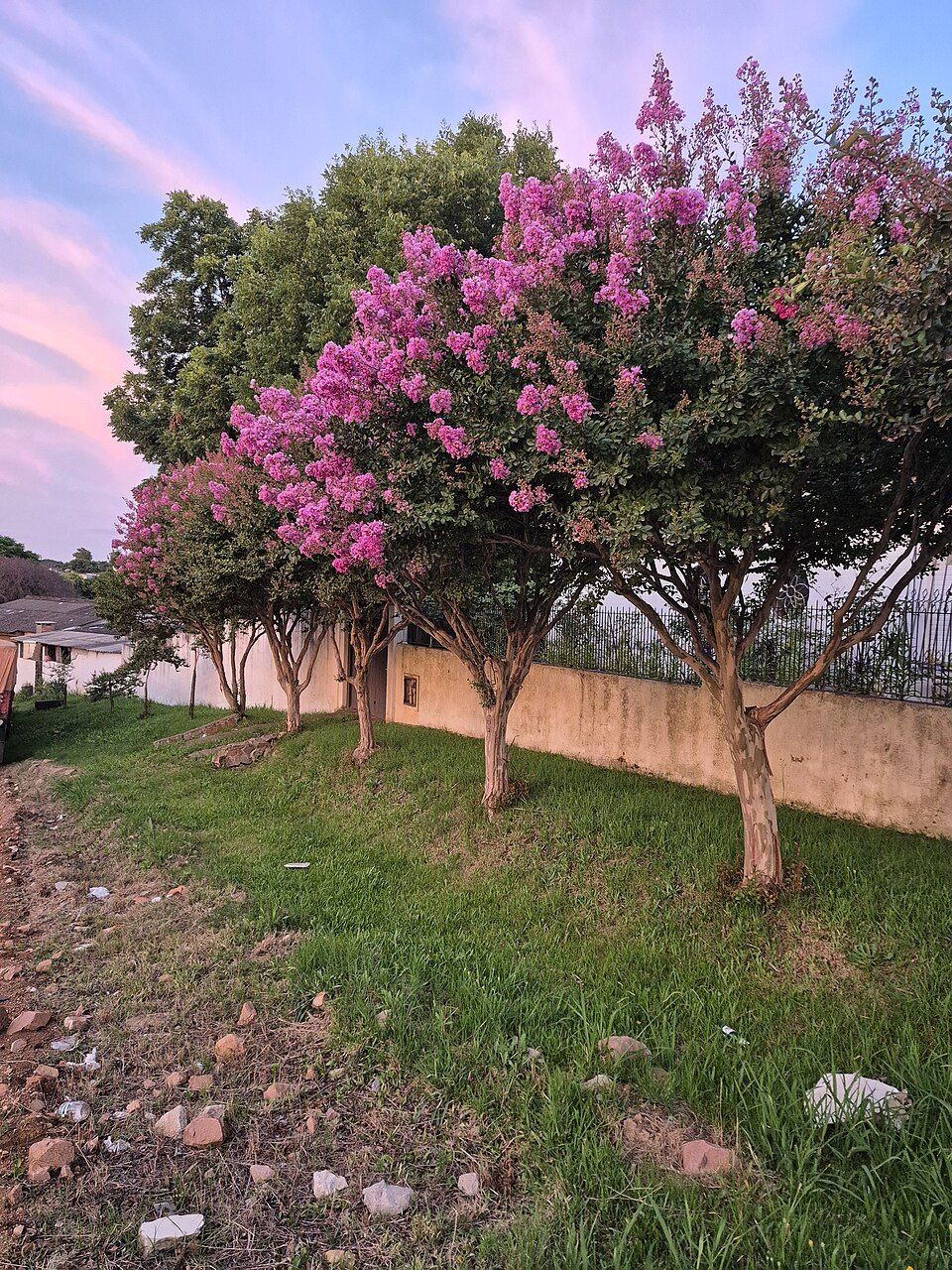
Crepe myrtle is a small deciduous tree grown for its long summer show of ruffled flowers in white, pink, mauve, purple or red. It grows well in most parts of Australia, gives summer shade, lets winter sun through, colours up in autumn and shows off smooth, mottled bark. Modern varieties range from 3 metre shrubs to 8 metre trees, and many resist powdery mildew.
- Exotic
- 3 to 8 m tall
- Flowers December to March
Crepe myrtle at a glance
- Height
- 3 to 8 m
- Leaves
- Deciduous
- Flowers
- White, pink, purple, red, December to March
- Origin
- Eastern Asia
- Family
- Lythraceae
How to identify a crepe myrtle
In summer, crepe myrtle is hard to miss: big trusses of crinkled flowers, with petals like crepe paper, cover the branch tips. The leaves are simple, pointed ovals, mostly in opposite pairs, and they turn red, orange or yellow before falling in autumn. Unpruned trees develop smooth, mottled trunks that peel in patches, often in red-brown tones. In winter, the bare, vase-shaped frame and patchy bark are the best clues. Australia's native crepe myrtle, Lagerstroemia archeriana from far north Queensland, is similar but has pinkish mauve flowers.
Growing a crepe myrtle in Brisbane
Crepe myrtles grow well in most Australian climates, and council landscapers often use them on median strips and roadsides. Give them full sun, at least six hours a day, and an open spot with good airflow, which helps them flower and reduces powdery mildew in damp, humid weather. They cope with a wide range of soils if drainage is good, and once established they handle dry spells, though they flower best with regular water while in leaf and bud.
What to watch out for
Older varieties can get powdery mildew, a white coating on the leaves, mostly in damp, humid weather; many newer varieties resist it. Some plants sucker from the roots, especially if the roots or lower trunk get damaged. Heavy lopping every winter spoils the tree's natural shape.
Pruning and care
The best pruning for a crepe myrtle is light pruning. Remove spent flower heads after flowering, and take off low side shoots if you want a single trunk that shows off the bark. Hard winter pruning forces long flowering stems but leaves a stubby, butchered-looking frame, so choose a smaller variety rather than cutting a big one back every year. Cut root suckers off at ground level, mulch the root zone, and feed from spring to autumn.
When do crepe myrtles flower in Brisbane?
Should I prune my crepe myrtle hard in winter?
How tall does a crepe myrtle grow?
Is crepe myrtle deciduous?
_em_um_fim_de_tarde_em_Bag%C3%A9-RS.jpg)
Sources and credits
- Crepe Myrtle Burke's Backyard
- Lagerstroemia (plant finder) Gardening Australia, ABC
- How to grow crepe myrtle Yates
- Don's tips: crepe myrtles Burke's Backyard
- Census of the Queensland Flora and Fungi 2025 Queensland Herbarium, Queensland Government
Photo: Gabriel Collares, CC BY 4.0, via Wikimedia Commons.
Checked October 2026. Weed listings and council rules change: check the council's and the Queensland Government's pages before you act.
Get a free quote. We'll beat most written quotes.
Tell us about the job and the site. You don't need to be home for the quote. Available 7 days.
- 4.9 on Google (38 reviews)
- Family owned & operating since 1993
- Fully insured
- We'll beat most written quotes