
Kurrajong
Brachychiton populneus · also called Black kurrajong
The kurrajong is a hardy native shade tree with a dense, rounded crown of glossy, poplar-like leaves. It grows naturally from Victoria to north Queensland, including the ranges around Brisbane, and farmers have long kept it in paddocks for shade and as drought fodder. It handles dry conditions well, but its deep roots, woody pods and irritating seed hairs mean it needs a spot well away from drains and paths.
- Native to South East Queensland
- 6 to 20 m tall
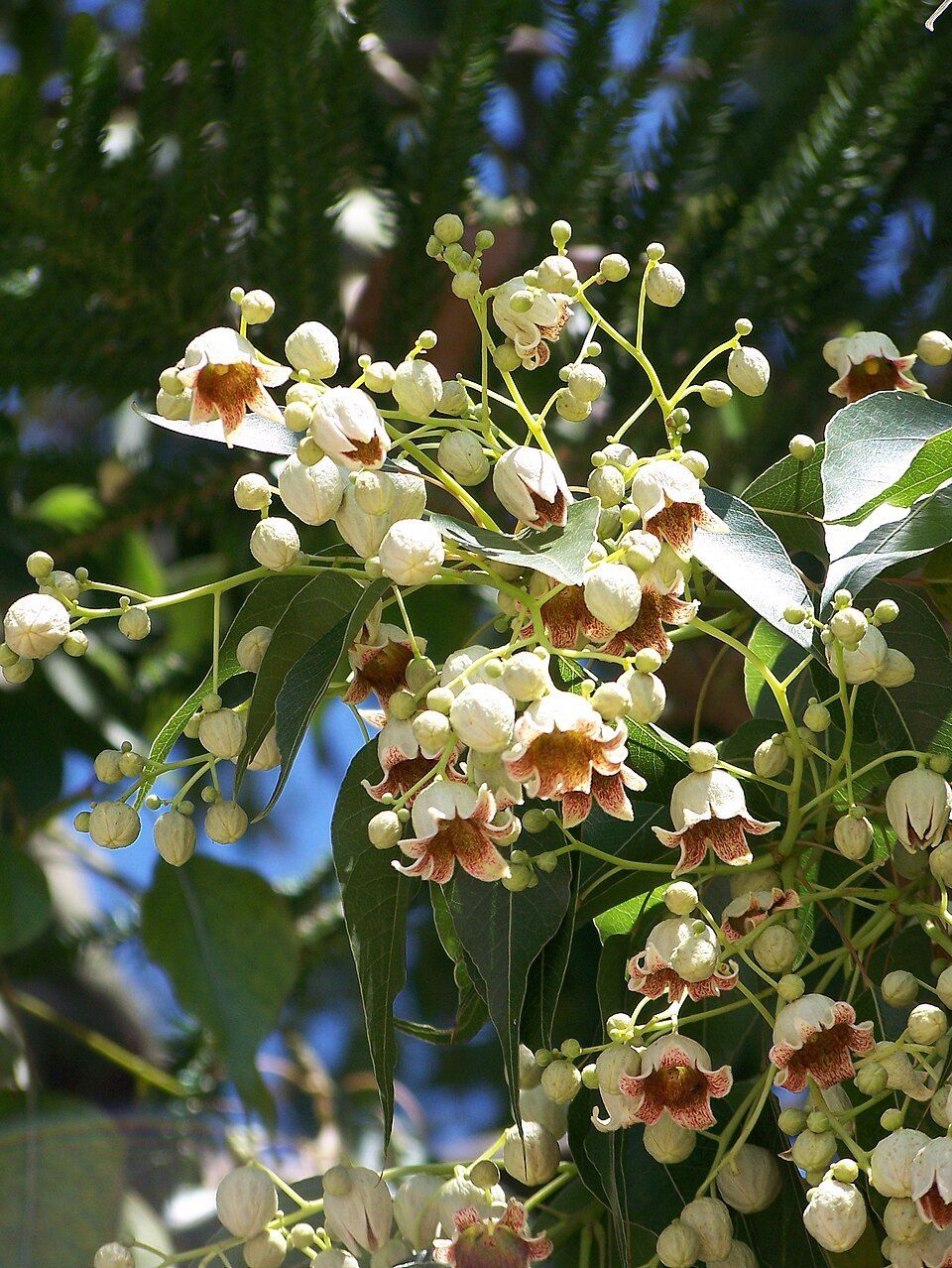
Kurrajong at a glance
- Height
- 6 to 20 m
- Spread
- 3 to 6 m
- Growth
- Slow
- Leaves
- Evergreen
- Flowers
- Small and easy to miss
- Roots
- Aggressive
- Origin
- Eastern Australia, from north-eastern Victoria to Townsville and from the coast to semi-arid inland country
- Family
- Malvaceae
How to identify a kurrajong
Kurrajong has a stout grey trunk and a dense, rounded crown of shiny green leaves on long stalks. Most adult leaves are plain and poplar-like, 5 to 10 cm long, while young plants often have leaves with 3 to 5 narrow lobes, and new growth can be tinged pink. In spring and summer, small bell-shaped flowers appear, creamy white outside and speckled red or purple inside. Woody, boat-shaped pods up to 7 cm long follow, packed with seeds like corn kernels. Kurrajong-type trees with pink or red flowers are garden hybrids, including crosses with the Illawarra flame tree.
Growing a kurrajong in Brisbane
Kurrajong is a local native. Herbarium collections record it in the D'Aguilar and Enoggera ranges and at Flinders Peak, and across its range it favours well-drained soils, often around rocky outcrops. It copes with dry conditions, most soil types and moderate frost, and grows in full sun or part shade. It is widely planted as a street and shade tree in Australia, but at up to 20 metres, with deep roots, it is better suited to a large block than a small backyard.
What to watch out for
Kurrajong roots go deep, and the Australian National Botanic Gardens warns they can clog drains, so keep the tree well away from sewer lines and stormwater pipes. The large woody pods can be a nuisance where they drop, and the fine hairs around the seeds irritate skin and eyes, so handle pods with gloves. Livestock may become ill from eating the fruit, although the leaves are a recognised drought fodder. It isn't on Brisbane City Council's weed list.
- Irritant sap or hairs. Fine hairs around the seeds inside the pods can irritate skin and eyes, so wear gloves when handling pods.
- Mess. The large woody pods drop and can be a nuisance on lawns, paths and driveways.
- Poisonous parts. Livestock may become ill from eating the fruit, although the leaves are a well-known drought fodder.
Pruning and care
Kurrajongs are tough once established and need little extra water. Saplings can grow very slowly, but loosening the soil, watering and regular care speed them up. Prune only to remove dead, damaged or crossing branches, or to lift the canopy for clearance, cutting cleanly just outside the branch collar. Wear gloves when collecting pods, as the seed hairs irritate skin and eyes. Large limbs, or any work near power lines, are a job for a qualified arborist.
Are kurrajong roots invasive?
Are kurrajong seed pods dangerous?
How tall does a kurrajong grow?
Is kurrajong native to Brisbane?
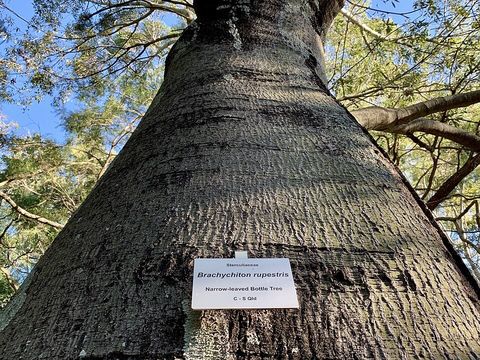
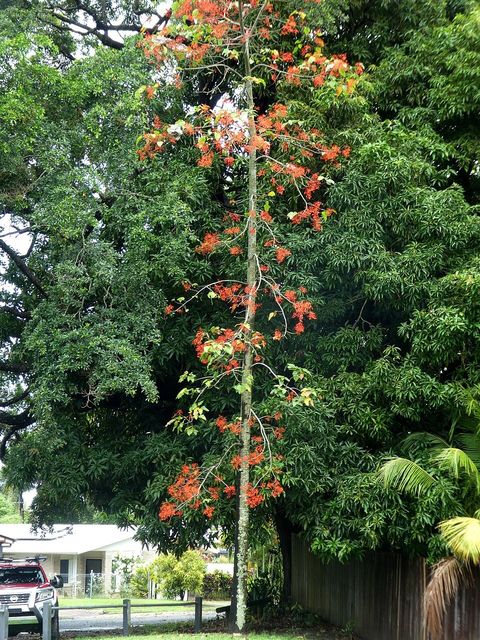
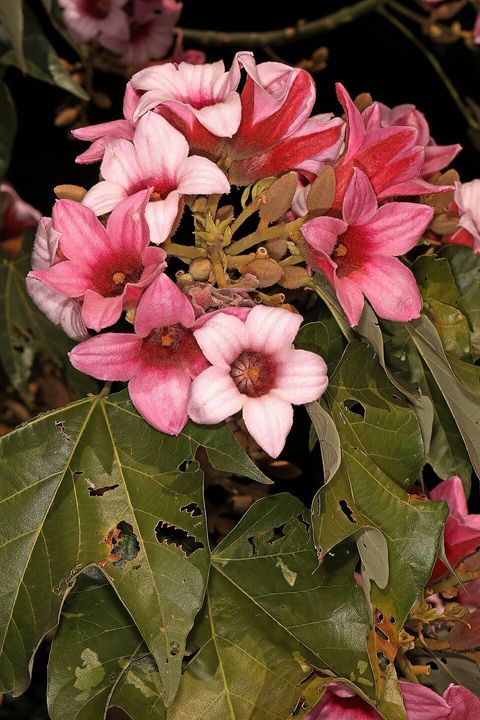

Sources and credits
- Brachychiton populneus, New South Wales Flora Online PlantNET, Royal Botanic Gardens and Domain Trust
- Brachychiton populneus (Growing Native Plants) Australian National Botanic Gardens
- Brachychiton populneus Australian Native Plants Society (Australia)
- Brachychiton populneus, Kurrajong Australian Plants Society NSW
- Brachychiton populneus, Kurrajong (Plant Selector) Botanic Gardens of South Australia
- Brachychiton populneus herbarium records within 50 km of Brisbane Atlas of Living Australia
Photo: Philmarin, CC BY-SA 3.0, via Wikimedia Commons.
Checked October 2026. Weed listings and council rules change: check the council's and the Queensland Government's pages before you act.
Get a free quote. We'll beat most written quotes.
Tell us about the job and the site. You don't need to be home for the quote. Available 7 days.
- 4.9 on Google (38 reviews)
- Family owned & operating since 1993
- Fully insured
- We'll beat most written quotes