
Lacebark tree
Brachychiton discolor · also called Lacebark, Scrub bottle tree, White kurrajong
The lacebark tree is a native dry-rainforest tree of coastal Queensland and New South Wales that sheds most of its leaves, then hangs clusters of large, pink, bell-shaped flowers from its branches in late spring and summer. It grows 12 to 20 metres in Brisbane streets, has a compact root system and suits large gardens and parks. Its furry pods hold seeds wrapped in irritating hairs, so handle them with gloves.
- Native to South East Queensland
- 12 to 20 m tall
- Flowers November to January
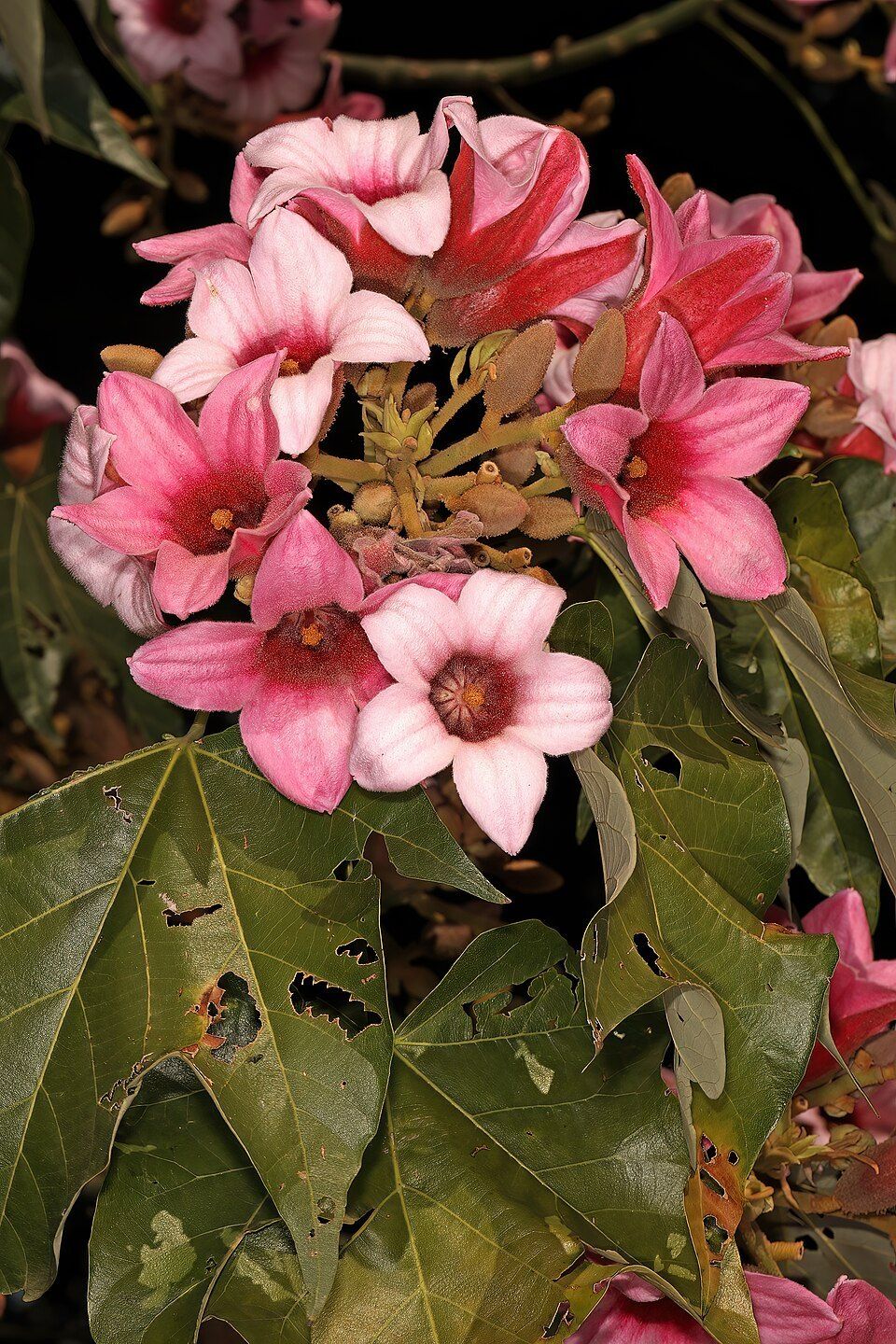
Lacebark tree at a glance
- Height
- 12 to 20 m (up to 35 m in the wild)
- Growth
- Slow
- Leaves
- Deciduous
- Flowers
- Pink, November to January
- Roots
- Gentle
- Origin
- Dry rainforest from Mackay, Queensland, to just north of Newcastle, New South Wales
- Power lines
- Not on the council's list for under power lines
- Family
- Malvaceae
How to identify a lacebark tree
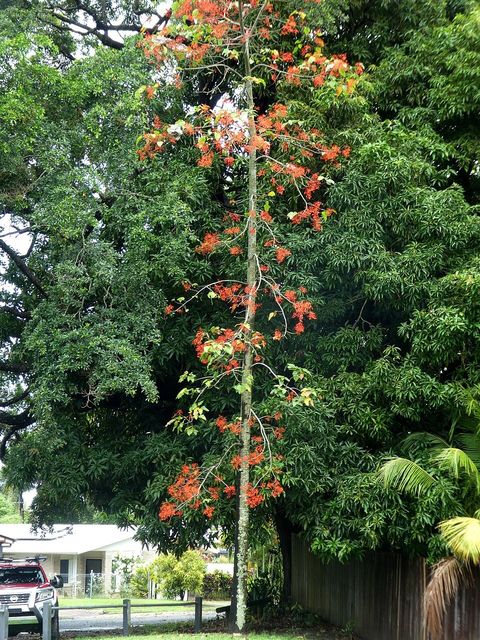
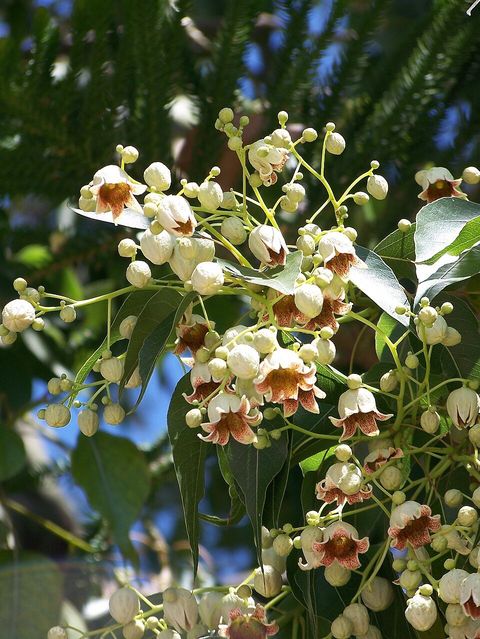
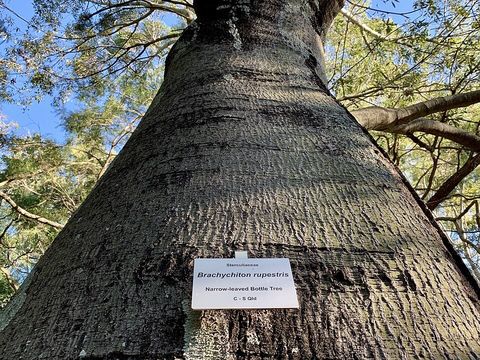
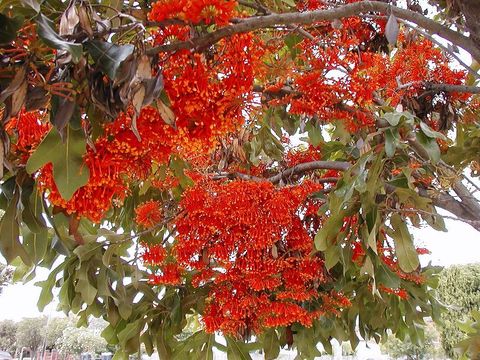
An upright tree, usually 12 to 20 metres tall in Brisbane. The large leaves, 8 to 18 cm long on long stalks, are cut into three to seven pointed lobes like a maple leaf and are densely coated in white felt underneath; new growth is tinged pink. Young bark is smooth and green to grey, and older trunks become finely fissured in a lace-like pattern. Pink bells 4 to 6 cm long, furry on the outside, open in clusters near the branch ends, often while the tree is leafless. Furry brown pods 10 to 20 cm long follow. The related Illawarra flame tree has red flowers instead.
Growing a lacebark tree in Brisbane
Lacebark grows naturally in dry rainforest from Mackay to just north of Newcastle, so it is well suited to Brisbane's climate. Council plants it on arterial road medians and roundabouts where verges are wider than 5 metres, though not under power lines. It takes clay, loam or sand, copes with drought once established and grows slowly. The Botanic Gardens of South Australia notes a compact root system that lets it be grown near infrastructure such as pools, but it still needs room for a crown that Council rates as medium-sized.
What to watch out for
The seed pods are the main nuisance: the seeds sit in a mass of fine, irritating hairs, so wear gloves when handling open pods and keep children from playing with them. The tree drops most of its leaves just before flowering. It becomes a big tree, 12 to 20 metres in Brisbane streets and up to 35 metres in rainforest, so plant it where it has room. It isn't on Brisbane City Council's weed list.
- Irritant sap or hairs. The seeds inside the pods are surrounded by irritating hairs, so wear gloves when handling or collecting them.
Pruning and care
Little pruning is needed. Shape young trees to a single trunk, remove dead or crossing branches, and lift low limbs if you need clearance underneath; large limbs are a job for a qualified arborist. Although it tolerates drought once established, it does better with extra water during long dry spells, especially while young. Wear gloves when picking up fallen pods, because the hairs around the seeds irritate skin. Expect it to drop most of its leaves just before it flowers.
When does the lacebark tree flower in Brisbane?
How tall does a lacebark tree grow?
Are lacebark tree roots invasive?
Is the lacebark tree native to Brisbane?

Sources and credits
- Street tree species (open data) Brisbane City Council
- Brachychiton discolor (New South Wales Flora Online) PlantNET, Royal Botanic Gardens and Domain Trust
- Brachychiton discolor (plant profile) Australian Native Plants Society (Australia)
- Brachychiton discolor (Australian Tropical Rainforest Plants) CSIRO
- Brachychiton discolor, White Kurrajong, Lacebark (Plant Selector) Botanic Gardens of South Australia
- Brachychiton discolor, Lacebark Noosa and District Landcare
- Brachychiton discolor (WildNet taxon details) Queensland Government
- Brachychiton discolor, Lacebark Tree (species page) Atlas of Living Australia
Photo: SAplants, CC BY-SA 4.0, via Wikimedia Commons.
Checked October 2026. Weed listings and council rules change: check the council's and the Queensland Government's pages before you act.
Get a free quote. We'll beat most written quotes.
Tell us about the job and the site. You don't need to be home for the quote. Available 7 days.
- 4.9 on Google (38 reviews)
- Family owned & operating since 1993
- Fully insured
- We'll beat most written quotes