
Queensland bottle tree
Brachychiton rupestris · also called Bottle tree, Narrow-leaved bottle tree
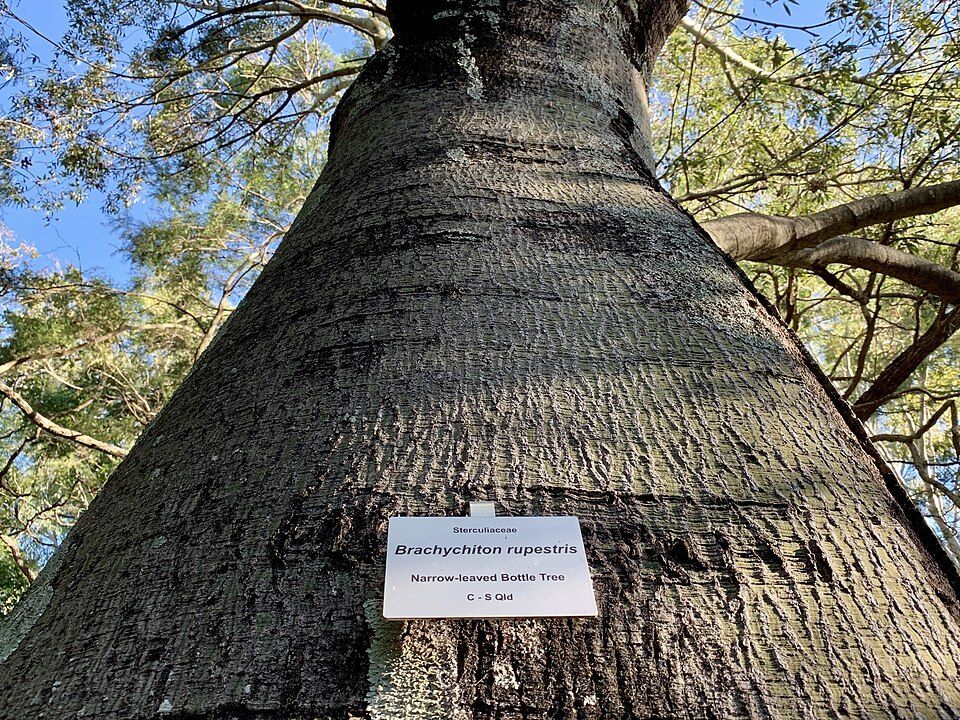
The Queensland bottle tree is a native tree with a swollen, bottle-shaped trunk that can grow to about 2 metres across. It comes from the dry vine scrubs of inland central and southern Queensland and is widely grown as a striking feature tree. It grows slowly, and the bottle shape usually starts to show when the tree is five to eight years old.
- Australian native
- 10 to 20 m tall
Queensland bottle tree at a glance
- Height
- 10 to 20 m (up to 25 m in the wild)
- Spread
- 5 to 12 m
- Growth
- Slow
- Leaves
- Semi-deciduous
- Flowers
- Small and easy to miss
- Origin
- Dry vine scrubs of inland central and southern Queensland, roughly between Mackay and the New South Wales border
- Family
- Malvaceae
How to identify a Queensland bottle tree
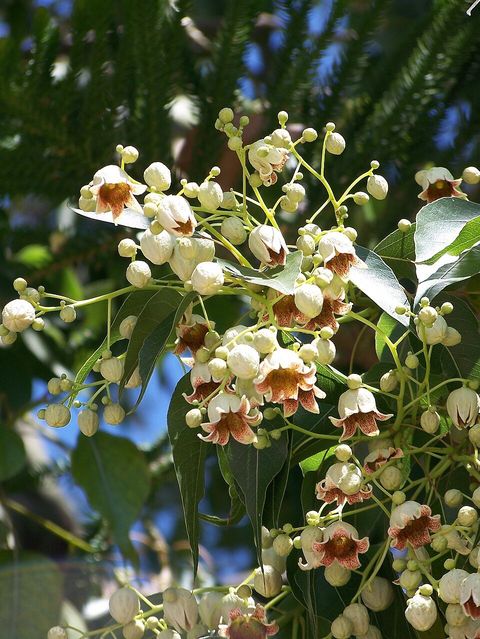
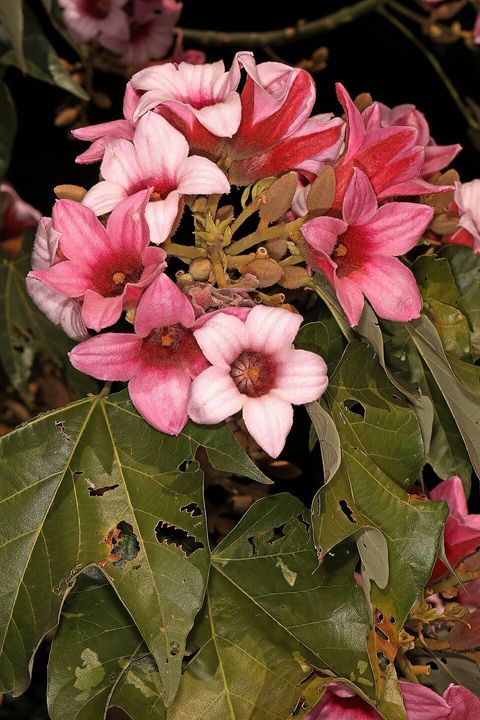
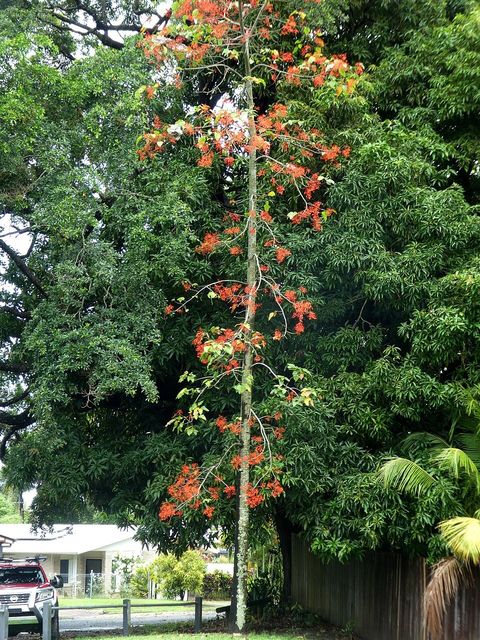
A mature bottle tree is hard to mistake: the trunk swells like a barrel and can reach 2 m across, with dark grey, fissured bark. The leaves are about 10 cm long and either narrow and undivided or deeply cut into several slender lobes. In spring the tree drops some or all of its leaves and then bears clusters of small, cream, bell-shaped flowers marked pink or red inside. Boat-shaped woody pods 1.5 to 3.5 cm long follow, lined with bristly hairs. Young trees have a slim trunk until the bottle shape develops.
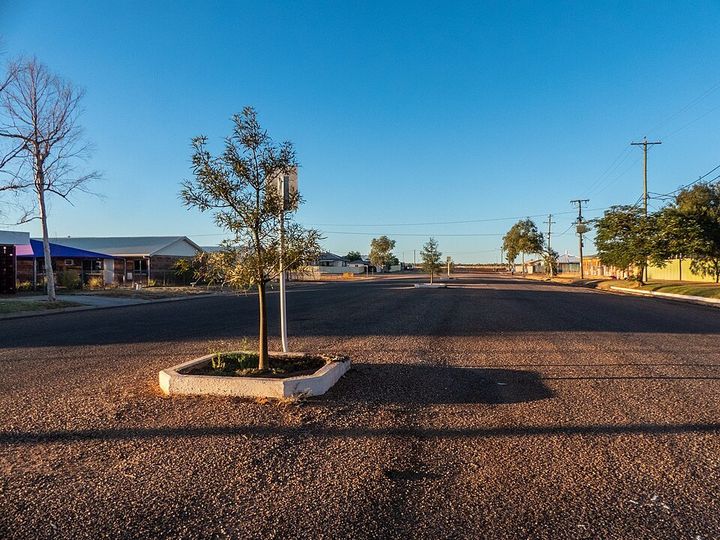
Growing a Queensland bottle tree in Brisbane
It is not native to the Brisbane area, but it is hardy and copes with a wide range of climates and soils, so it adapts well to gardens far from its natural range. Growth is slow at first, so be patient: the bottle shape usually appears after five to eight years. Even trees that are decades old can be transplanted successfully. Allow room for a tree of 10 to 20 m with a canopy 5 to 12 m wide and a very thick trunk.
What to watch out for
Plan for the trunk and the pods. The trunk can swell to about 2 m across, so don't plant it hard up against paths, walls or the house. The seed pods are lined with irritating hairs, so wear gloves when picking them up. The tree also drops some or all of its leaves for a while in spring, which is normal.
- Irritant sap or hairs. The seed pods are lined with hairs that irritate skin, so wear gloves when handling or collecting them.
Pruning and care
Bottle trees need very little pruning. Remove dead or damaged branches and lift low limbs for clearance if needed, but avoid cutting into or wounding the swollen trunk. Water young trees until they establish; once settled they are hardy. Expect the canopy to thin in a drought and the leaves to drop before flowering. Wear gloves when handling the seed pods. Moving or removing a mature bottle tree, with its heavy, water-holding trunk, is a job for a professional with the right gear.
How big does a bottle tree get?
How fast does a Queensland bottle tree grow?
Why is my bottle tree losing its leaves?
Is the Queensland bottle tree native to Brisbane?


Sources and credits
- Brachychiton rupestris (Australian Tropical Rainforest Plants) CSIRO
- Brachychiton rupestris (Growing Native Plants) Australian National Botanic Gardens
- Brachychiton rupestris (plant profile) Australian Native Plants Society (Australia)
- Brachychiton rupestris (species page) Atlas of Living Australia
Photo: Kgbo, CC BY-SA 4.0, via Wikimedia Commons.
Second photo: John Robert McPherson, CC BY-SA 4.0, via Wikimedia Commons.
Checked October 2026. Weed listings and council rules change: check the council's and the Queensland Government's pages before you act.
Get a free quote. We'll beat most written quotes.
Tell us about the job and the site. You don't need to be home for the quote. Available 7 days.
- 4.9 on Google (38 reviews)
- Family owned & operating since 1993
- Fully insured
- We'll beat most written quotes