
Muttonwood
Myrsine variabilis · also called Mutton wood, Variable muttonwood, Rapanea
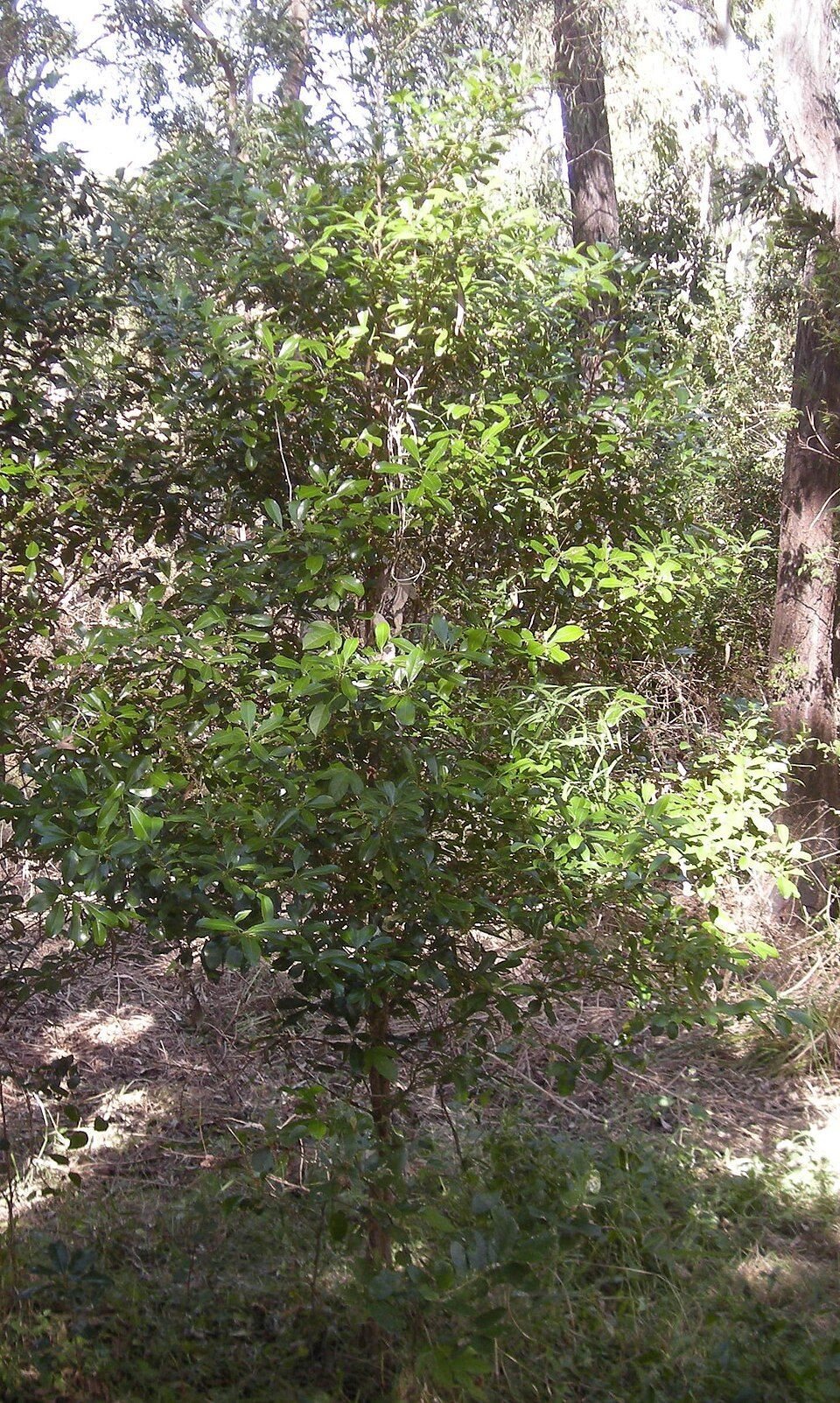
Muttonwood is a tough native shrub or small tree found along the whole east coast, including around Brisbane, in places from beach dune scrub to rainforest edges. It has shiny, leathery leaves, tiny cream flowers through winter and small blue to purple berries in spring and early summer, and its leaves feed the caterpillars of the white lineblue butterfly.
- Native to South East Queensland
- 1 to 13 m tall
Muttonwood at a glance
- Height
- 1 to 13 m
- Leaves
- Evergreen
- Flowers
- Small and easy to miss
- Origin
- East coast, from far north Queensland to the New South Wales south coast
- Family
- Primulaceae
How to identify a muttonwood
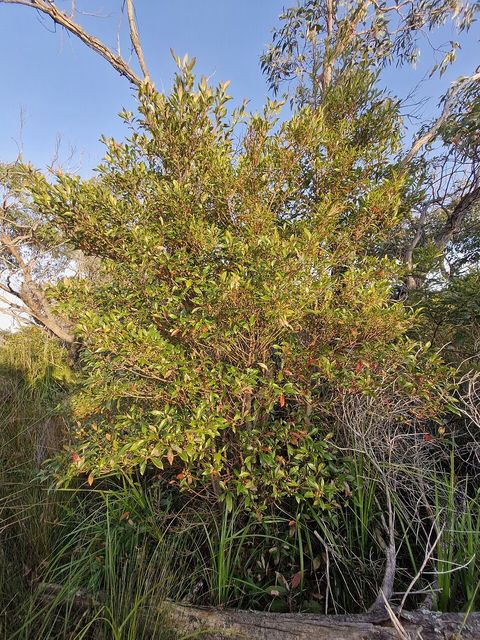
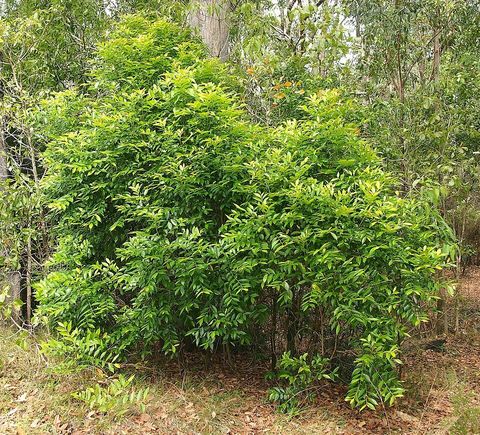
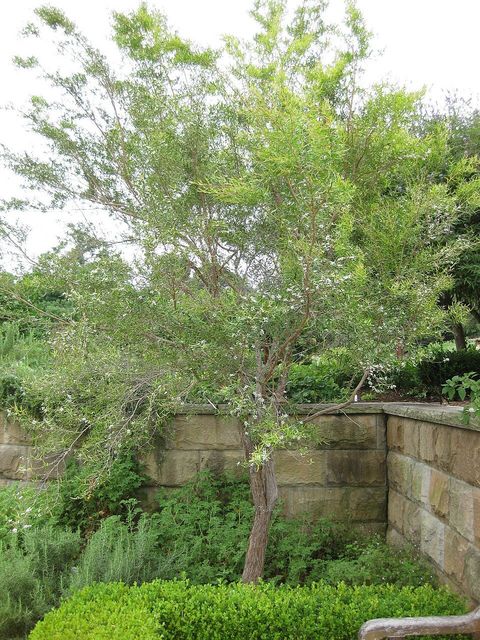
Look for shiny, leathery leaves 4 to 13 cm long that are widest near the tip, with duller, paler undersides. Leaf shape and size vary a great deal, which is where the species name variabilis comes from, and young plants often have a few stiff, almost prickly teeth along the edges. Shoot tips carry fawn to brown hairs. Tiny cream to pale yellow flowers sit in tight clusters at the leaf bases along the stems, mainly from May to September, followed by round berries 4 to 6 mm across that ripen blue to purple. The bark is grey.
Growing a muttonwood in Brisbane
Muttonwood is one of Brisbane's own plants. It is the most widespread Australian Myrsine, ranging from far north Queensland to the New South Wales south coast, and from beside mangroves up to about 1000 metres. Its natural homes run from beach dune scrub and dry rainforest out into eucalypt forest, and it often grows in exposed spots on the coast, so it fits coastal and bush-style gardens. Expect it to send up a few suckers from the roots.
What to watch out for
It tends to sucker from the roots, so expect some new shoots around the base that may need removing.
Pruning and care
Specific pruning advice for muttonwood is hard to find, so general good practice applies. Grow it as a multi-stemmed shrub or train it to a small tree, trimming lightly to shape rather than cutting it hard. Remove unwanted root suckers at the base if you want a single trunk. Water young plants through dry spells until established and mulch around the roots. Larger specimens near buildings or power lines are a job for a qualified arborist.
What does muttonwood look like?
How tall does muttonwood grow?
Is muttonwood native to Brisbane?
When does muttonwood flower and fruit?

Sources and credits
- Myrsine variabilis PlantNET (Royal Botanic Gardens and Domain Trust, Sydney)
- Myrsine variabilis (Australian Tropical Rainforest Plants) CSIRO
- Myrsine variabilis (Flora of Australia) Australian Biological Resources Study (Australian Government)
- Myrsine variabilis Atlas of Living Australia
Photo: Mark Marathon, CC BY-SA 3.0, via Wikimedia Commons.
This profile updates sheet 38 of the plant profile booklet made for Colourful Tree Lopping in 2013. We checked every fact against current sources and rewrote it for the guide.
Checked October 2026. Weed listings and council rules change: check the council's and the Queensland Government's pages before you act.
Get a free quote. We'll beat most written quotes.
Tell us about the job and the site. You don't need to be home for the quote. Available 7 days.
- 4.9 on Google (38 reviews)
- Family owned & operating since 1993
- Fully insured
- We'll beat most written quotes