
Cheese tree
Glochidion ferdinandi · also called Buttonwood, Pencil cedar
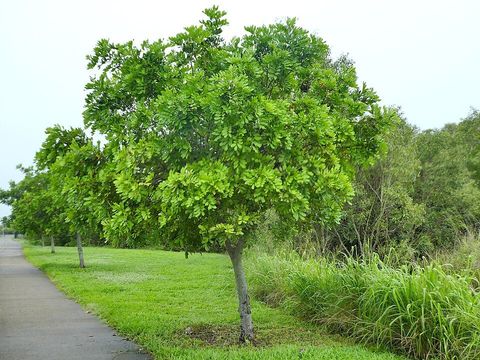
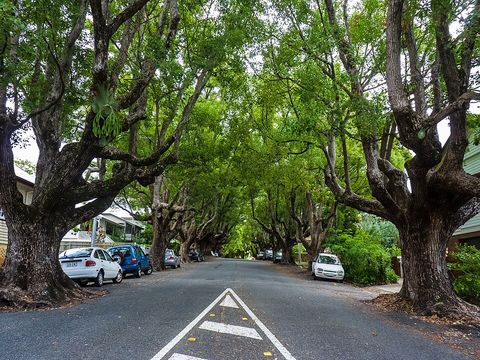
The cheese tree is a hardy native tree of eastern Australia, named for its small lobed fruits that look like tiny wheels of cheese or miniature pumpkins. It grows naturally around Brisbane, puts on growth quickly and casts generous shade, and its fruit feeds many native birds. It can be kept as a pruned shrub or left to form a broad, shady dome.
- Native to South East Queensland
- 8 to 15 m tall
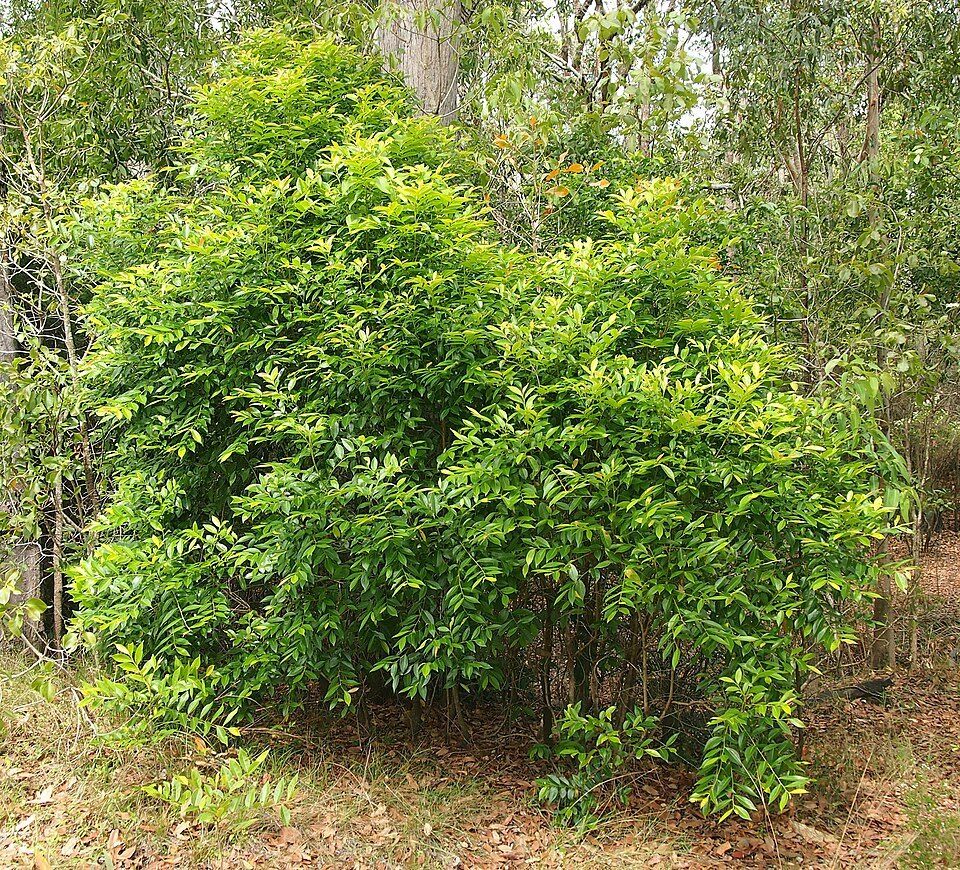
Cheese tree at a glance
- Height
- 8 to 15 m (up to 30 m in the wild)
- Growth
- Fast
- Leaves
- Semi-deciduous
- Flowers
- Small and easy to miss
- Origin
- Eastern Australia, from the Paluma Range near Townsville to the New South Wales south coast
- Family
- Phyllanthaceae
How to identify a cheese tree
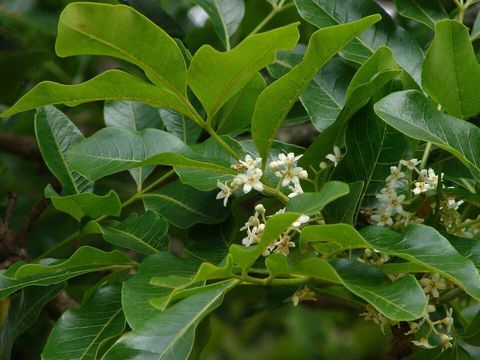
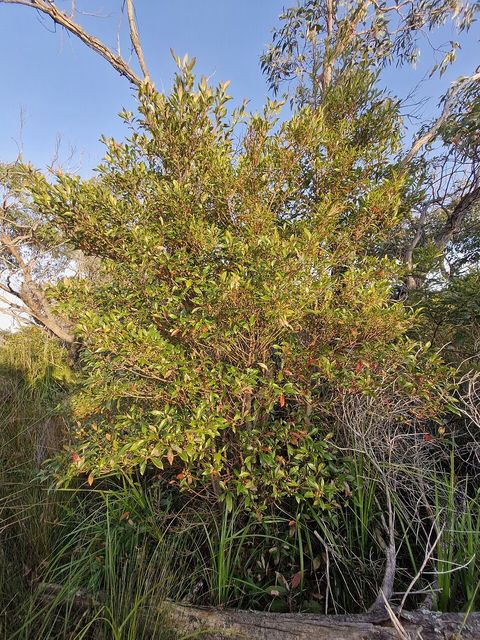
The leaves are oval, semi-glossy and up to about 10 cm long, lined up in two flat rows along each twig, so a whole branchlet can pass for a single compound leaf. New growth is reddish, the upper surface often carries purplish spots, and leaves turn orange or red before they fall. The greenish-yellow flowers are tiny and easy to miss. The fruit is the giveaway: flattened, deeply lobed capsules around 1.5 cm across that ripen pink to red and split open to show bright red seeds, mostly from November. Bark is grey-brown, fissured and flaky. From a distance, big old trees can resemble camphor laurel, with a similar finely cracked brown trunk and a broad, dense crown.
Growing a cheese tree in Brisbane
This is a local tree. Flora of Australia records it from the Paluma Range near Townsville south to the New South Wales south coast, in open forest, coastal rainforest and rainforest edges. It is a hardy, fast-growing choice for Brisbane yards, copes with a wide range of soils and grows in sun or shade, although young plants need plenty of water to establish. As a pioneer species it is often planted in bush regeneration, and it may self-seed into disturbed ground nearby. Expect it to drop some leaves in winter.
What to watch out for
Expect some leaf drop in winter and occasional caterpillar damage to the foliage. As a pioneer species it can self-seed into disturbed ground nearby. Old trees can be confused with the weedy camphor laurel from a distance, so check the leaves and fruit before deciding a tree is a weed.
Pruning and care
Decide early whether you want a shade tree or a pruned shrub, because it suits either. For a shrub, trim lightly and often rather than cutting hard all at once. For a tree, remove dead, damaged or crossing branches and lift low limbs over paths gradually. Water young plants well until they are established; after that it is a very hardy tree. Caterpillars sometimes chew the leaves, which is part of its value to local wildlife. Large limbs over a roof or fence are a job for a professional with the right gear.
Why is it called a cheese tree?
How tall does a cheese tree grow?
Is the cheese tree good for birds?
Does the cheese tree lose its leaves?

Sources and credits
- Glochidion ferdinandi PlantNET (Royal Botanic Gardens and Domain Trust, Sydney)
- Glochidion ferdinandi (Australian Tropical Rainforest Plants) CSIRO
- Glochidion ferdinandi (Flora of Australia) Australian Biological Resources Study (Australian Government)
- Glochidion ferdinandi Australian Plants Society NSW
- Glochidion ferdinandi Atlas of Living Australia
Photo: Mark Marathon, CC BY-SA 3.0, via Wikimedia Commons.
Checked October 2026. Weed listings and council rules change: check the council's and the Queensland Government's pages before you act.
Get a free quote. We'll beat most written quotes.
Tell us about the job and the site. You don't need to be home for the quote. Available 7 days.
- 4.9 on Google (38 reviews)
- Family owned & operating since 1993
- Fully insured
- We'll beat most written quotes