
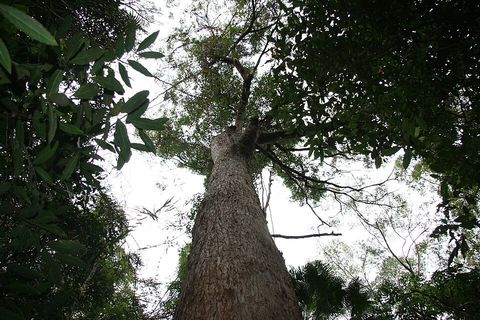
Narrow-leaved ironbark tree
Eucalyptus crebra · also called Ironbark, Narrow-leaved red ironbark
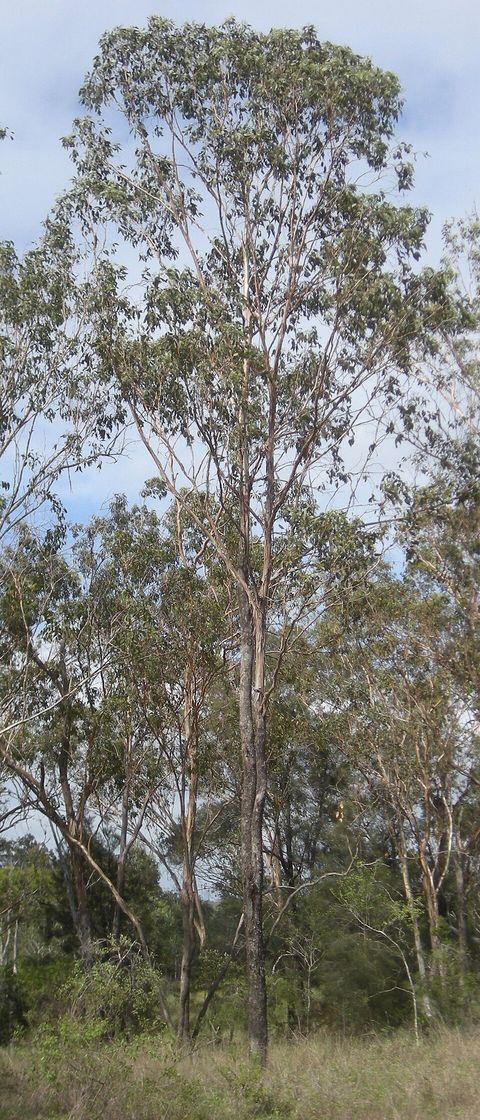
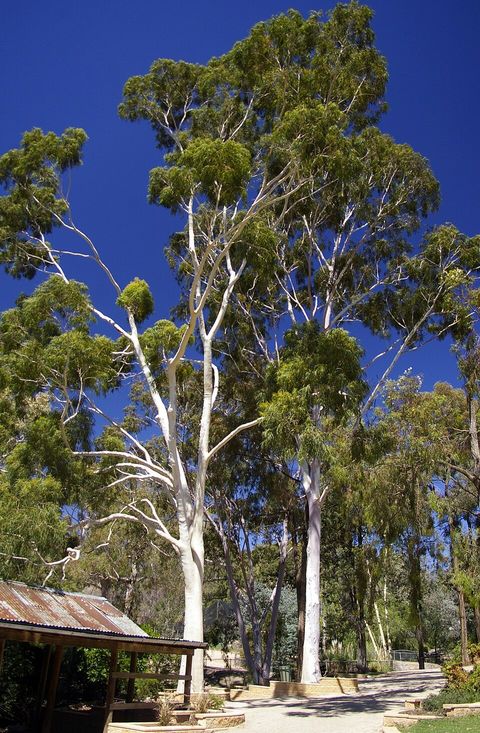
The narrow-leaved ironbark is South East Queensland's most familiar ironbark tree, known for its hard, deeply furrowed, almost black bark. It is a local native that grows to about 25 metres, feeds koalas and is a valuable honey tree, with winter flowers rich in pollen and nectar. It needs a big block, well away from the house and pipes.
- Native to South East Queensland
- 25 to 35 m tall
- Flowers May to August
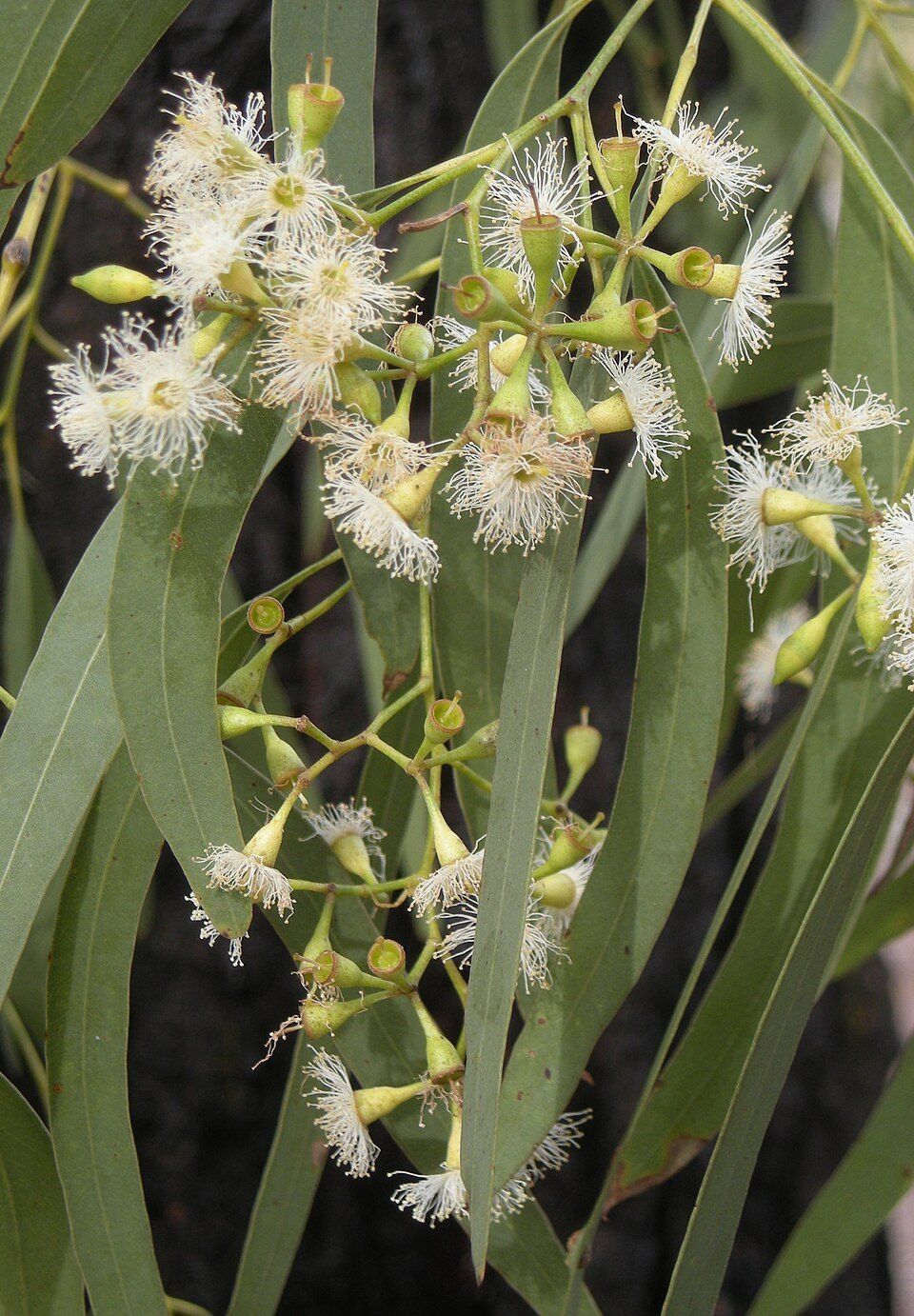
Narrow-leaved ironbark at a glance
- Height
- 25 to 35 m
- Leaves
- Evergreen
- Flowers
- White, May to August
- Roots
- Aggressive
- Origin
- Eastern Australia, from near Sydney north to Cape York
- Family
- Myrtaceae
How to identify a narrow-leaved ironbark
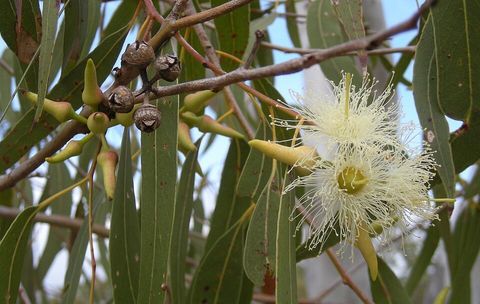
The bark is the giveaway: hard, dark grey to black and deeply furrowed, running from the base of the trunk right up into the small branches. Adult leaves are narrow, 5.5 to 18 cm long and dull green to grey-green on both sides. Small white flowers open from buds grouped in sevens, nines or elevens, mostly in winter, and are followed by tiny cup- or barrel-shaped gumnuts 2 to 7 mm long. Grey ironbark, another local ironbark, has larger, diamond-shaped buds and cone-shaped fruit.
Growing a narrow-leaved ironbark in Brisbane
This is a local native of South East Queensland's dry eucalypt forests, where it grows on ridges and slopes with shallow, stony or sandy soils of modest fertility. That makes it a good fit for poor, well-drained ground. It is a big tree, though, reaching about 25 m, so it suits acreage, parks and large blocks rather than small suburban yards. Keep it well away from the house, sewer lines and water pipes.
What to watch out for
Size and roots are the issues. It reaches about 25 m and up to 35 m, and Unitywater lists large gum trees among plants not to grow near water and sewer pipes, so plant it well clear of the house and services. Koalas feed on it in South East Queensland, so check for wildlife before any pruning or removal.
- Size. It grows into a medium to large tree of about 25 m and can reach 35 m, so it needs plenty of space.
Pruning and care
Ironbarks need little care once established. Prune only to remove dead, damaged or crossing branches and to keep clearance over roofs, driveways and power lines, cutting back to a branch collar and avoiding heavy topping. Young trees can be trained to a single strong leader. The tree can reshoot from a woody swelling at its base, called a lignotuber, if the top is damaged. Work on a large eucalypt is a job for a professional with the right gear.
How tall does an ironbark tree grow?
Are ironbark roots invasive?
Do koalas eat narrow-leaved ironbark?
When does narrow-leaved ironbark flower?

Sources and credits
- Eucalyptus crebra (EUCLID: Eucalypts of Australia) Centre for Australian National Biodiversity Research
- Eucalyptus crebra (New South Wales Flora Online) PlantNET, Royal Botanic Gardens Sydney
- Eucalyptus crebra Flora of Australia (ABRS), Atlas of Living Australia
- Narrow leaved ironbark (local plants database) Central QLD Coast Landcare Network
- Eucalyptus crebra (plant details) Noosa Native Plants
- Land for Wildlife Note A4: Koalas Land for Wildlife South East Queensland
- Think before you plant Unitywater
- Eucalyptus crebra (species page) Atlas of Living Australia
Photo: Ethel Aardvark, CC BY 3.0, via Wikimedia Commons.
This profile updates sheet 45 of the plant profile booklet made for Colourful Tree Lopping in 2013. We checked every fact against current sources and rewrote it for the guide.
Checked October 2026. Weed listings and council rules change: check the council's and the Queensland Government's pages before you act.
Get a free quote. We'll beat most written quotes.
Tell us about the job and the site. You don't need to be home for the quote. Available 7 days.
- 4.9 on Google (38 reviews)
- Family owned & operating since 1993
- Fully insured
- We'll beat most written quotes