
Rubber tree
Ficus elastica · also called Indian rubber tree, Rubber plant, Rubber fig
The rubber tree is the same Ficus elastica sold as an indoor rubber plant, but planted in a Brisbane yard it can grow into a huge fig 30 metres or more tall. Its roots go looking for drains and sewer pipes and can crack paths and driveways, and it drops heavy leaf litter. Brisbane City Council lists it as pest vegetation.
- Exotic
- Brisbane pest plant
- 30 to 40 m tall
Rubber tree at a glance
- Height
- 30 to 40 m (up to 60 m in the wild)
- Growth
- Fast
- Leaves
- Evergreen
- Flowers
- Small and easy to miss
- Roots
- Aggressive
- Origin
- Northern India, Nepal and Bhutan through to Myanmar and Indonesia
- Family
- Moraceae
How to identify a rubber tree
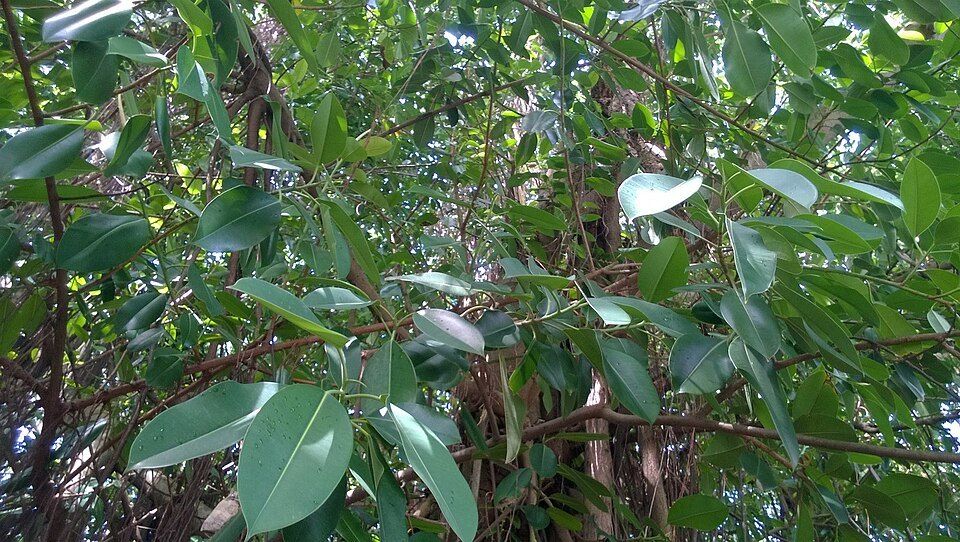
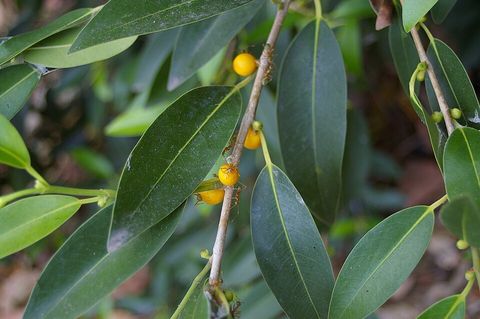
Leaves are large, thick and glossy, 10 to 35 cm long on young plants but nearer 10 cm on old trees. Each new leaf grows inside a protective sheath at the shoot tip that drops off as the leaf opens, and garden forms come in many colours, including variegated. Leaves and stems hold a milky, latex-like sap. Mature trees build a stout trunk with buttresses and aerial roots that drop from the branches to help support heavy limbs. The fruit is a small, oval, yellow-green fig about 1 cm long, so it is easy to miss.
Growing a rubber tree in Brisbane
Brisbane's warm climate lets it grow outdoors with real vigour. Sustainable Gardening Australia warns that once its roots reach the soil it stops behaving like a tidy house plant, forming a wide, dense canopy that blocks light from everything below. In Australia it seems to spread mainly from dumped garden waste and branches that take root, rather than from seed, and it is sparingly naturalised along the coast of south-east Queensland. It is not a tree for an average suburban block.
What to watch out for
Brisbane City Council lists it as pest vegetation, so you generally don't need a council permit to remove it, as long as the work doesn't affect a significant landscape tree or damage protected plants nearby. Its roots seek out drains and sewer pipes and can break up paths and driveways. The sap irritates skin, the leaves can make pets and children sick if eaten, and big trees drop a lot of leaves.
- Irritant sap or hairs. The milky, latex-like sap can irritate skin, and people with a latex allergy should avoid handling it.
- Poisonous parts. Leaves and stems can cause nausea and vomiting if eaten, and are toxic to cats, small dogs and young children.
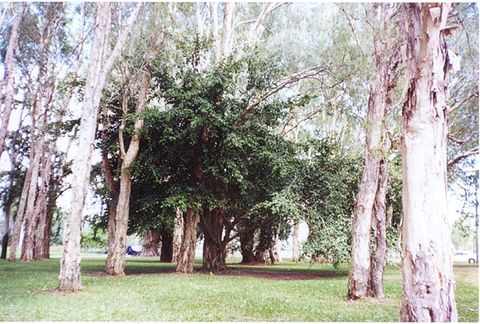
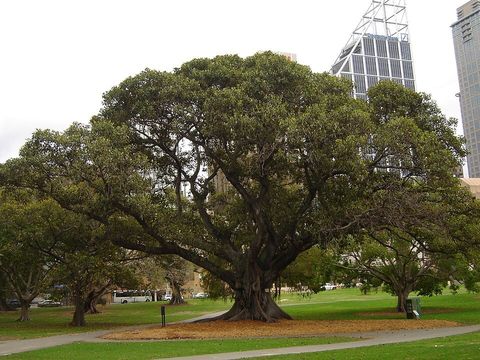
- Size. In the ground it can reach 30 to 40 metres, with a wide, heavy canopy propped up by aerial and buttress roots.
- Mess. A big tree sheds a heavy load of leaves and casts deep shade over plants underneath.
Pruning and care
In a large pot it stays a manageable plant, reaching about 2.5 metres indoors. In the ground it needs a lot of room, well away from the house, pipes, pool and paving. Wear gloves and eye protection when pruning, because the milky sap irritates skin. Don't dump prunings in bushland or leave them lying on soil, as pieces can take root. Taking down a large tree, along with its roots and stump, is a job for a qualified tree service with the right gear.
Are rubber tree roots invasive?
Is the rubber tree a weed in Brisbane?
Is a rubber plant poisonous to pets?
How big does a rubber tree grow outdoors?

Sources and credits
- Indian rubber tree (weed identification tool) Brisbane City Council
- Frequently asked questions (weed identification tool) Brisbane City Council
- Ficus elastica (Rubber Plant) Sustainable Gardening Australia
- Planting near sewer pipes Hunter Water
- Ipswich green thumbs urged to beware of thirsty tree roots (Urban Utilities advice) Ipswich First (Ipswich City Council)
- Ficus elastica (Environmental Weeds of Australia) Lucid weed key (Identic)
- Brisbane weeds (open data) Brisbane City Council
Photo: VuThiAnh, CC0, via Wikimedia Commons.
Checked October 2026. Weed listings and council rules change: check the council's and the Queensland Government's pages before you act.
Get a free quote. We'll beat most written quotes.
Tell us about the job and the site. You don't need to be home for the quote. Available 7 days.
- 4.9 on Google (38 reviews)
- Family owned & operating since 1993
- Fully insured
- We'll beat most written quotes