
Weeping fig
Ficus benjamina · also called Benjamin fig
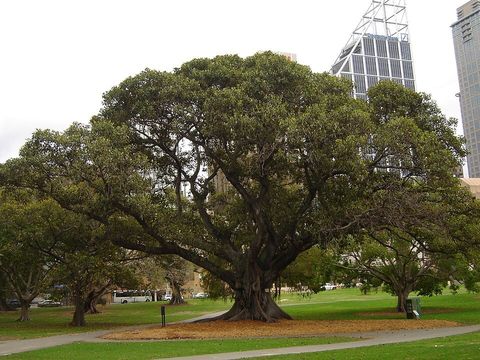
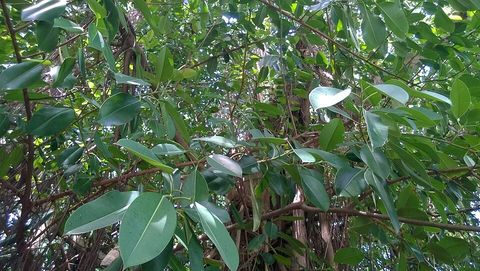
The weeping fig is a glossy-leaved fig best known as an indoor plant, but planted in a Brisbane yard it becomes a huge, spreading shade tree with roots notorious for damaging pipes, paths and foundations. It is native to northern Australia and South-East Asia and grows 15 to 30 metres tall with a very large crown. Keep it in a pot, or give it a park-sized space well away from buildings.
- Australian native
- 15 to 30 m tall
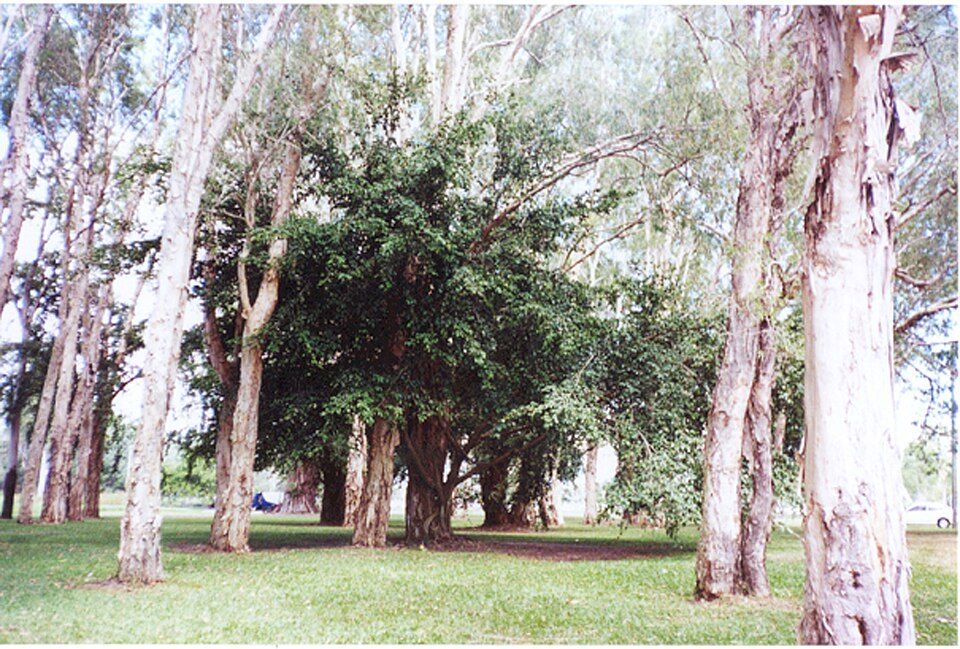
Weeping fig at a glance
- Height
- 15 to 30 m
- Growth
- Fast
- Leaves
- Evergreen
- Flowers
- Small and easy to miss
- Roots
- Aggressive
- Origin
- Northern Australia (the Top End and Queensland south to about Rockhampton), New Guinea and South-East Asia
- Power lines
- Not on the council's list for under power lines
- Family
- Moraceae
How to identify a weeping fig
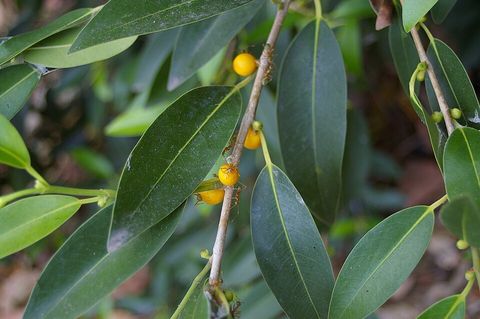
Weeping fig has glossy, oval leaves 3 to 12 cm long with a pointed tip, on twigs that droop at the ends and bleed milky sap when snapped. The trunk is grey and smooth, and old trees can drop aerial roots from the branches that thicken into extra trunks. Small round figs about 1 cm across sit directly on the twigs and ripen from green through red to black. Hill's weeping fig, a common look-alike, has figs that ripen salmon pink with greenish yellow warts.
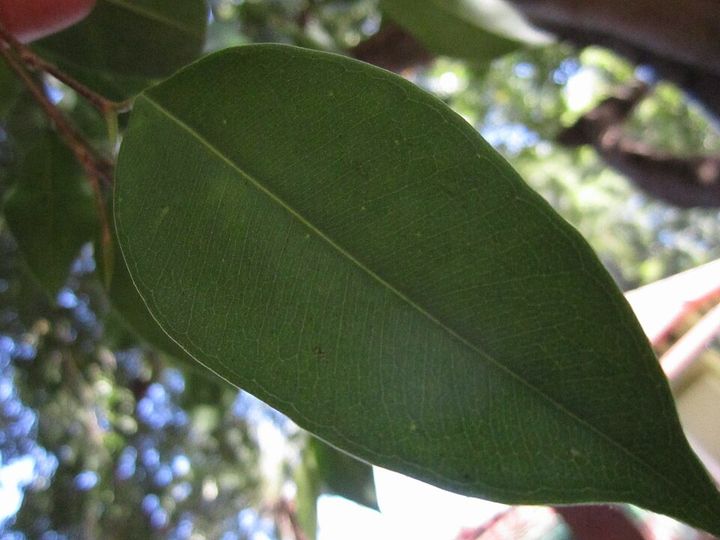
Growing a weeping fig in Brisbane
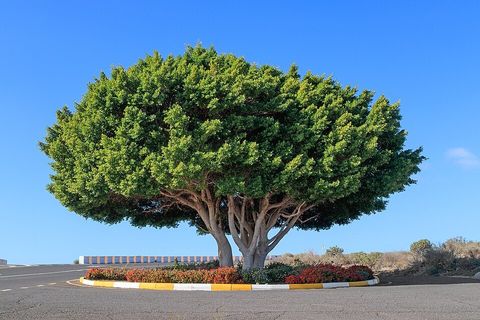
Weeping fig grows wild in north Queensland and the Top End and is widely planted in Queensland. Brisbane City Council lists it only for arterial road medians and roundabouts with more than 5 metres of room, which says a lot about its size. In home gardens it is best kept in a pot or as a firmly clipped hedge. As a tree, Burke's Backyard suggests keeping figs at least 8 to 10 metres from the house and well clear of paths and driveways.
What to watch out for
The roots are the problem. Planted in the ground, weeping fig grows into a huge tree whose roots crack paths and driveways, can damage foundations and drains, and can crush plastic pipes and terracotta sewers. Burke's Backyard warns that trimming the canopy doesn't stop the roots causing trouble. The milky sap can irritate skin and eyes and is harmful if swallowed. Birds spread the seeds, and it has naturalised along much of the east coast.
- Irritant sap or hairs. The milky sap can irritate skin and eyes.
- Poisonous parts. The sap is harmful if swallowed, so keep indoor plants away from children and pets.
- Size. Planted out, it grows into a huge tree, 15 to 30 metres tall with a very large crown.
- Seedlings. Birds and other animals spread the seeds, and it has naturalised along much of Australia's east coast.
Pruning and care
In a pot, give weeping fig a warm spot with bright, indirect light, water only when the mix feels dry, and avoid moving it, because it drops leaves when relocated. As a hedge, it needs regular, firm pruning, and Burke's Backyard warns that neglected fig hedges can wreck footpaths, so let future owners know. A large fig in the ground near buildings is worth having assessed by a qualified arborist, and major root or limb work is a job for professionals with the right gear.
Are weeping fig roots invasive?
Is the weeping fig native to Australia?
How big does a weeping fig grow?
Is weeping fig sap poisonous?


Sources and credits
- Street tree species (open data) Brisbane City Council
- Ficus benjamina Australian Tropical Rainforest Plants, CSIRO
- Census of the Queensland Flora and Fungi 2025 Queensland Herbarium, Queensland Government
- Trees & other plants to avoid Burke's Backyard
- Growing weeping figs Burke's Backyard
- Roots of Ficus benjamina Burke's Backyard
- Don's best indoor figs Burke's Backyard
- Ipswich green thumbs urged to beware of thirsty tree roots (Urban Utilities advice) Ipswich City Council (Ipswich First)
- How to grow weeping fig Yates
- Ficus benjamina fact sheet Lucidcentral weed key (updated with sponsorship from Sunshine Coast Council)
- Weeping fig (Hill's weeping fig) Burke's Backyard
Photo: John Robert McPherson, CC BY-SA 4.0, via Wikimedia Commons.
Second photo: Craig Franklin, CC BY-SA 3.0 au, via Wikimedia Commons.
This profile updates sheet 33 of the plant profile booklet made for Colourful Tree Lopping in 2013. We checked every fact against current sources and rewrote it for the guide.
Checked October 2026. Weed listings and council rules change: check the council's and the Queensland Government's pages before you act.
Get a free quote. We'll beat most written quotes.
Tell us about the job and the site. You don't need to be home for the quote. Available 7 days.
- 4.9 on Google (38 reviews)
- Family owned & operating since 1993
- Fully insured
- We'll beat most written quotes