
Tibouchina
Pleroma species · also called Lasiandra, Glory bush
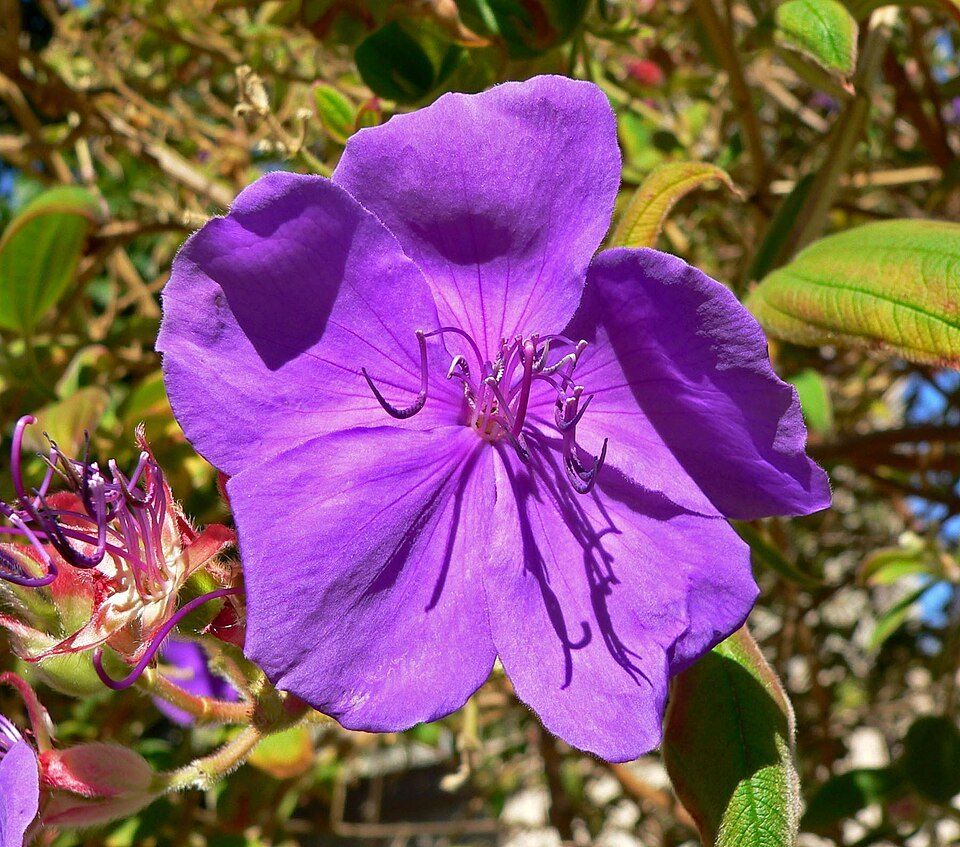
Tibouchina is the garden name for a group of South American shrubs and small trees, many now classed as Pleroma, grown for masses of purple or pink blooms from late summer through autumn. Larger kinds such as 'Alstonville' make a 4 to 5 metre feature tree, while dwarf varieties suit pots and small gardens. They take pruning well, but their square stems are brittle in wind.
- Exotic
- 4 to 8 m tall
- Flowers February to May
Tibouchina at a glance
- Height
- 4 to 8 m
- Leaves
- Evergreen
- Flowers
- Purple, pink, February to May
- Origin
- South-east Brazil
- Family
- Melastomataceae
How to identify a tibouchina
In flower they are hard to miss: from late summer into autumn the canopy fills with violet, purple or pink blooms. The leaves are dark green with a paler underside, and the young stems are square in cross-section, a handy clue when the plant isn't flowering. 'Alstonville', one of the best-known larger forms, is a dense evergreen shrub or small tree of 4 to 5 metres. Dwarf types such as 'Jules' grow to only about 1 metre and have small, velvety leaves. Some tree forms reach about 8 metres.
Growing a tibouchina in Brisbane
Burke's Backyard says tibouchinas grow across most of Australia's warm to cool temperate regions, but not in cool mountain districts, inland areas or the hottest parts of the tropics. The popular 'Alstonville' and 'Jules' were both bred in Alstonville, a town near Lismore in northern New South Wales, not far from Brisbane. They like a sunny spot and light, crumbly soil with plenty of moisture through the growing season. Choose a position sheltered from strong wind, because the brittle stems break easily, particularly on young plants. 'Jules' is the most cold-sensitive of them.
What to watch out for
The square stems are brittle and can snap in strong wind, so shelter young plants and check for broken branches after storms.
- Brittle branches. The square stems are brittle and can snap in strong wind, especially on young plants.
Pruning and care
Tibouchinas respond very well to pruning and can be trimmed at almost any time of year. Burke's Backyard suggests a harder prune after flowering in late winter, then tip pruning through spring and summer to keep plants dense and bushy. Cut just above new shoots, because these thicken quickly and carry the next flush of flowers. With the right pruning a tree form can be held at whatever height suits the garden. Water well through the growing season, and stake or shelter young plants in windy spots.
When should you prune a tibouchina?
How tall does a tibouchina grow?
When do tibouchinas flower?
Why are tibouchinas now called Pleroma?

Sources and credits
- Tibouchina Burke's Backyard
- Tibouchinas Burke's Backyard
- Pruning Tibouchinas Burke's Backyard
- Pleroma Atlas of Living Australia
- Pleroma urvilleanum Atlas of Living Australia
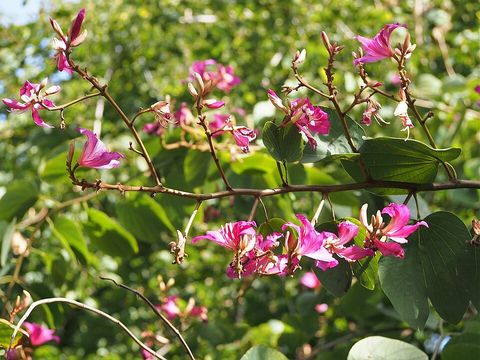
Photo: Stan Shebs, CC BY-SA 3.0, via Wikimedia Commons.
Checked October 2026. Weed listings and council rules change: check the council's and the Queensland Government's pages before you act.
Get a free quote. We'll beat most written quotes.
Tell us about the job and the site. You don't need to be home for the quote. Available 7 days.
- 4.9 on Google (38 reviews)
- Family owned & operating since 1993
- Fully insured
- We'll beat most written quotes