
Chinese elm tree
Ulmus parvifolia · also called Lacebark elm
The Chinese elm tree is an East Asian shade tree with small glossy leaves, often weeping branchlets and patchwork bark that flakes in grey, tan and orange. In Brisbane it usually keeps some leaves through winter. It is popular for shade, streets and bonsai, but its roots are hard on sewer pipes and seedlings pop up nearby. Don't confuse it with Chinese celtis, a restricted weed that is also called Chinese elm.
- Exotic
- 6 to 13 m tall
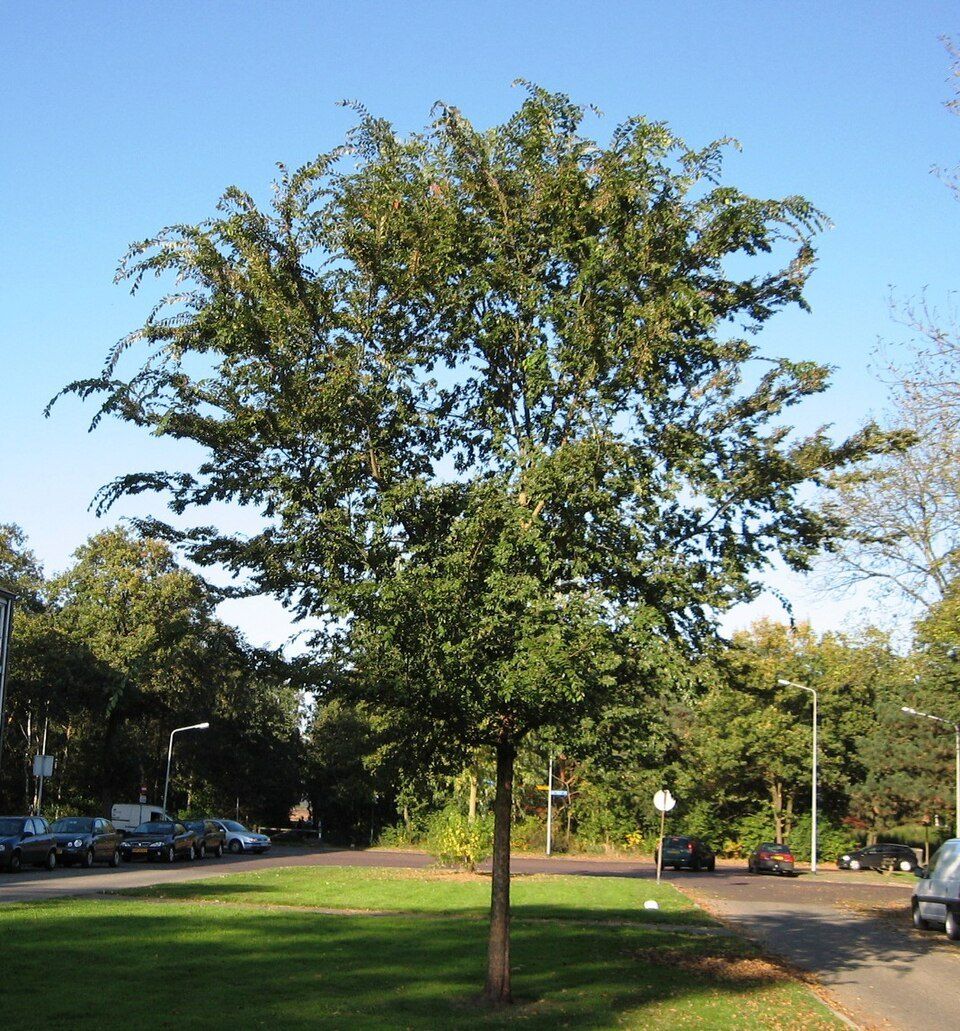
Chinese elm at a glance
- Height
- 6 to 13 m (up to 25 m in the wild)
- Leaves
- Semi-deciduous
- Flowers
- Small and easy to miss
- Roots
- Aggressive
- Origin
- China, Japan and Vietnam
- Family
- Ulmaceae
How to identify a Chinese elm
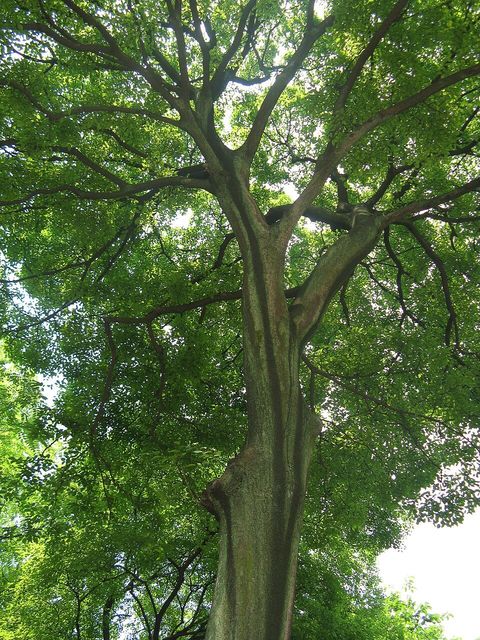
A broad-crowned tree, often 6 to 13 metres in gardens, usually with drooping or weeping branchlets. The leaves are small, mostly 2.5 to 5 cm long, glossy dark green above, toothed along the edges and a little lopsided at the base. The bark is the best clue: smooth when young, then mottled grey, tan and orange-brown as it sheds in small plates. Flowers are tiny and easy to miss, and flat winged seeds about 1 cm long follow in autumn. Chinese celtis, which some people also call Chinese elm, has smooth silver-grey bark, leaves 4 to 7 cm long and small orange berries instead of winged seeds.
Growing a Chinese elm in Brisbane
Chinese elm is widely planted in Australian gardens, parks and streets and grows in most soils in full sun. Flora of Australia notes it is often semi-deciduous here and close to evergreen in warmer places, so Brisbane trees usually drop only part of their foliage. It has naturalised in parts of south-east Queensland, with herbarium records from Boonah and a creek at Chapel Hill, and seedlings often appear near planted trees. Give it plenty of room away from sewer and water pipes.
What to watch out for
Hunter Water rates elms among the trees with a very high risk of damaging sewer pipes, so keep this one well clear of pipes. Seedlings often come up near planted trees; it has naturalised in parts of south-east Queensland, and the Queensland Government's WildNet database flags it as an environmental weed. The bigger trap is the name: Chinese celtis, a Category 3 restricted invasive plant in Queensland, is also called Chinese elm in Brisbane. It must not be given away, sold or released into the environment, so check which tree you have.
- Seedlings. Seedlings often come up near planted trees, and it has naturalised in parts of south-east Queensland, including beside a creek at Chapel Hill.
Pruning and care
Chinese elm is commonly grown as bonsai, and a garden tree needs only light, selective pruning. Remove crossing, rubbing or dead branches, lift the canopy over paths and thin dense growth rather than cutting the whole crown back hard. Weeping forms may need their lowest branchlets trimmed for head room. Pull out seedlings that come up in garden beds. Large limbs over the house or near power lines are a job for a qualified arborist.
Is Chinese elm a weed in Queensland?
How do I tell Chinese elm from Chinese celtis?
Are Chinese elm tree roots invasive?
Is Chinese elm deciduous?
.JPG)
Sources and credits
- Ulmus parvifolia, New South Wales Flora Online PlantNET, Royal Botanic Gardens and Domain Trust
- Ulmus parvifolia, Flora of Australia Australian Biological Resources Study (Flora of Australia online)
- Ulmus parvifolia, Plants of South Eastern New South Wales Lucidcentral identification key
- Tree information sheet: Chinese elm (Ulmus parvifolia) City of Unley
- Planting near sewer pipes Hunter Water
- Chinese celtis (weed identification tool) Brisbane City Council
- Chinese celtis Business Queensland (Queensland Government)
- Restricted invasive plants Business Queensland (Queensland Government)
- Brisbane weeds (open data) Brisbane City Council
- Ulmus parvifolia species page Atlas of Living Australia
- Species profile: Ulmus parvifolia (WildNet taxon details) Queensland Government
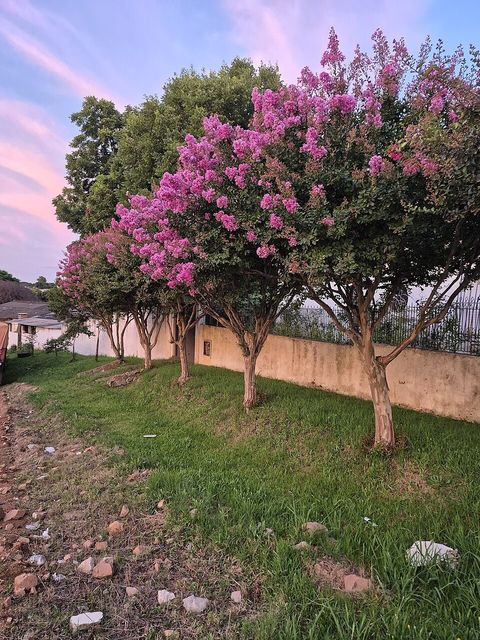
Photo: Ronnie Nijboer, CC0, via Wikimedia Commons.
Checked October 2026. Weed listings and council rules change: check the council's and the Queensland Government's pages before you act.
Get a free quote. We'll beat most written quotes.
Tell us about the job and the site. You don't need to be home for the quote. Available 7 days.
- 4.9 on Google (38 reviews)
- Family owned & operating since 1993
- Fully insured
- We'll beat most written quotes