
Chinese celtis
Celtis sinensis · also called Chinese hackberry, Japanese hackberry, Chinese nettle tree
Chinese celtis, a quick-growing deciduous tree from eastern Asia, was once planted in gardens and streets and is now ranked among the top ten environmental weeds of South East Queensland. It is a Category 3 restricted invasive plant in Queensland. Birds and flying foxes spread its small orange berries, and it forms dense stands along creek banks that stop native plants from regrowing.
- Exotic
- Restricted weed in Queensland
- 10 to 20 m tall
Chinese celtis at a glance
- Height
- 10 to 20 m (up to 30 m in the wild)
- Growth
- Fast
- Leaves
- Deciduous
- Flowers
- Small and easy to miss
- Origin
- Eastern Asia: China, Taiwan, Korea and Japan
- Family
- Cannabaceae
How to identify a Chinese celtis
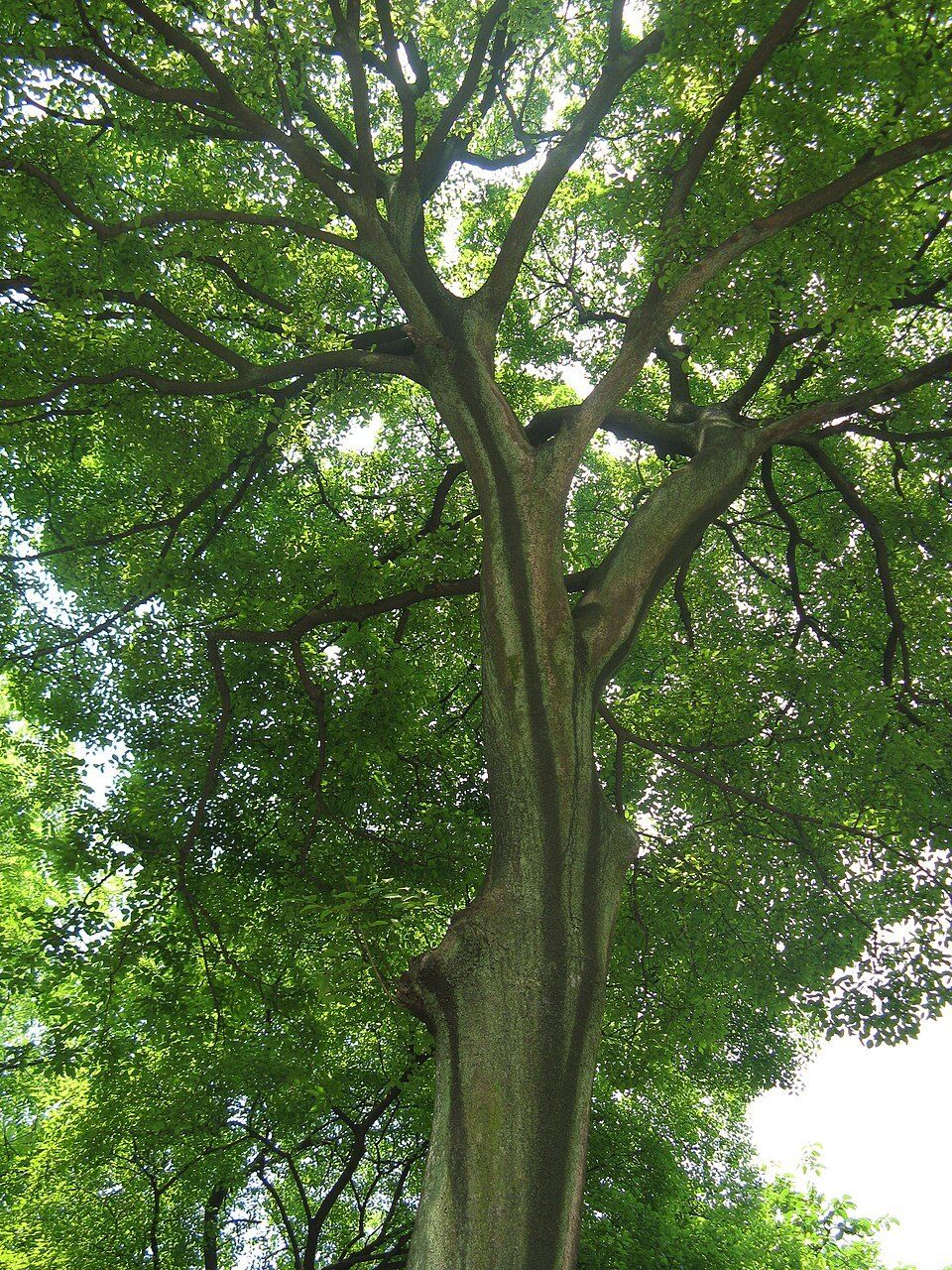
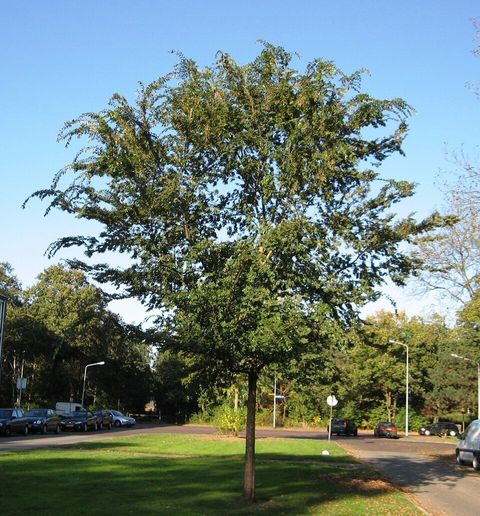
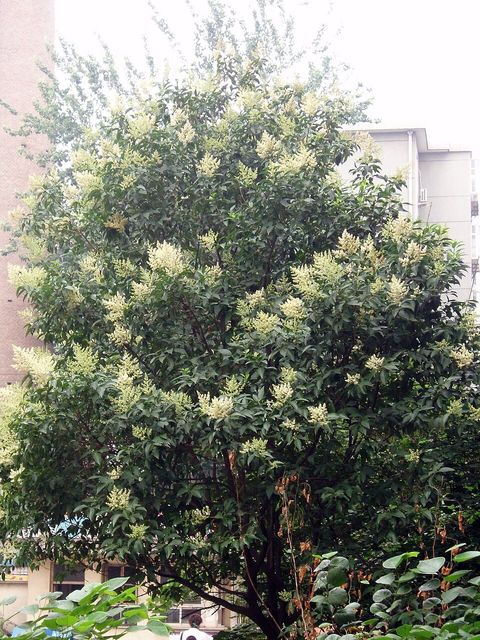
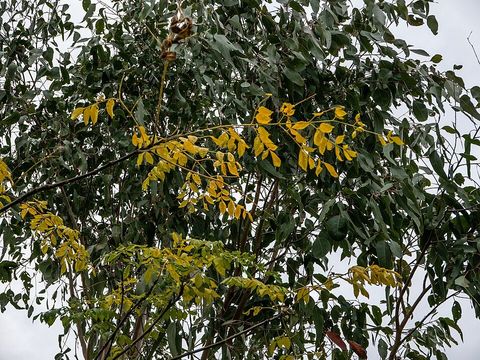
Chinese celtis is a large, spreading tree with smooth, silver-grey bark. Its glossy, dark green leaves are oval with a long point, 4 to 10 cm long, with three main veins from the base and blunt teeth mostly on the upper half. It loses its leaves in winter. The tiny greenish spring flowers are easy to miss, but the small round berries that follow ripen from green through orange to red-brown. Chinese elm has narrower, finely toothed leaves and dry winged seeds, while the native silky celtis has smooth-edged leaves and blackish fruit.
Growing a Chinese celtis in Brisbane
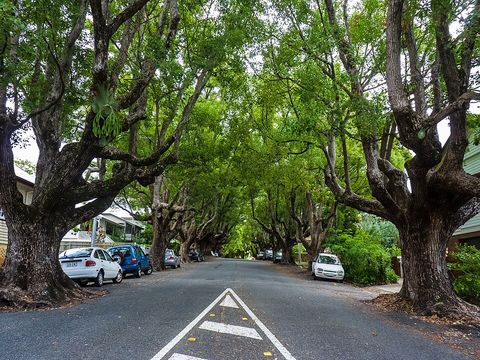
Chinese celtis has naturalised through most of South East Queensland. It favours clay soils on creek flats, floodplains and gullies, but also turns up along roadsides, in parks, gardens, rainforest edges and urban bushland. It was widely grown as a garden and street tree, so mature trees are still found in suburban yards, and birds carry their seed into nearby gardens and bushland. As a restricted invasive plant, it should not be planted, and existing trees need managing so they don't spread.
What to watch out for
As a Category 3 restricted invasive plant, Chinese celtis must not be sold, given away or released, and you must manage it on your land. A tree produces thousands of berries, and birds, flying foxes and floodwater carry the seed into creeks and bushland, where dense stands use a lot of water and stop native plants regenerating. It can also produce suckers. Mature trees reach 10 to 20 m or more, so removing a large one near buildings needs care.
- Seedlings. Birds, flying foxes and floodwater spread the seed, and it forms dense stands along creek banks that stop native plants regenerating.
- Size. Brisbane City Council describes it as a large, spreading tree of 10 to 30 m.
Pruning and care
Pull or dig out seedlings while they are small, as they come out far more easily than saplings. Larger trees are generally controlled by cutting them down and treating the stump, or by stem injection, with a registered herbicide used as the Queensland Government fact sheet directs. It can also send up suckers, so keep watching for regrowth afterwards. Felling a large celtis safely, especially over a house or fence, is a job for a professional with the right gear.
Is Chinese celtis a weed in Queensland?
How do I identify Chinese celtis?
Is Chinese celtis the same as Chinese elm?
How tall does Chinese celtis grow?

Sources and credits
- Chinese celtis (weed identification tool) Brisbane City Council
- Chinese celtis Business Queensland (Queensland Government)
- Celtis sinensis (Environmental Weeds of Australia, Biosecurity Queensland edition) Biosecurity Queensland and Identic
- Celtis sinensis Flora of Australia (ABRS), Atlas of Living Australia
- Celtis sinensis (species page) Atlas of Living Australia
Photo: Geographer ( talk ), CC BY 3.0, via Wikimedia Commons.
Checked October 2026. Weed listings and council rules change: check the council's and the Queensland Government's pages before you act.
Get a free quote. We'll beat most written quotes.
Tell us about the job and the site. You don't need to be home for the quote. Available 7 days.
- 4.9 on Google (38 reviews)
- Family owned & operating since 1993
- Fully insured
- We'll beat most written quotes