
Loquat tree
Eriobotrya japonica · also called Japanese medlar, Japanese plum
The loquat tree is an evergreen fruit tree from eastern Asia, grown in backyards for its clusters of sweet orange-yellow fruit in spring. It flowers in autumn, with fragrant white blooms among big, leathery, rusty-backed leaves. Birds spread its seed into bushland and along creeks, so Brisbane City Council includes it on its weed list, although there is no legal requirement attached.
- Exotic
- On Brisbane's weed list
- 3 to 10 m tall
- Flowers March to May
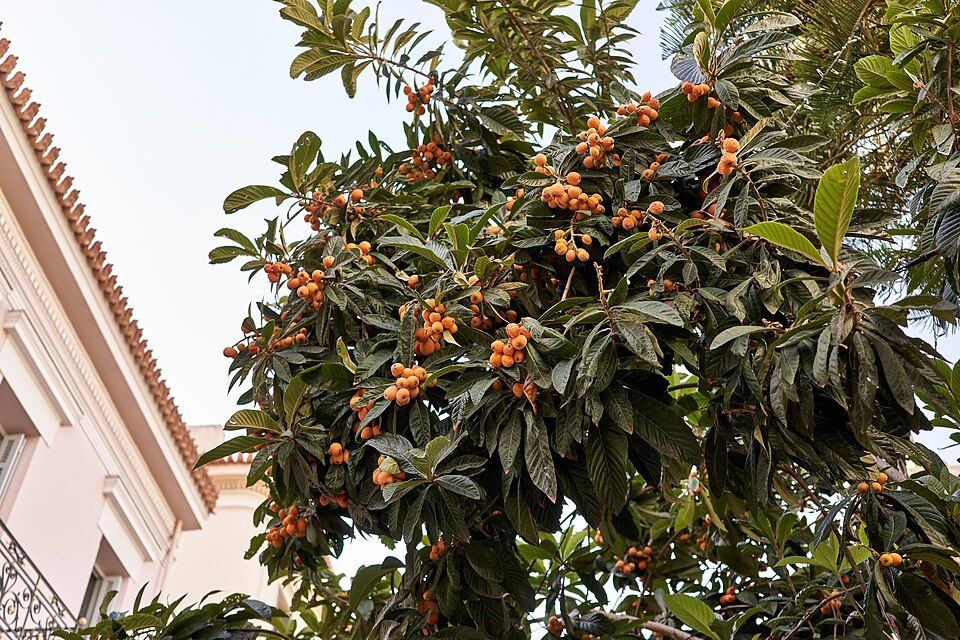
Loquat at a glance
- Height
- 3 to 10 m
- Leaves
- Evergreen
- Flowers
- White, March to May
- Origin
- Eastern Asia: China, Japan and Taiwan
- Family
- Rosaceae
How to identify a loquat
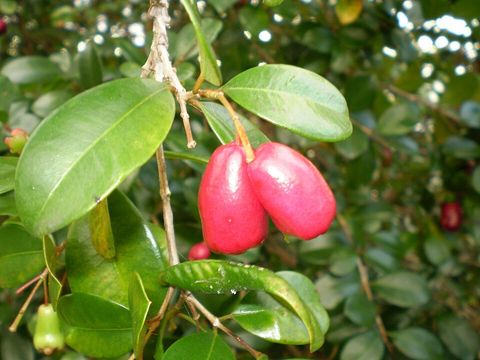
An evergreen tree, often small but able to reach about 10 metres. The leaves are the giveaway: stiff and leathery, 10 to 30 cm long, glossy dark green on top with sunken veins that make them look ribbed, rusty and woolly underneath, and coarsely toothed. New shoots are covered in rusty hairs. Fragrant white flowers about 1 cm across open in dense, branched clusters in autumn. Round to pear-shaped yellow or orange fruit 3 to 4 cm long follows in spring, each holding one or two large seeds.
Growing a loquat in Brisbane
Loquats grow readily in south-east Queensland, flowering in autumn and ripening fruit in spring, which makes them a familiar backyard fruit tree. They are also one of the region's more widespread garden escapes: the Environmental Weeds of Australia key ranks loquat among the 200 most important invasive plants in south-east Queensland, and it has naturalised in dry eucalypt forest and along creeks, including the Gold Coast's Tugun Hill Conservation Area. Keep trees well away from bushland.
What to watch out for
Loquat is on Brisbane City Council's weed list, with no legal requirement attached, because birds and other animals carry the seed into bushland, where it can form tall stands that push out native plants. Remove seedlings early and avoid planting near creeks or bush. The fruit is a host of Queensland fruit fly, so pick it promptly and don't leave fallen fruit lying under the tree.
- Seedlings. Birds and other animals eat the fruit and spread the seed into bushland and along creeks, where seedlings can grow into stands that crowd out native plants.
- Falling fruit. Loquat is a host of Queensland fruit fly, and Business Queensland advises not letting fallen fruit build up under trees.
Pruning and care
A light prune after harvest keeps a loquat low enough to pick and net, and opening up the centre lets in light. Remove dead, crossing or crowded branches rather than shearing the whole canopy. Pick fruit as it ripens and clear fallen fruit promptly, because loquat is a host of Queensland fruit fly and maggots develop in the fruit. Pull out seedlings that appear around the garden. Big limbs over the house or fence are a job for a qualified arborist.
Is loquat a weed in Queensland?
When do loquats fruit in Brisbane?
How big does a loquat tree grow?

Sources and credits
- Loquat (weed identification tool) Brisbane City Council
- Brisbane weeds (open data) Brisbane City Council
- Eriobotrya japonica fact sheet Environmental Weeds of Australia (Lucid key, Identic Pty Ltd)
- Eriobotrya japonica, New South Wales Flora Online PlantNET, Royal Botanic Gardens and Domain Trust
- Eriobotrya japonica, Plants of South Eastern New South Wales Lucidcentral identification key
- Species profile: Eriobotrya japonica (WildNet taxon details) Queensland Government
- Queensland fruit fly Business Queensland (Queensland Government)
- Eriobotrya japonica species page Atlas of Living Australia
- Free Native Plants: Species (open data) Brisbane City Council
- Planting guide Unitywater
- Brisbane trees (street tree species table) Brisbane City Council
Photo: George E. Koronaios, CC BY-SA 4.0, via Wikimedia Commons.
Checked October 2026. Weed listings and council rules change: check the council's and the Queensland Government's pages before you act.
Get a free quote. We'll beat most written quotes.
Tell us about the job and the site. You don't need to be home for the quote. Available 7 days.
- 4.9 on Google (38 reviews)
- Family owned & operating since 1993
- Fully insured
- We'll beat most written quotes