
Tulip satinwood
Rhodosphaera rhodanthema · also called Deep yellowwood, Yellow cedar
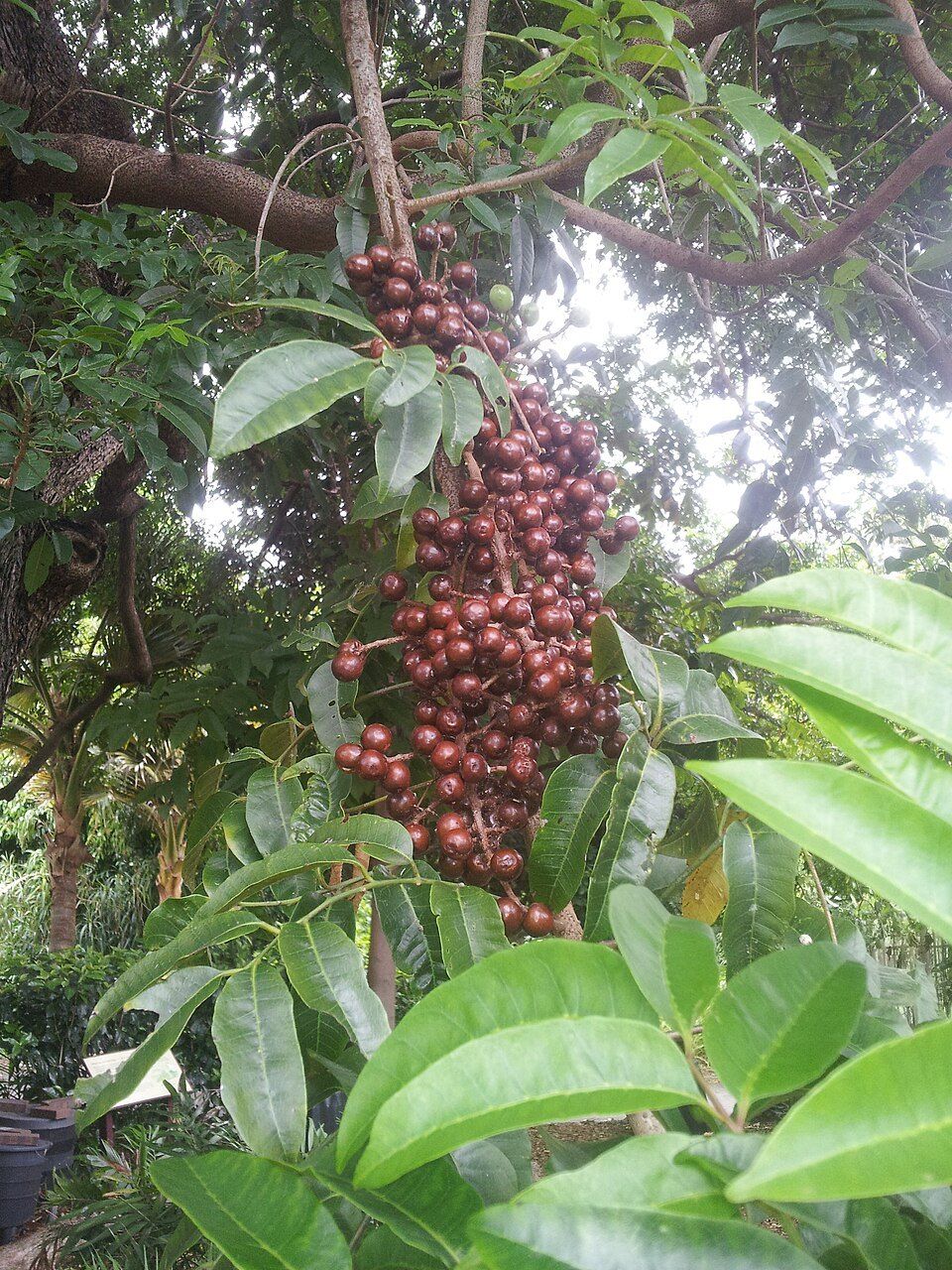
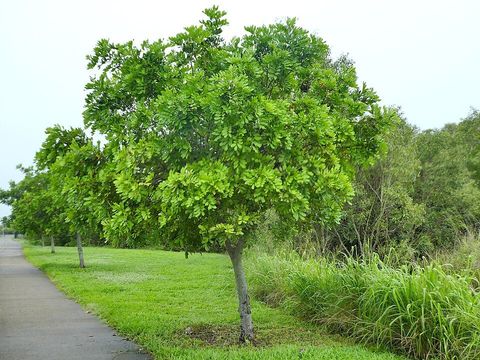
The tulip satinwood is a native rainforest tree of South East Queensland and northern New South Wales, also called deep yellowwood after the colour of its heartwood. In spring it carries sprays of tiny pinkish-red flowers, and female trees follow with clusters of shiny brown fruit that hang on for months. In gardens it usually grows 8 to 12 metres tall, with a clear trunk and an open crown that gives shade.
- Native to South East Queensland
- 8 to 12 m tall
- Flowers September to November
Tulip satinwood at a glance
- Height
- 8 to 12 m (up to 20 m in the wild)
- Spread
- 8 to 12 m
- Leaves
- Evergreen
- Flowers
- Red, pink, September to November
- Origin
- Dry rainforest from the Mary River and Bunya Mountains (Qld) south to the Macleay River (NSW)
- Family
- Anacardiaceae
How to identify a tulip satinwood
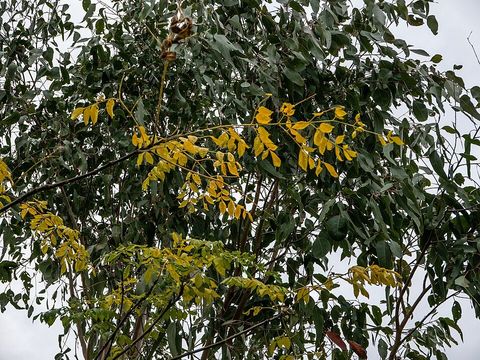
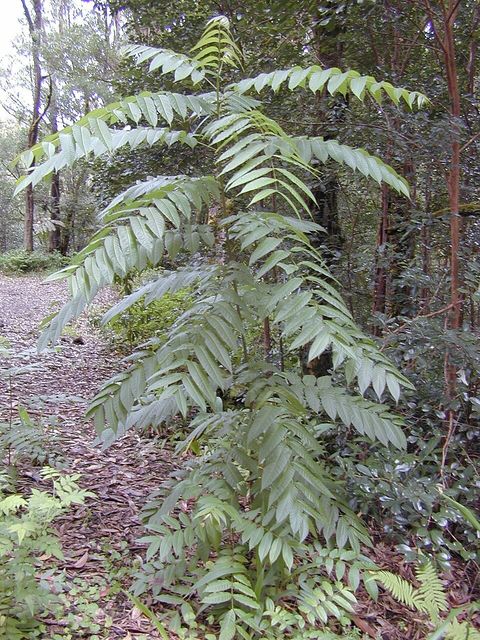
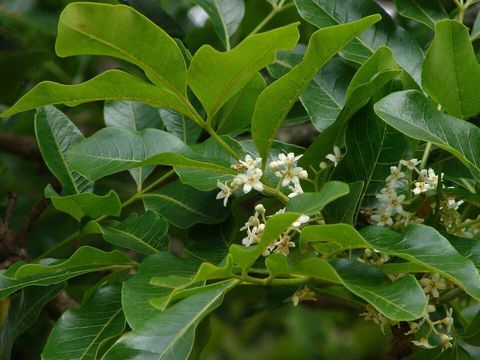
Tulip satinwood has compound leaves 8 to 20 cm long, each with 3 to 11 pointed leaflets that are often lopsided at the base, with tiny tufts of hair in the vein angles underneath. Young plants carry lobed, oak-like leaves. The bark is brown to grey and scaly, and young twigs are dotted with reddish pores. In spring, sprays 10 to 20 cm long of tiny pinkish-red flowers appear at the branch tips. Each tree is either male or female, and only females carry the round, shiny brown fruit, about 1 cm across, often likened to Jaffas. Without flowers or fruit it can be mistaken for white cedar, an unrelated tree.
Growing a tulip satinwood in Brisbane
This is a local tree. It grows naturally in the dry rainforests and vine scrubs of South East Queensland, and Flora of Australia cites a specimen from Gold Creek Reservoir in Brisbane's west. Ipswich City Council lists it among the native trees of its dry vine forests, and Noosa Council includes it on its preferred species list. In a garden it wants full sun and copes with clay, loam or sand. Once established it needs little extra water and handles dry spells and frost.
What to watch out for
Tulip satinwood isn't on Brisbane City Council's weed list or Queensland's restricted list. The main nuisance is fruit: female trees can carry heavy crops of hard, round fruit that drop and roll on paths and paving, so keep it away from walkways, pools and driveways. In rainforest it can reach about 20 metres, so give it room well away from the house.
- Falling fruit. Female trees can carry a lot of hard, round fruit that drops and can roll underfoot on paths and paving.
Pruning and care
Tulip satinwood is hardy and needs little attention once established. Give it a sunny spot in well-drained soil and water young trees through dry spells until they settle in. It usually needs only light pruning: remove dead, damaged or crossing branches, and lift low limbs gradually if you want a clear trunk. Female trees can drop a lot of fruit, so plant it back from paths, pools and driveways. Large limbs or work high in the crown are a job for a qualified arborist.
Is tulip satinwood native to Brisbane?
How tall does a tulip satinwood grow?
Why doesn't my tulip satinwood have fruit?
Is tulip satinwood fruit messy?

Sources and credits
- Rhodosphaera rhodanthema, New South Wales Flora Online PlantNET, Royal Botanic Gardens and Domain Trust
- Rhodosphaera rhodanthema Flora of Australia (ABRS), Atlas of Living Australia
- Rhodosphaera rhodanthema, Deep Yellow Wood (Plant Selector) Botanic Gardens of South Australia
- Plant of the month: Deep Yellowwood (October 2025) Botanic Gardens of Sydney
- Natives to Notice Gardening Australia (ABC)
- Rhodosphaera rhodanthema (plant details) Noosa Native Plants (Noosa Parks Association Botany Group)
- Dry vine forests (vegetation communities rehabilitation guide, guideline 3) Ipswich City Council
- East Hills Group Newsletter, October 2016 Australian Plants Society NSW, East Hills Group
- Rhodosphaera rhodanthema species page Atlas of Living Australia
Photo: Casliber, CC BY-SA 3.0, via Wikimedia Commons.
This profile updates sheet 1 of the plant profile booklet made for Colourful Tree Lopping in 2013. We checked every fact against current sources and rewrote it for the guide.
Checked October 2026. Weed listings and council rules change: check the council's and the Queensland Government's pages before you act.
Get a free quote. We'll beat most written quotes.
Tell us about the job and the site. You don't need to be home for the quote. Available 7 days.
- 4.9 on Google (38 reviews)
- Family owned & operating since 1993
- Fully insured
- We'll beat most written quotes