
Honey locust
Gleditsia triacanthos · also called Sweet locust, Bean tree, McConnel's curse
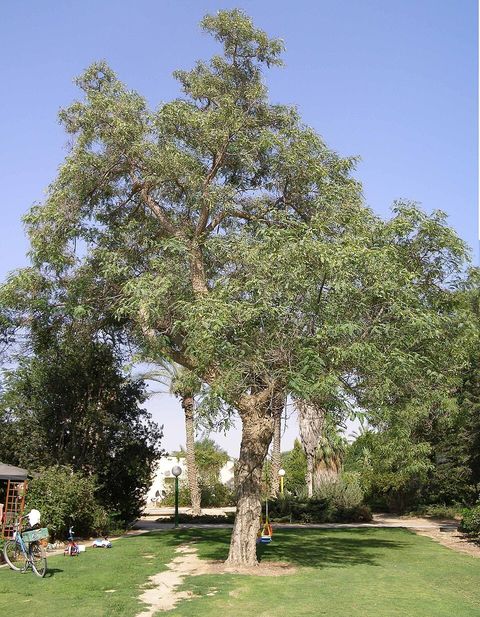
Honey locust is a fast-growing deciduous tree from North America with fern-like leaves, long twisted seed pods and, in its wild form, large branched spines on the trunk. Thornless forms such as 'Sunburst' were sold as garden and street trees, but the species forms dense, spiny thickets along waterways and is a Category 3 restricted invasive plant in Queensland.
- Exotic
- Restricted weed in Queensland
- 10 to 20 m tall
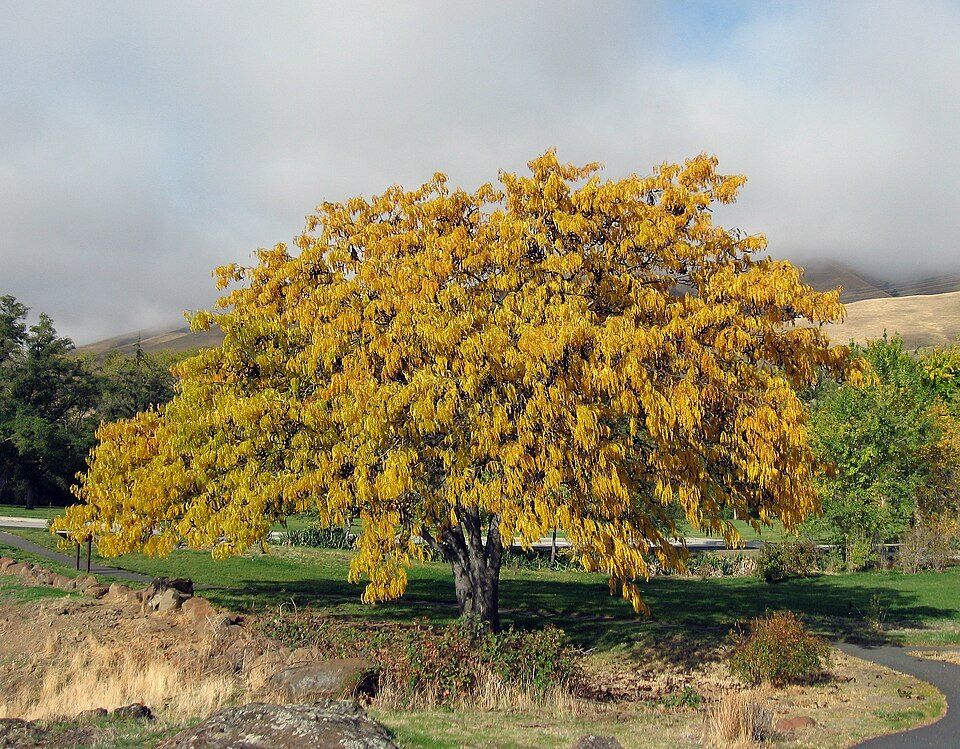
Honey locust at a glance
- Height
- 10 to 20 m (up to 25 m in the wild)
- Growth
- Fast
- Leaves
- Deciduous
- Flowers
- Small and easy to miss
- Origin
- Eastern and central North America
- Family
- Fabaceae
How to identify a honey locust
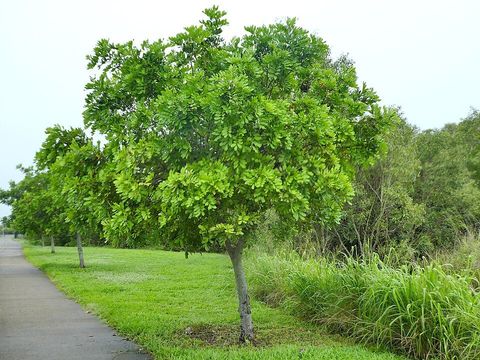
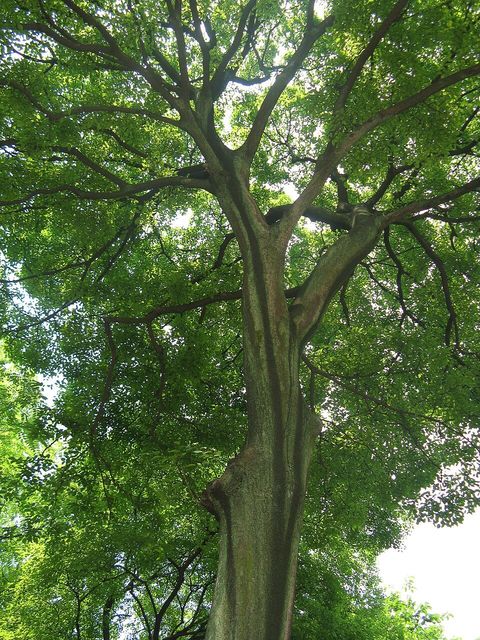
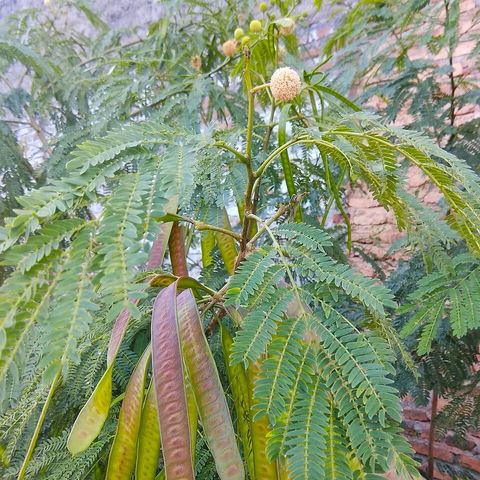
Honey locust is a spreading deciduous tree with fern-like leaves up to 20 cm long, divided once or twice into many small leaflets with finely toothed edges; on older wood the leaves sprout in clusters from short spurs. Wild trees carry large spines, often branched, up to about 18 cm long on the trunk and main limbs, and those thorns make the wild form hard to mistake for anything else. In October and November it has small greenish to creamy flowers in drooping spikes, followed by flat, twisted, dark brown pods up to 45 cm long. Thornless garden forms such as 'Sunburst' and 'Shademaster' lack the spines and set few seeds, but have the same leaves.
Growing a honey locust in Brisbane
Honey locust's stronghold in South East Queensland was the upper Brisbane River valley and the Darling Downs, where thorny thickets covered more than 1000 hectares before a state eradication program began in 1993. Infestations are now hard to find, but the tree prefers the alluvial soils of river flats, handles drought and has no climatic barrier to spreading through the region. Brisbane City Council notes that thornless ornamental forms could cause the same damage if they became widely naturalised.
What to watch out for
The spines on wild honey locust trees are long, strong and branched, and they can cause serious wounds and infections; even dead branches keep their spines, and they can puncture tyres. Seed can lie dormant in the ground for 20 years or more, and stock and floodwater carry the pods. Thornless garden forms can still sucker into neighbouring yards and can throw thorny seedlings, so they are not a safe exception.
- Spines. Wild trees carry strong, often branched spines up to about 18 cm long that can cause serious injuries and infections, and they stay sharp on dead wood.
- Seedlings. Seed can lie dormant in the ground for 20 years or more and is spread by stock and floodwater, and thornless garden forms can produce thorny seedlings.
Pruning and care
As a restricted invasive plant, honey locust needs control rather than care. Dig out seedlings and suckers while they are small, wearing heavy gloves, long sleeves and eye protection around the spines. A tree that is cut down or broken off regrows strongly from the base and the roots, so removal means treating the stump and returning to deal with suckers. A mature or thorny tree is a job for a professional crew with protective gear and a stump grinder.
Is honey locust a weed in Queensland?
Are honey locust thorns dangerous?
Is thornless honey locust a weed too?
How tall does a honey locust grow?

Sources and credits
- Honey locust (weed identification tool) Brisbane City Council
- Honey locust Business Queensland (Queensland Government)
- Gleditsia triacanthos (Honey Locust) Weeds Australia profiles (Atlas of Living Australia)
- Gleditsia triacanthos Flora of Australia (ABRS, via Atlas of Living Australia)
- Honey locust Grow Me Instead (Nursery & Garden Industry Australia)
- Brisbane weeds (open data) Brisbane City Council
Photo: Kevmin, CC BY-SA 3.0, via Wikimedia Commons.
This profile updates sheet 39 of the plant profile booklet made for Colourful Tree Lopping in 2013. We checked every fact against current sources and rewrote it for the guide.
Checked October 2026. Weed listings and council rules change: check the council's and the Queensland Government's pages before you act.
Get a free quote. We'll beat most written quotes.
Tell us about the job and the site. You don't need to be home for the quote. Available 7 days.
- 4.9 on Google (38 reviews)
- Family owned & operating since 1993
- Fully insured
- We'll beat most written quotes